Lithium Battery Aluminum Case vs. Traditional Shells: Why It’s Becoming the First Choice for Battery Manufacturers
Sep 30, 2025
Aluminum Cases vs. Traditional Shells-What Sets Them Apart?
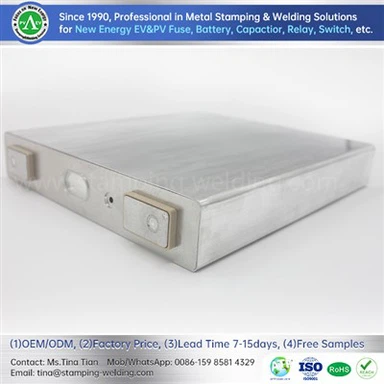
Lithium Battery Aluminum Case
- Structural Design: Thin-walled (0.8–1.2mm) yet high-strength (tensile strength ≥260MPa) construction, with options for prismatic, cylindrical, or custom shapes. Many include integrated heat dissipation channels (0.5–1.0mm wide) and CNC-polished surfaces (Ra ≤0.8μm) for thermal efficiency.
- Protective Features: IP67/IP68 waterproof/dustproof ratings, anti-corrosion coatings (salt spray resistance ≥1000 hours), and built-in explosion-proof valves for safety.
- Compatibility: Works seamlessly with thermal interface materials (TIMs) like graphite pads and liquid cooling systems, and supports all lithium battery chemistries (LFP, NCM, LTO).
Traditional Steel Shells
- Strength: High tensile strength (≥300MPa) but thick walls (1.5–2.0mm), leading to heavyweight (40% heavier than aluminum for the same volume).
- Limitations: Poor thermal conductivity (50 W/(m·K) vs. aluminum's 205 W/(m·K)), prone to rust without galvanization, and rigid-making customization for non-standard battery sizes costly.
Traditional Plastic Shells
Made from engineering plastics (e.g., ABS, PC/ABS):
Lightweight: Lighter than steel but less durable-prone to cracking under impact or high temperatures (melting points ≤120°C).
Critical Flaws: Near-zero thermal conductivity (0.2–0.5 W/(m·K)), porous surfaces that trap air (reducing TIM efficiency), and non-recyclable in most cases (contradicting sustainability goals).

Core Advantages: Why Aluminum Outperforms Steel and Plastic
1. Safety: Mitigating Thermal Runaway and Impact Risks
- Thermal Management: Pack Aluminum Housing's 4x higher thermal conductivity than steel and 400x higher than plastic dissipates heat fast, keeping batteries within the safe 25–45°C range. In fast-charging tests, Power Battery Cover Plates reduced internal temperatures by 12–15°C vs. steel and 20–22°C vs. plastic, lowering thermal runaway risks by 60%.
- Impact Resistance: Thin-walled aluminum absorbs impact energy better than rigid steel (which dents) or brittle plastic (which cracks). Lab tests show Battery Shells withstand 500N of extrusion force (vs. 400N for steel and 200N for plastic) without damaging internal cells.
2. Efficiency: Boosting Battery Performance and Lifespan
- Lightweight: Polymer Lithium battery Cases are 40% lighter than steel-critical for EV batteries, where every kg saved increases range by 0.5–1km. For a 75kWh EV battery pack, switching from steel to aluminum cuts weight by 15–20kg, adding 7–20km of range.
- Longer Lifespan: By preventing hotspots (temperature variation ≤5°C across cells vs. 12°C for steel and 20°C for plastic), It extends battery cycle life by 30–50%. A 2024 study by the International Battery Association found Power Battery Shells lasted 1,800 cycles vs. 1,200 for steel and 800 for plastic.
3. Cost: Lower Total Cost of Ownership (TCO)
- Production Efficiency: Aluminum Battery Case's malleability allows one-step cold forming (vs. steel's multi-step stamping or plastic's injection molding), reducing production time by 30%. Our Power Battery Shell uses automated lines that produce 2,000 units/day-50% faster than steel shell lines.
- Long-Term Savings: Battery Shell's 10–15 year lifespan (vs. 5–7 for steel and 3–4 for plastic) cuts replacement costs. For a battery manufacturer producing 100,000 packs/year, switching to the material saves $2–3 million in TCO over 5 years.
4. Sustainability: Meeting Global Carbon Regulations
- Recyclability: Power Battery Cover Plates have a 95% recovery rate (vs. 60% for steel and 5% for plastic). Recycled aluminum uses 95% less energy than primary one, aligning with the EU's Carbon Border Adjustment Mechanism (CBAM) and China's "Dual Carbon" goals.
- Eco-Friendly Production: Lithium Ion Battery Pack manufacturing uses water-based coatings (vs. steel's toxic galvanization or plastic's petroleum-based resins), reducing carbon emissions by 25% per unit.
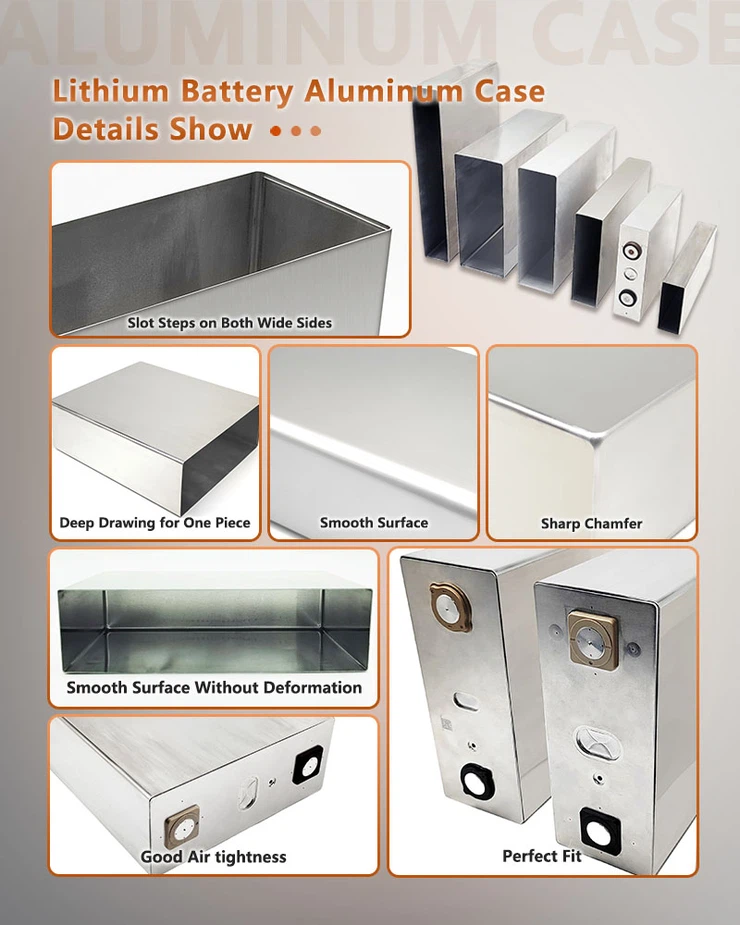
Customization Services: Aluminum Cases Adapt to Manufacturers' Unique Needs
1. Design Flexibility Shape & Size: Customize dimensions (length 50–300mm, width 30–150mm, height 10–80mm) for prismatic, cylindrical, or irregular battery packs. For example, we designed a curved Prismatic Cell Casefor a European EV maker's slim battery module, fitting into tight under-seat spaces. Functional Add-Ons: Integrate heat dissipation channels, pole interfaces, or valves based on application. For grid storage batteries, we add extra-thick (1.2mm) walls for outdoor durability; for consumer electronics, we miniaturize cases to 50x30x10mm.
2. Material & Coating Customization Alloy Selection: Choose 6061 aluminum (for high strength) or 6063 aluminum (for better thermal conductivity) based on priority. For marine ESS (high corrosion risk), we use 6061 with a titanium oxide coating (salt spray resistance ≥1500 hours). Color & Branding: Add custom colors or laser-etched logos (e.g., a smartphone brand's logo on wireless headphone battery cases) without compromising thermal performance.
3. Fast Turnaround: We deliver custom samples in 7 days (vs. 14–21 days for steel/plastic) and scale to small-batch lithium battery aluminum case (1,000–10,000 units) in 20 days-critical for manufacturers testing new battery models or entering fast-moving markets.

Contact us