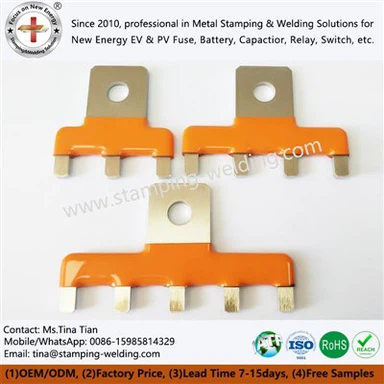
Process Characteristics of Copper Stamping Technology
Oct 26, 2025
With continuous technological advancement, copper stamp technology, as an important metal forming process, has been widely used in various industries. This process offers a set of unique advantages, giving it broad application prospects in electronics, communications, automotive, and household appliances. This article explains in detail the technical characteristics of Stamping Copper Sheet technology.
Process Overview
Custom Copper Stamping is a precision metal forming process where copper sheets or tubes are shaped into specific forms using molds and press machines. This method leverages copper's exceptional electrical conductivity and ductility, allowing for intricate designs without compromising structural integrity. The process is integral in producing components like connectors, terminals, and switches, which are pivotal in various electronic applications.
Beyond electronics, copper sheet stamping is also utilized in industries such as automotive, aerospace, and renewable energy. In the automotive sector, stamped copper components are used in connectors and terminals for electric vehicles. Aerospace applications benefit from copper's high strength-to-weight ratio, making it ideal for lightweight structural parts. Additionally, the renewable energy industry employs copper stamping for components in solar panels and wind turbines, capitalizing on copper's excellent conductivity for efficient energy transmission.
The versatility of copper sheet stamping extends to its ability to produce complex geometries with high precision, meeting the stringent requirements of modern manufacturing. This capability ensures that components not only fit perfectly but also perform reliably under various operational conditions.
Furthermore, advancements in stamping technology have led to improvements in efficiency and cost-effectiveness. Modern stamping presses are capable of high-speed production, reducing cycle times and increasing throughput. This makes copper sheet stamping a viable option for both small and large-scale manufacturing needs.

Main Process Features
High-Precision Forming
Electrical Copper Stamping Parts are crafted with meticulous attention to detail, ensuring tight tolerances and consistent profiles. Advanced stamping machinery and high-quality mold designs facilitate the production of parts that meet stringent dimensional requirements, enhancing the overall performance and reliability of the end products.
High Production Efficiency
The copper stamping process is optimized for mass production, enabling the formation of metal sheets into desired shapes in a single stroke. This efficiency reduces cycle times, lowers production costs, and supports automated operations, making it a cost-effective solution for large-scale manufacturing.
Wide Applicability
Copper sheet stamping is versatile, accommodating various metal thicknesses and materials. The adaptability of molds and presses allows for the production of a diverse range of components, catering to different specifications and requirements across industries.
Environmental Friendliness
Compared to traditional cutting methods, Custom Copper Stamping generates less material waste, contributing to more sustainable manufacturing practices. The recyclability of copper further enhances the environmental benefits, aligning with global efforts towards eco-friendly production processes.
Excellent Electrical Conductivity
Copper's superior electrical conductivity ensures efficient current transmission in stamped components. Additionally, its natural resistance to oxidation guarantees long-term stability and reliability, making it an ideal choice for critical applications in electronics and electrical systems.

Conclusion
As a vital metal forming process, Electrical Copper Stamping Parts technology offers high precision, efficiency, adaptability, environmental benefits, and excellent conductivity. These advantages make it increasingly essential in electronics, communications, automotive, and household appliance industries. With ongoing advancements in manufacturing, copper stamping processes will continue to evolve, contributing to innovation and growth in the metal fabrication field.
contact us