Stamping Sheet Metal: Material Choices, Process Types & Application Insights
Oct 26, 2025
"Stamping sheet metal" refers to the process of using a stamping press and die to form flat metal sheets into predetermined shapes by cutting, bending, stretching, or drawing.When the material is stainless steel, the part can benefit from corrosion resistance, high strength and good appearance, making it suitable for many demanding applications.In modern manufacturing, Stainless Steel Sheet Metal Stamping is widely used in automotive, household appliances, telecommunications, medical devices and other fields.

Material Selection
Common materials: For Stainless Metal Stamping, materials commonly include cold-rolled steel, stainless steel, aluminium alloys, copper/brass. The choice depends on strength, corrosion resistance, weight, cost and formability.
Stainless steel specific: Stainless steel offers high corrosion resistance and durability, which is why it's used when the stamped part must endure harsh environments or maintain appearance.
Challenges and trade-offs for stainless steel in Sheet Metal Stamping:
- Higher strength and work-hardening tendency requiring more robust tooling.
- Greater spring-back (elastic recovery) after bending or forming, so design must account for that.
- Surface finish and handling must be properly managed to avoid scratches, burrs, or damage.
Thickness and sheet condition: The sheet thickness, temper (softened/annealed or hardened), and surface finish all affect how well the Precision Metal Stamping process will perform and the quality of the final part.

Types of Stamping Processes and Their Characteristics
Blanking / Piercing: Stainless Steel Sheet Metal Stamping initial stages where the sheet is cut (blanked) or holes are punched (piercing). These operations separate the piece and create features.
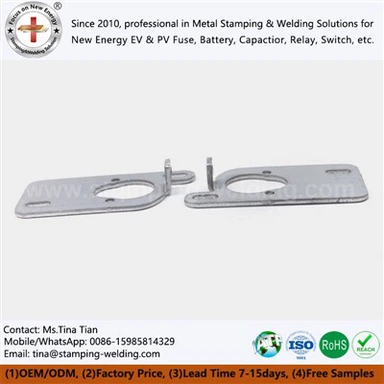
Bending / Flanging: After blanking, sheet metal may be bent into angles or flanged edges to obtain 3D geometry. Due to stainless steel's elastic recovery, bending design must include allowances for spring-back.
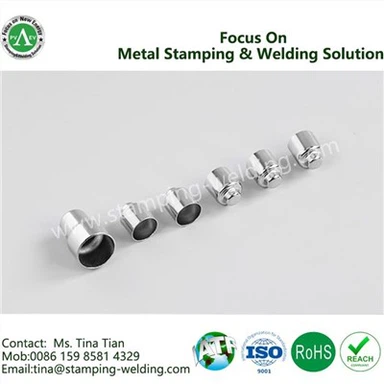
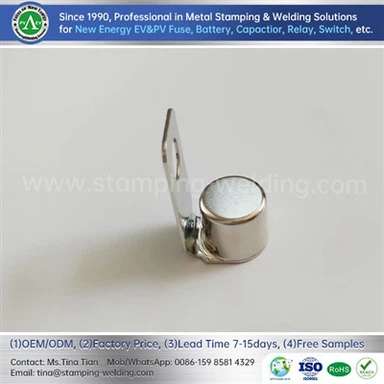
Deep Drawing / Stretch Forming: For Stainless Metal Stamping parts such as cups, shells or housings, the sheet is drawn into a die cavity. This is more complex and material formability becomes critical.
Progressive / Combination Stamping: Many operations (blanking, piercing, forming, trimming) are integrated in one die sequence or station set, enabling high-volume production.
Key process in Sheet Metal Stamping characteristics:
- Because stainless steel is tougher to form, tooling and die maintenance become more critical.
- High-volume stamping yields cost-efficiency but requires upfront tooling investment.
- Surface treatment and final finishing often follow stamping, especially for visible stainless steel parts.

Typical Application Scenarios
Automotive & transport equipment: Many structural brackets, exhaust system components, interior trim pieces and chassis parts are made by Precision Metal Stamping in stainless steel for durability and corrosion resistance.
Home appliances & kitchen equipment: Stamped stainless steel parts are common in refrigerator panels, washer/dryer housings, dishwasher doors, kitchen hoods, etc., because they combine aesthetics, hygiene and durability.
Electronics & telecommunications: Stainless Steel Sheet Metal Stamping enclosures, frames or shielding parts often use stainless steel for its strength and corrosion resistance, especially for outdoor or industrial devices.
Medical & food-processing equipment: The cleanliness and corrosion resistance of stainless steel make it ideal for stamping parts used in medical devices, food processing equipment, and hygienic environments.
Architectural & decorative applications: Panels, covers, trims made by Stainless Metal Stamping offer both the desired form and appearance for design-heavy applications.

Engineering Recommendations & Procurement Focus
- When designing Sheet Metal Stamping: consider material grade (304, 316, etc.), sheet condition, thickness, and the stamping process tolerances (spring-back, work-hardening).
- Tooling design is critical: dies must handle higher forces and material toughness; maintenance and wear must be accounted for.
- For high-volume production, investing in progressive or combination stamping dies pays off in cost per Precision Metal Stamping, but the upfront cost is higher.
- Quality control: Because of the precision and finish demands, inspections for dimensions, surface defects, burrs and deformation are essential.
- Supply chain & procurement considerations: Stainless Steel Sheet Metal Stamping, make sure to specify material grade, thickness, finish, tolerances, required volume and surface treatment early in sourcing.
- Post-processing: After stamping, treatments such as deburring, polishing, passivation, coating or painting may be required to meet appearance and performance specs.
Summary
Stamping sheet metal-particularly using stainless steel-offers a highly efficient and versatile manufacturing route for producing structurally sound, durable, and visually appealing components. From blanking and piercing to deep drawing and progressive stamping, the process spans a wide spectrum of techniques suitable for high-volume production. By selecting the right material, optimizing tooling and process design, and integrating quality control and finishing steps, manufacturers can deliver high-performance stamped stainless steel parts suitable for automotive, appliance, medical, architectural and many other sectors. Understanding the material and process trade-offs empowers engineers, procurement professionals and manufacturing decision-makers to leverage Precision Metal Stamping technologies effectively.
contact us