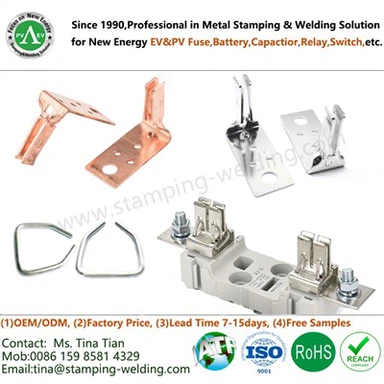
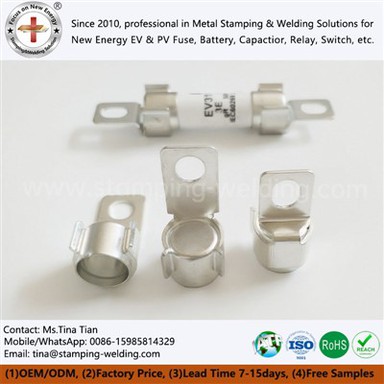
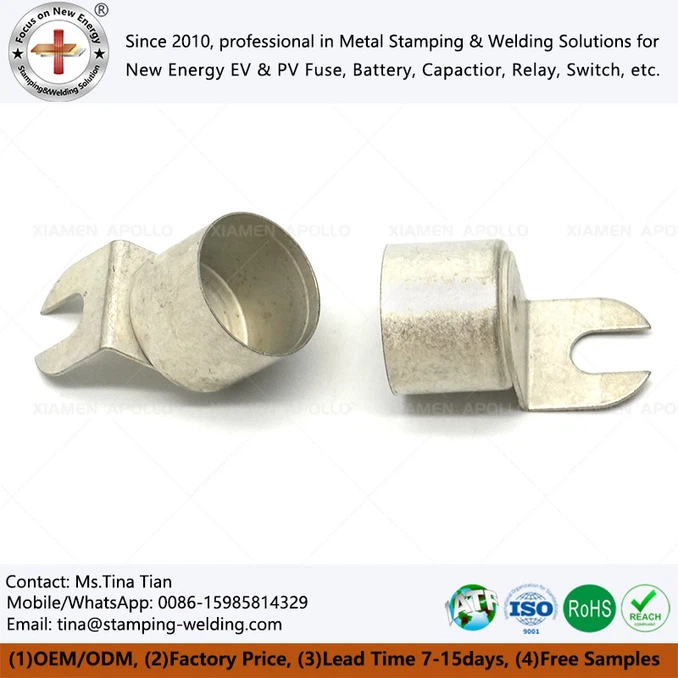
Tin plating is the preferred process in the power electronics field, making Tin Plated Copper End Caps assemblies a cost-effective choice
Apr 12, 2026
In the core conductive components of power protection equipment, the surface treatment process directly determines the component's performance, service life, and overall cost. With its multiple core advantages, tin plating has become the preferred surface treatment solution for Tin Plated Copper End Caps, and it is widely used in new energy, industrial power distribution, and other fields, making it the industry's best choice for cost-effectiveness.
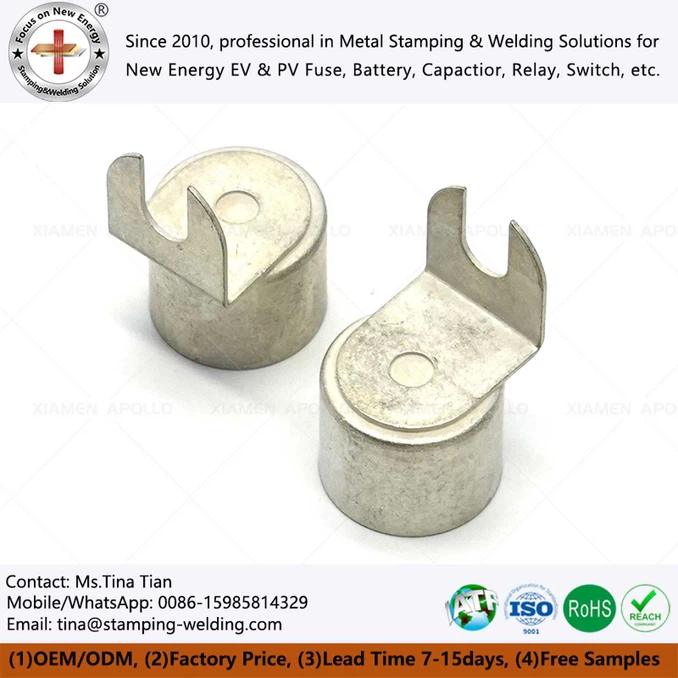
Tin plating specifically addresses the inherent shortcomings of copper substrates
Tin-plated blade cap assemblies, as key conductive components in power protection equipment such as high-voltage fuses, mainly consist of blades and end caps. The base material is mostly copper or copper alloys. Copper itself has excellent conductivity, making it an ideal choice for electrical connections. However, copper's susceptibility to oxidation and weak corrosion resistance make it difficult to adapt to complex operating conditions. Tin plating precisely addresses this pain point, becoming a core support for upgrading component performance. This is also one of the core reasons why the industry chooses tin plating technology.
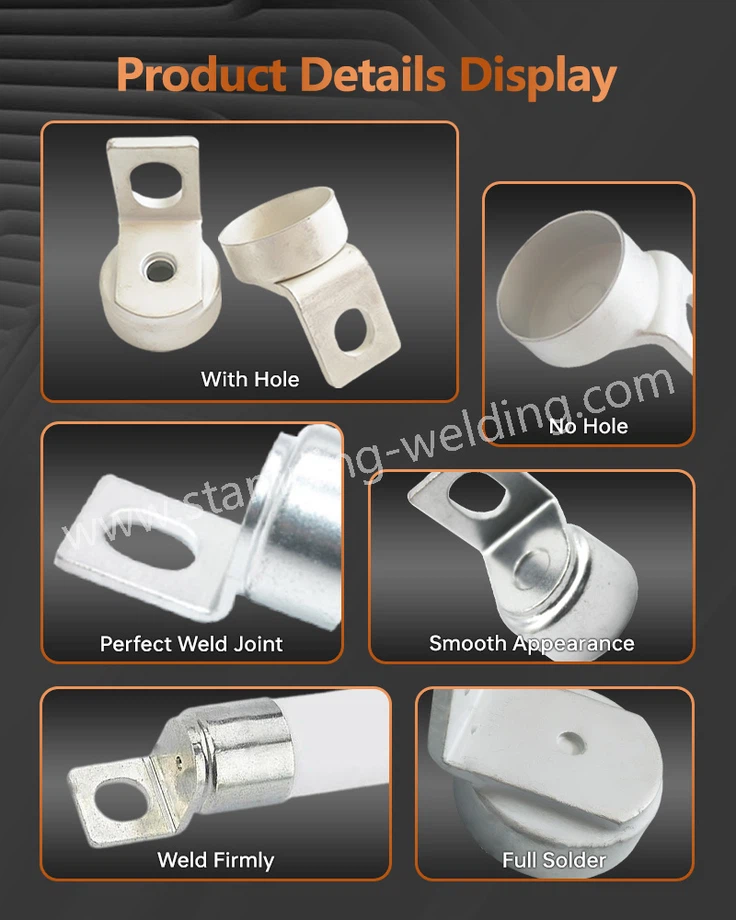
Advantage 1: Anti-oxidation, ensuring stable conductivity
Choosing tin plating is essentially an optimal decision that balances performance, cost, and practicality. Its core advantages precisely match the core needs of the power electronics field, making it a key support for replacing other surface treatment solutions. First, tin plating effectively solves the problem of copper substrate oxidation, ensuring conductivity stability: Tin can form a dense yet fragile oxide film at room temperature, which can isolate environmental factors such as air and moisture, preventing oxidation and corrosion of the underlying copper substrate. It can also easily break under the mechanical pressure of contact insertion and removal, maintaining a low and stable contact resistance, ensuring smooth power transmission, which is a core prerequisite for the stable operation of power equipment.
Advantage 2: High cost-effectiveness, suitable for large-scale applications
Secondly, tin plating is highly economical, meeting the needs of large-scale industry applications. Among surface treatment options for conductive components, tin plating offers a significant cost advantage over silver and gold plating-it has the lowest cost, allowing for component performance upgrades without substantial investment. While silver and gold plating offer advantages in conductivity and wear resistance, their higher cost makes them unsuitable for large-scale applications in ordinary power protection equipment. For most power electronic devices, tin plating's performance is sufficient to meet usage requirements, offering a far superior cost-effectiveness compared to other solutions.
Advantage 3: High practicality, adaptable to various scenarios
In addition, tin plating offers both practicality and adaptability, further solidifying its position as the preferred choice. On one hand, tin has excellent wettability with solder, significantly improving the solderability of tin-plated contact cap assemblies. This facilitates reliable connections between the assemblies and other circuit components during production, increasing production efficiency, reducing production losses, and adapting to various production needs such as Cap and Contact for Electric Vehicle (EV) Fuses and Cap and Contact for Battery Pack Fuse. On the other hand, tin has a certain degree of lubrication, reducing friction during contact insertion and removal, minimizing contact mechanical wear, and extending component lifespan. Furthermore, tin's excellent chemical stability effectively isolates it from salt spray, corrosive gases, and other corrosive environments, making it suitable for humid and complex industrial and new energy scenarios.
Application Practice: Tin Plating Becomes the Mainstream Choice in the Industry
From an industry application perspective, based on these core advantages, tin plating has become the preferred surface treatment for Tin Plated Copper End Caps, widely used in applications such as automotive fuses in new energy vehicles, battery pack protection circuits in energy storage systems, and industrial power distribution switchgear. Compared to silver plating and gold plating, tin plating avoids the inherent shortcomings of copper substrates while balancing performance and cost. It eliminates the need to pay exorbitant costs for unnecessary high-end performance, perfectly meeting the needs of most power protection equipment and becoming a core process supporting related categories such as Copper End Caps and Fuse Contact, and Fuse Contact Knife Cap.
Industry Trend: The Advantages of Tin Plating Technology Will Continue to Be Highlighted
Industry analysis indicates that with the continued expansion of the new energy and industrial power distribution sectors, the market's demand for the cost-effectiveness of core components in power protection equipment will further increase, highlighting the advantages of tin plating. In the future, with continuous innovation in tin plating technology, its conductivity and wear resistance will be further optimized, further solidifying its core position in the surface treatment of tin-plated contact cap assemblies and providing crucial support for the high-quality, low-cost development of the power electronics industry.
Contact Us
In practical engineering applications, technical principles need to be implemented through specific product design. The combination of structure and materials affects the stability of the system. If you need a customized Tin Plated Copper End Caps solution tailored to your specific scenario, please contact us for professional support.