


Unveiling Top Lid For Prismatic Battery Cell: A Pillar in New Energy Vehicles
Jul 11, 2025
In the booming development of the new energy vehicle (NEV) industry, lithium - ion batteries, as the core components, have their related components' technologies and applications attracting extensive attention. Top Lid For Prismatic Battery Cell (such as Power Battery Cover Plates and other related types), as key structural parts of lithium - ion batteries, have a profound impact on battery performance, safety, and the overall vehicle performance. The following is an analysis of the industry knowledge in the field of new energy vehicles from multiple dimensions.
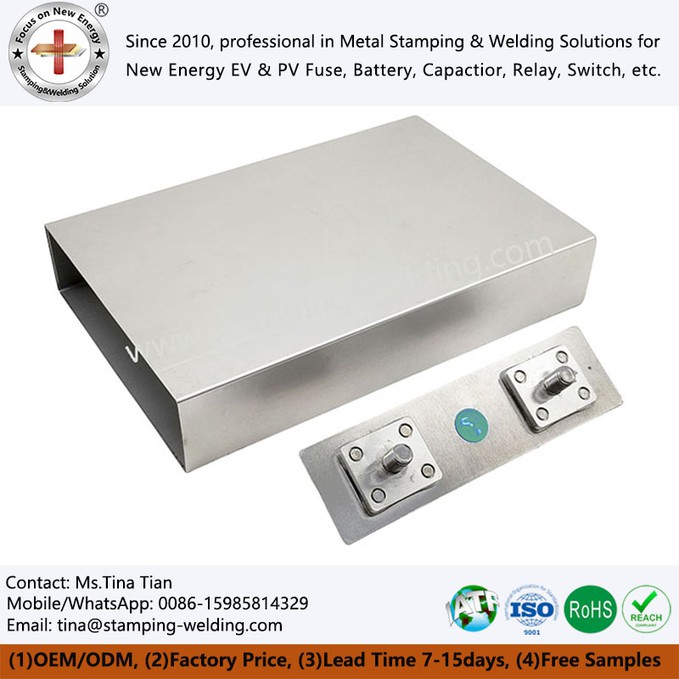
Types and Characteristics
(I) Diverse Materials and Types
Lithium-ion battery cover plates include Aluminum Cover Plates for Batteries. Taking advantage of aluminum's characteristics of low weight, good thermal conductivity, and relatively strong corrosion resistance, they meet the NEV's requirements for lightweight and thermal management. There are also Copper and Aluminum Bimetal Bipolar Plates, which balance conductivity, thermal conductivity, and corrosion resistance, facilitating the efficient progress of electrochemical reactions inside the battery. In addition, Lithium Battery Top Caps, Prismatic Lithium Battery Lids, Prismatic Lithium Battery Canopies, and top lids for prismatic battery cells are designed for the structure of prismatic lithium - ion batteries. They provide support for the regular shape of prismatic batteries, seal the battery cells, and ensure the stability of the internal environment. Different designs meet the integration requirements of different battery modules.
(II) Key Functional Characteristics
Power Battery Cover Plates and other cover plates are responsible for sealing the Top Lid For Prismatic Battery Cell, preventing the entry of external air and moisture, avoiding electrolyte leakage, and ensuring the stability of the internal electrochemical system of lithium - ion batteries under complex working conditions of NEVs (such as bumps, temperature changes, etc.). At the same time, the cover plates integrate conductive structures such as poles to realize the electric energy transmission between the battery and the external circuit. Their conductivity and connection reliability directly affect the charging and discharging efficiency of the battery and the power output of the whole vehicle. Some cover plates also incorporate designs such as safety valves. When the internal pressure of the battery is abnormal, they release the pressure to ensure battery safety, which is crucial for the thermal runaway protection of the NEV battery system.
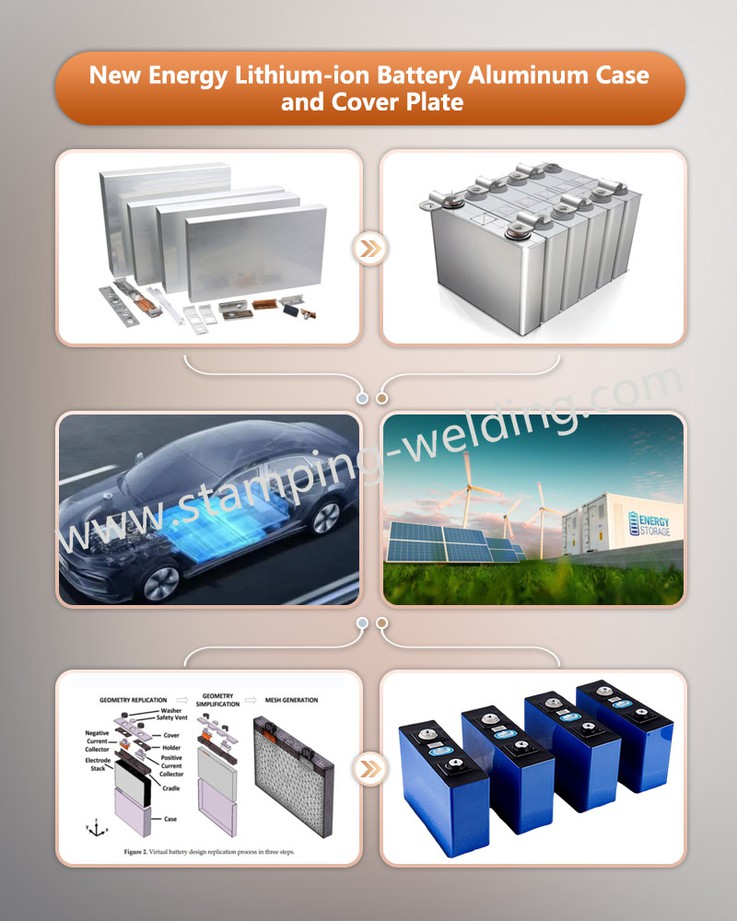
Roles in the NEV Battery System
Ensuring Battery Safety |
The NEV battery system has strict safety requirements. The sealing performance of lithium-ion battery cover plates (such as Lithium Battery Top Caps) is the basic line of defense. Good sealing can prevent the electrolyte from reacting with moisture and oxygen in the air, avoid cell corrosion and performance degradation, and also reduce the risk of thermal runaway. When the battery has an abnormal internal pressure change due to abnormal charging and discharging, external collision, etc., the safety structure (such as an explosion - proof valve) on the cover plate can release the pressure in time to prevent the battery from catching fire or exploding, protecting the whole vehicle and the safety of the passengers. |
Assisting Thermal Management |
Aluminum Cover Plates for Batteries and others, due to the good thermal conductivity of aluminum, can assist the battery thermal management system, conduct the heat generated by the cell operation to the cooling structure, maintain the appropriate operating temperature of the battery, and improve the battery cycle life and stability. In terms of electric energy transmission, the components such as poles integrated in Power Battery Cover Plates need to have low resistance and high reliability to ensure that the electric energy output by the battery is efficiently transmitted to the vehicle motor and other systems, so that the NEV has a timely power response and stable range performance. For example, Copper and Aluminum Bimetal Bipolar Plates optimize the electric energy conduction path in some high-end battery designs, reducing energy loss. |
Key Points of Production, Manufacturing, and Quality Control
(I) Production Equipment and Processes
In terms of production equipment, the production of lithium-ion battery cover plates will use professional injection molding, stamping, welding equipment, etc. (similar to the lithium-ion battery cover plate production equipment shown in the figure), to ensure the dimensional accuracy and structural integrity of the cover plates. In terms of processes, technologies such as In-mold Injection of poles are involved, so that the poles are firmly combined with the main body of the cover plate, improving the reliability of the conductive connection. For Prismatic Lithium Battery Lids and other prismatic battery cover plates, it is necessary to accurately control the stamping and forming processes to ensure the installation and sealing requirements of the Top Lid For Prismatic Battery Cell, and ensure the consistency of the battery module after integration.
(II) Quality Inspection Links
Quality control covers multi - dimensional inspections, such as OCP Test (Over - Current Protection Test), to inspect the protection performance of the integrated circuit on the cover plate under over - current conditions; Welding Inspection to ensure the welding quality between the cover plate components, avoiding virtual welding that affects conductivity and sealing; Tension & Pressure Test to verify the structural strength of the cover plate and the firmness of pole connection, etc. It ensures that the cover plate can withstand external forces such as vibration and impact during the use of the NEV, maintaining stable performance. Each link focuses on the product quality of Power Battery Cover Plates and other products, and the reliability of the battery system.

Industry Development Trends and Challenges
(I) Trend: Meeting the Demand for High Energy Density
With the NEV industry's pursuit of longer driving range, the development of high-energy-density batteries is inevitable, and lithium-ion battery cover plates need to meet this trend. For example, the research and development of lighter and high - strength Aluminum Cover Plates for Batteries can reduce the weight of the battery system while ensuring structural strength and sealing performance; Prismatic Lithium Battery Canopies and others are optimized for large - size Top Lid For Prismatic Battery Cell, helping battery modules integrate higher - energy - density cells and improving the vehicle's driving range. At the same time, intelligent integration is also a direction. The cover plates integrate more sensor interfaces, etc., providing hardware support for real-time battery status monitoring and intelligent thermal management.
(II) Challenges: Balancing Technology and Cost
On the one hand, under the requirements of high energy density and high safety, the research and development of new materials and the application of new processes for lithium-ion battery cover plates (such as Copper and Aluminum Bimetal Bipolar Plates) need to break through technical bottlenecks, ensuring performance while controlling costs. On the other hand, the fierce competition in the NEV market has transmitted the cost-reduction pressure to battery components. Cover plate manufacturing enterprises need to find a balance among the investment in high-end manufacturing equipment, quality control, and cost optimization. They also need to meet the customized requirements of different vehicle manufacturers and battery manufacturers, improving product adaptability and production flexibility.
In conclusion, lithium - ion battery cover plates (a series of products such as Power Battery Cover Plates) play a key role in the NEV battery system. From type characteristics to production applications, and then to industry development, they all focus on ensuring battery performance and promoting the progress of the NEV industry. Their technological iteration and quality improvement will continue to empower the safe and efficient operation of NEVs.
Contact Us


