Why Industrial Electrical Cabinets Are Critical for Heavy-Duty Machinery Protection
Sep 28, 2025
Products Description
In the demanding world of industrial manufacturing, mining, and heavy processing, machinery is the lifeblood of operations. These colossal systems, from hydraulic presses to conveyor networks and robotic assembly arms, represent significant capital investment and are crucial for productivity. However, their continuous, reliable function hinges on a component often overlooked: the industrial electrical cabinet. More than just a metal box, this enclosure is the central nervous system's armored fortress, playing an indispensable role in protecting the sensitive electronics that control powerful machinery.

Shielding Against Harsh Environmental Contaminants
Dust and Particulate Matter
Airborne abrasive particles like metal shavings, cement dust, or textile fibers can infiltrate unprotected electrical components. This leads to short circuits, insulation failure, and accelerated wear on contacts and circuit boards. Electrical cabinets, with IP (Ingress Protection) ratings like IP65 or higher, provide a sealed environment, ensuring that internal components remain clean and operational.
Moisture and Corrosion
In sectors like food processing, pulp and paper, or marine applications, humidity, splashing water, and corrosive agents are constant threats. Moisture can cause catastrophic short circuits and lead to rapid corrosion of copper tracks and component terminals. Sealed cabinets, often with internal climate control, prevent condensation and corrosion, safeguarding the integrity of the control system.
Chemical Exposure
Chemical plants and other settings with airborne solvents or acids require industrial electrical cabinets constructed from specialized, corrosion-resistant materials like stainless steel (e.g., SS 304 or 316) or coated carbon steel. This prevents the enclosure itself from degrading and breaching the protective seal.
Ensuring Electrical Integrity and Overload Protection
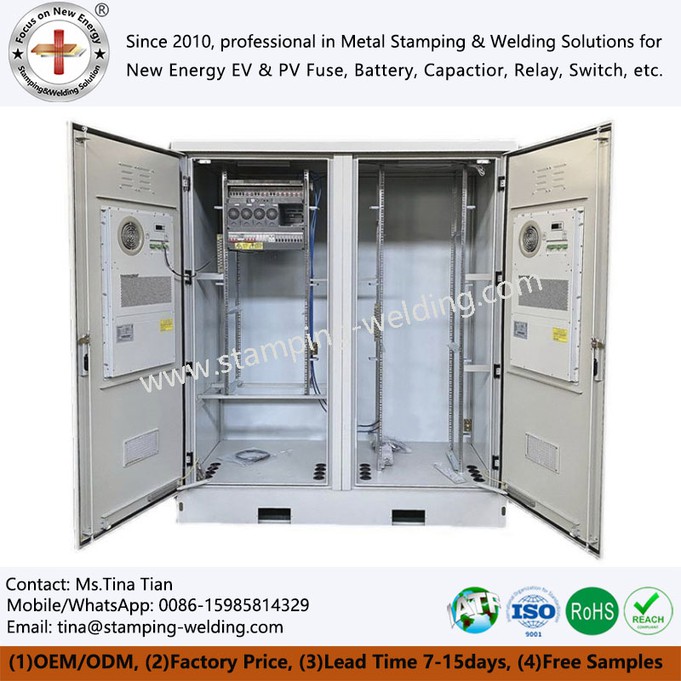
- Centralized Circuit Protection: electrical control cabinets house critical protection devices such as circuit breakers, fuses, and overload relays. These components are the first line of defense against electrical faults like short circuits and current overloads. By isolating a faulty circuit, they prevent damage from cascading through the entire control system, which could lead to motor burn-outs, damaged drives, and fire hazards.
- EMI and Noise Suppression: Heavy machinery, with its large motors and frequent switching of high inductive loads, generates significant electromagnetic interference (EMI). This electrical "noise" can disrupt the signals in sensitive PLCs (Programmable Logic Controllers), sensors, and communication networks, causing erratic behavior, data corruption, and unexpected downtime. Properly designed cabinets act as Faraday cages, shielding internal electronics from external EMI. Furthermore, they provide a structured way to organize wiring, separate power and data lines, and ground systems effectively, all of which minimize internal noise generation.
Mitigating Physical Impact and Tampering
The sheer scale of activity in a heavy-duty facility presents constant physical risks.
- Accidental Impact: Forklifts, moving equipment, and falling tools pose a significant threat to exposed electrical panels. Control panel cabinets, built from robust, thick-gauge steel, are engineered to withstand bumps and impacts that would easily destroy unprotected components.
- Unauthorized Access and Tampering: Safety and process integrity demand that critical controls are not accessible to unauthorized personnel. Lockable the doors prevent accidental or intentional interference with settings, which could lead to machine malfunction, product quality issues, or severe safety incidents. This centralized access also simplifies management for qualified technicians.

Facilitating Thermal Management and System Longevity
Electrical components generate heat. When concentrated in a confined space, this heat can drastically reduce the lifespan of semiconductors, capacitors, and other devices.
In control panels for heavy machinery, the density of heat-producing devices like Variable Frequency Drives (VFDs) and servo amplifiers is high. Without proper cooling, temperatures can exceed safe operating limits, leading to premature component failure. Industrial cabinets are equipped with thermal management solutions-from simple ventilation fans and filtered air vents for less harsh environments to advanced air-to-air heat exchangers or even air conditioning units for sealed cabinets in hot conditions. This controlled climate is vital for maximizing the Mean Time Between Failures (MTBF) of the entire control system.
Enhancing Serviceability and Organizational Efficiency
- Structured Organization: Control panel cabinets provide a standardized framework for mounting components-PLCs, drives, power supplies, and terminal blocks-in a logical, organized layout. Clear labeling and systematic wiring allow technicians to quickly identify and address issues, drastically reducing Mean Time To Repair (MTTR).
- Centralized Access: Instead of having control components scattered across a machine, a centralized boiler control unit gives service personnel a single, safe point of access for diagnostics, routine checks, and repairs, improving both efficiency and technician safety.

Contact us