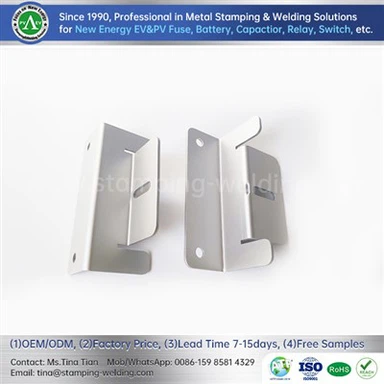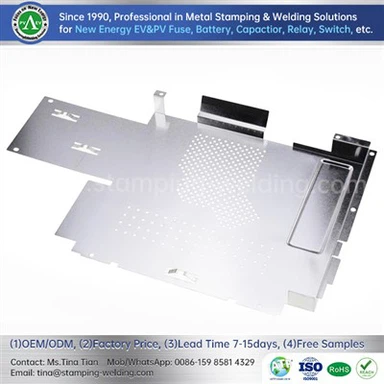


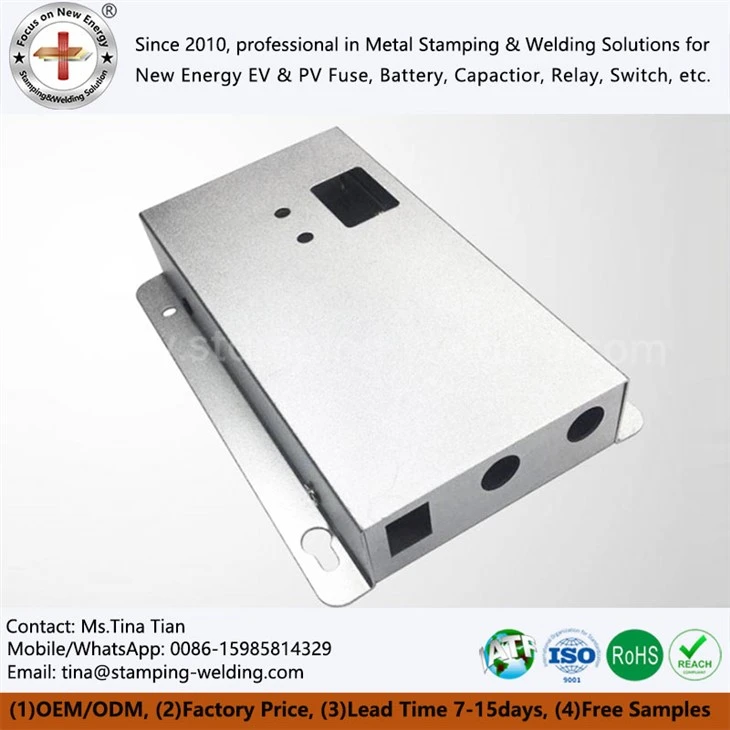
Aluminum Alloy Stamping Parts For Solar Energy
Aluminum alloy stamping parts are essential for the production of solar energy systems, providing lightweight, durable, and cost-effective solutions for panel frames and other components.
- Fast Delievery
- Quality Assurance
- 24/7 Customer Service
Product Introduction
PRODUCT DESCRIPTION
Aluminum Alloy Stamping Parts For Solar Energy are essential for the production of solar energy systems, providing lightweight, durable, and cost-effective solutions for panel frames and other components.

PRODUCT FUNCTIONS
- Frame Support: Aluminum alloy stamping parts are commonly used to construct the frame of solar energy panels, providing structural support and stability. The stamped parts are typically strong and lightweight, enabling easy installation and transportation.
- Heat dissipation: Aluminum has good heat conductivity, enabling stamped parts to provide efficient heat dissipation for solar energy panels, keeping the panels cool during operation.
- Electrical conduction: Aluminum alloy stamping parts may also serve as electrical conductors, providing a conductive path for the flow of electrical current generated by the solar energy panels.
- UV protection: Aluminum alloy stamping parts help to protect the solar energy panel from UV radiation, reducing the panel's aging and degradation, ensuring longevity and reliable performance.
- Easy installation: The stamped parts are designed for easy installation and attachment to other components of the solar energy system, simplifying the installation process and reducing labor costs.
- Corrosion resistance: Aluminum alloy stamping parts are resistant to corrosion, enabling them to withstand outdoor environments where solar energy panels are typically installed.
- Cost-effectiveness: The use of Aluminum Alloy Stamping Parts For Solar Energy can provide cost-effective solutions for solar energy systems, as the manufacturing process is typically efficient and the materials are relatively low-cost compared to other metals.

PRODUCT MATERIALS
- Characteristics:
Corrosion Resistance: One of the most notable features of 5052 aluminum is its exceptional resistance to corrosion, even in marine and harsh environments. This makes it an ideal choice for components exposed to moisture and corrosive substances.
Formability: 5052 aluminum alloy has good formability and can be easily shaped, bent, or formed without cracking or weakening. This characteristic makes it suitable for complex and intricate designs in various industries.
Weldability: It exhibits excellent weldability, allowing for strong and reliable joints to be created through various welding methods, including MIG and TIG welding.
High Fatigue Strength: 5052 aluminum has relatively high fatigue strength, making it suitable for applications subject to repetitive stress and vibration, such as marine structures and vehicle components.
Good Ductility: This alloy offers good ductility, allowing it to be stretched or drawn into various shapes and sizes without losing its structural integrity.
Excellent Surface Finish: 5052 aluminum alloy can be easily finished to achieve a smooth and attractive surface, making it suitable for applications where aesthetics are important.
- Advantages:
Versatility: The versatility of 5052 aluminum makes it suitable for a wide range of applications across industries, including automotive, marine, aerospace, architectural, and electronic components.
Lightweight: As an aluminum alloy, 5052 is lightweight, which is advantageous in applications where weight savings are important, such as in transportation and aerospace.
Cost-Effective: It is cost-effective compared to some other high-strength alloys, making it an attractive choice for manufacturers looking to balance performance and affordability.
Durability: Its resistance to corrosion and its ability to maintain structural integrity in harsh environments contribute to its long-lasting durability.
Recyclability: Like all aluminum alloys, 5052 is fully recyclable, making it an environmentally friendly choice.
Machinability: It can be easily machined and processed, allowing for efficient manufacturing processes.
Non-Toxic: 5052 aluminum is non-toxic, making it suitable for applications in the food and beverage industry and medical devices.

PROCESSING TECHNOLOGY
- Aluminum Alloy Selection: The first step is to select the appropriate aluminum alloy for the stamping parts. The alloy chosen should have good formability, strength, and corrosion resistance, depending on the application requirements. Commonly used aluminum alloys for solar energy applications include 6063, 6061, and 5052.
- Sheet Metal Processing: The aluminum alloy sheet metal is prepared for stamping by undergoinp operations such as cutting, blanking, and bending to obtain the desired shape and size of the stamping parts.
- Stamping: The stamping operation involves placing the aluminum alloy sheet metal into a stamping press and applying pressure to form the desired shape. The stamping process can be performed using different techniques, such as single-stage stamping or transfer stamping, depending on the complexity of the shape and the production volume.
- Heat Treatment: After stamping, the aluminum alloy parts may undergo heat treatment to improve their mechanical properties and corrosion resistance. Heat treatment typically involves heating the parts to a temperature just below the solidus temperature of the aluminum alloy, followed by rapid cooling.
- Surface Finishing: The aluminum alloy stamping parts then undergo surface finishing operations to remove any remaining burrs or roughness and ensure a smooth finish. This may involve deburring, polishing, or other processes that enhance the appearance and smoothness of the parts.
- Assembly: Finally, the aluminum alloy stamping parts are assembled into solar energy systems. Assembly typically involves joining the stamped parts to other components using fasteners, welding, or other joining methods to create complete solar energy systems.
CONTACT US

Hot Tags: aluminum alloy stamping parts for solar energy, China, manufacturers, suppliers, factory