

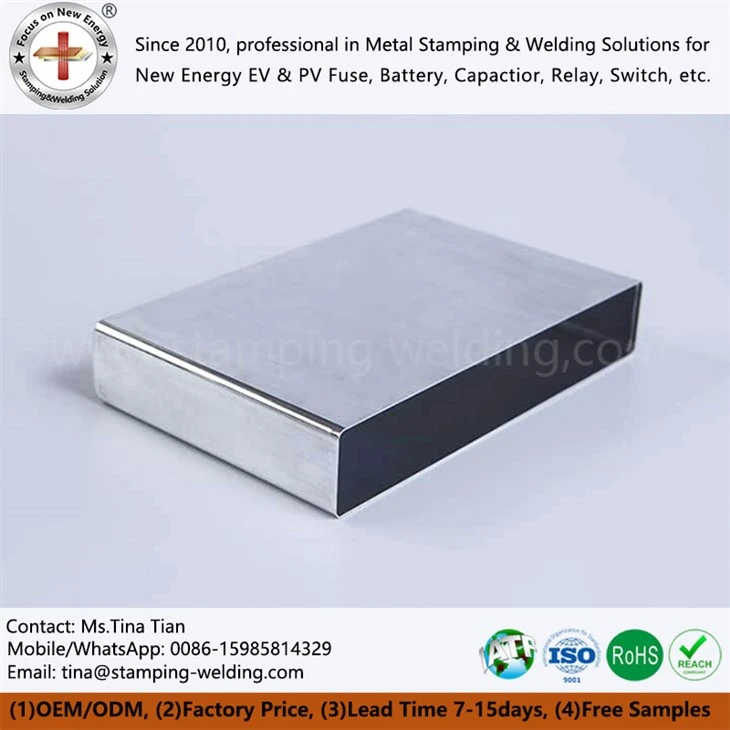
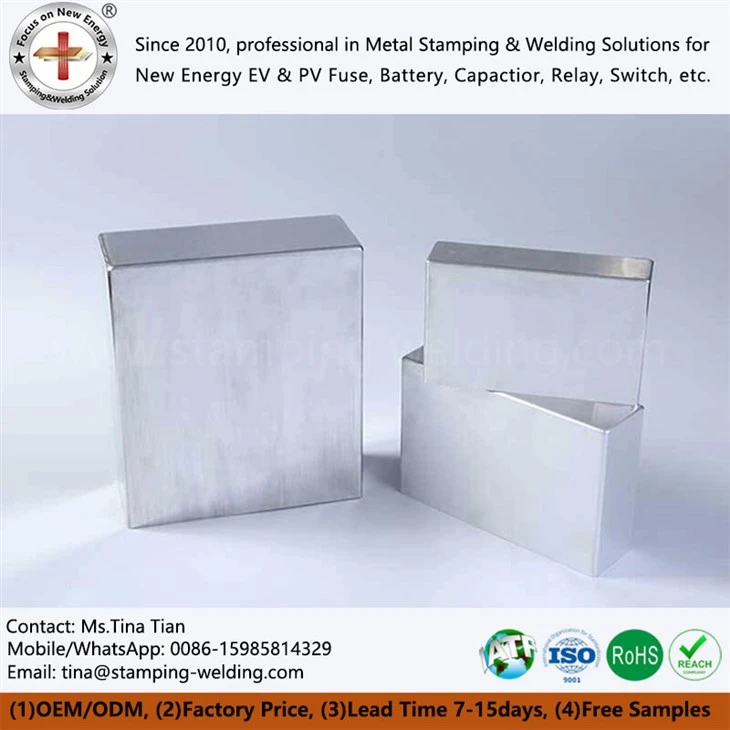
Lto Lithium Battery Aluminum Housing
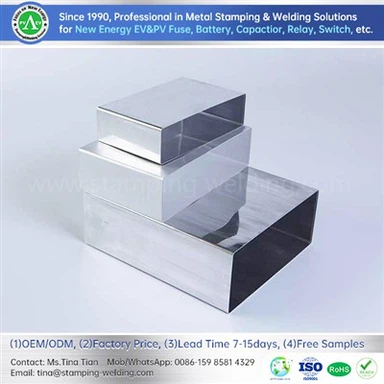
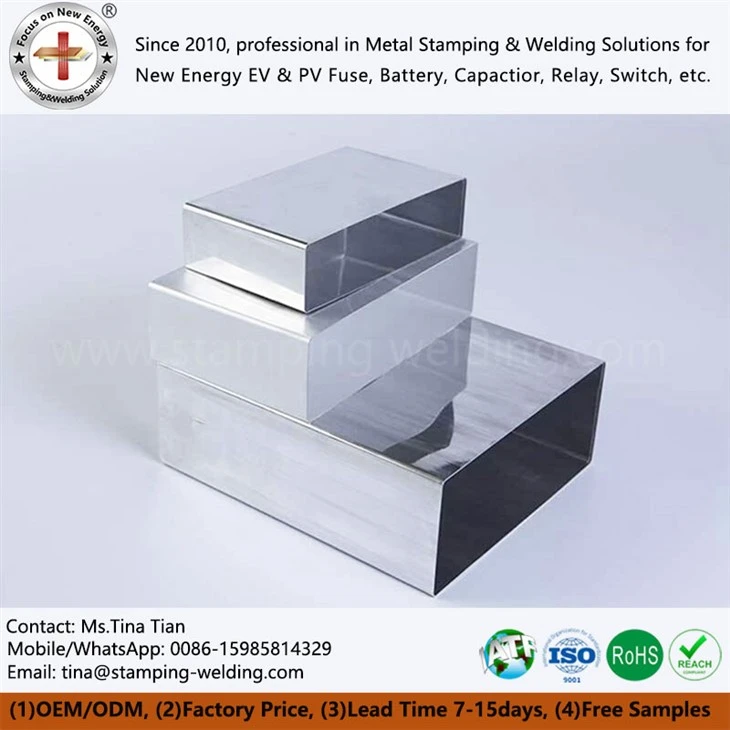
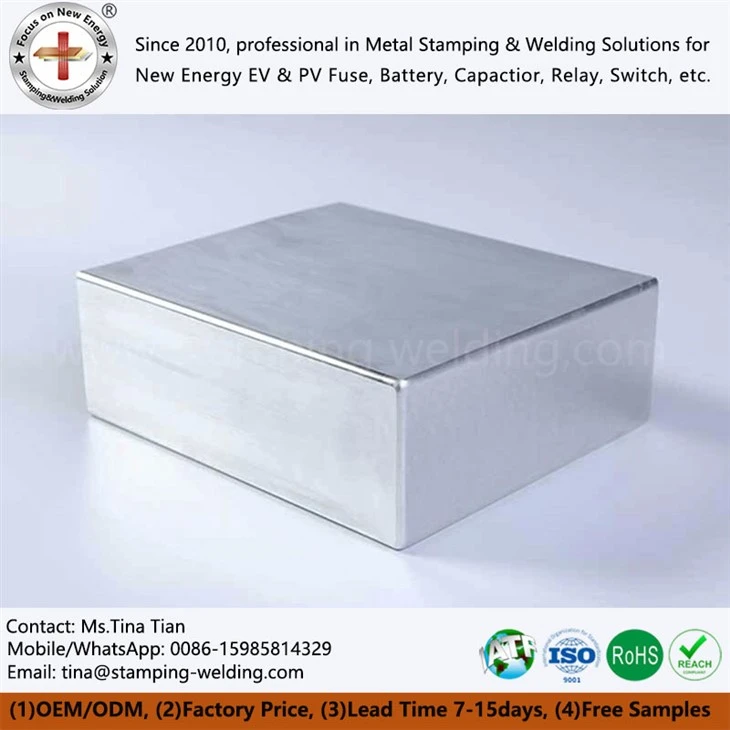
The LTO lithium battery aluminum housing is a structural component designed for prismatic lithium titanate (LTO) cells, serving to provide external mechanical protection and an enclosure for the cell. Compared to cylindrical battery casings, prismatic aluminum housings create a regular rectangular internal space tailored to the cell's dimensions, facilitating cell arrangement, module integration, and efficient system-level space utilization. For LTO batteries, the housing is far more than a simple "metal container." Factors such as casing dimensions, bottom forming, wall thickness distribution, opening flatness, corner transitions, and the interface with the cover plate all impact subsequent cell assembly and encapsulation processes. Consequently, the manufacturing of LTO battery aluminum housings focuses not only on material selection but—crucially—on deep-drawing die design, continuous forming control, dimensional stability, and the quality of post-process cleaning.
- Fast Delievery
- Quality Assurance
- 24/7 Customer Service
Product Introduction
The aluminum housing for LTO lithium batteries primarily consists of a prismatic casing body and a matching cover plate assembly; the specific configuration can be adjusted based on the cell design.
The casing performs several core functions:
Providing stable external mechanical protection for the electrode assembly;
Establishing a uniform and consistent internal cell space;
Mitigating the impact of external mechanical forces during transport, assembly, and operation;
Providing a stable interface for subsequent cover plate welding and sealing;
Facilitating compact arrangement within modules and battery packs, aligned with the cell dimensions.
The prismatic structure is particularly well-suited for battery systems requiring high space utilization. From an engineering procurement perspective, the key factors to consider are not merely the nominal external dimensions, but rather the dimensional tolerances, forming consistency, condition of the opening, bottom flatness, and the fit with the cover plate.

Aluminum Case for Primary Lithium Iron Battery LiFeS2 Design Advantages: Centered on "Durability" and "Internal Pressure"
Bulge-Resistance Design
Utilizes variable wall thickness, local stiffening ribs, and large radii at the bottom and sidewalls to enhance overall resistance to internal pressure-induced deformation while controlling weight; this suppresses casing bulging and dimensional drift caused by long-term gas expansion.
01
Internal Pressure Management and Directed Venting
The placement, orientation, and opening threshold of the explosion-proof structure are co-designed with the system's pressure relief channels to ensure abnormal internal pressure is released along a preset path, while preventing premature activation due to fatigue under sustained slight positive pressure.
02
Long-Life Sealing Design
Flatness and roughness specifications for the casing opening's welding surface are integrated with laser welding parameters to ensure continuous weld penetration and a dense microstructure, thereby mitigating leakage risks associated with long-term vibration and creep.
03
High-Rate Thermal Management Interface
Bottom-surface flatness and roughness determine the quality of contact with thermal pads or liquid cooling interfaces, directly influencing interfacial thermal resistance and temperature uniformity.
04
Potential Management and Insulation
Blue film, insulating coatings, and casing potential design ensure adequate creepage distance and dielectric strength, while preventing galvanic corrosion between the cell and pack-level structural components.
05

lithium prismatic cells Aluminum shell Technical Features: Four key capabilities, each individually verifiable
Thermal Management
Liquid cooling channels can be integrated into the profile base frame or a separate channel plate; sealing is achieved via brazing or friction stir welding, followed by independent pressure and flow testing. Air-cooling solutions rely on precise inlet/outlet ducting and flow distribution designs.
Sealing and Protection
Sealing surfaces are continuously machined to ensure flatness, with smooth corner transitions to prevent adhesive discontinuity. Post-assembly, leak testing is conducted using differential pressure or helium mass spectrometry methods based on project specifications, with test values recorded for every unit.
Stiffness and Modal Characteristics
Bending and torsional modal frequencies are enhanced through cross-sectional stiffening and connection point optimization to avoid excitation frequency ranges of the vehicle or equipment-a critical factor for automotive and mobile applications.
Cleanliness and Foreign Object Control
Internal burrs, particles, and moisture pose safety risks to battery cells. All through-holes undergo deburring and chamfering, followed by ultrasonic cleaning and drying before shipment; endoscopic inspections are performed on a sampling basis, with records retained.

Frequently Asked Questions for LFP prismatic cells Aluminum shell
Can the housing accommodate the high heat flux and wide-temperature-range cycling characteristic of LTO batteries?
-
Yes. By analyzing thermal cycling profiles and expansion characteristics, we optimize thermal paths and structural margins to support high-frequency operational cycles.
How are dimensional stability and sealing performance maintained during long-term cycling?
-
We mitigate the risk of drift under repeated thermo-mechanical loads through the selection of creep-resistant materials, controlled molding processes, and precision control of sealing surfaces.
Does the design facilitate ongoing condition monitoring and localized maintenance?
-
Sensor and inspection interfaces can be integrated during the design phase to support predictive maintenance and rapid replacement strategies.
How does mass-production consistency support long-life project validation?
-
We ensure the stability of critical dimensions and surface conditions during mass production through batch traceability, dedicated inspection tooling, and verified process capabilities.
How is the impact on durability validation managed during engineering changes or specification adjustments?
-
Changes require a simultaneous assessment of molds, inspection tooling, and the scope of thermo-mechanical validation to ensure that process repeatability is maintained.

contact us
If you are developing LTO prismatic cells, you need more than just aluminum alloy casing samples; you require a comprehensive engineering and manufacturing solution-covering everything from materials and tooling to deep-drawing processes and stable mass-production quality control. We invite you to submit your drawings or product specifications to discuss the details further with our engineering team.

Power battery aluminum shells usually use a variety of processing methods such as deep drawing, stamping, and forming to achieve complex structural designs. In the entire processing process of the aluminum battery shell, we strictly perform fine operations and strict control at every step to ensure that the quality and performance of the final aluminum shell meet the requirements.
Hot Tags: LTO lithium battery aluminum housing, LTO battery case, prismatic lithium battery aluminum housing, aluminum battery case