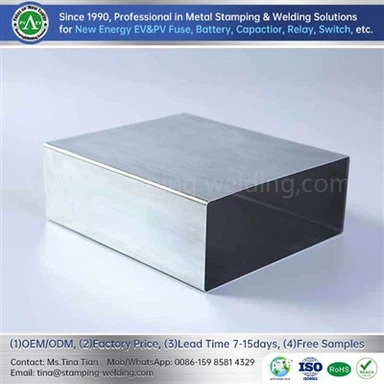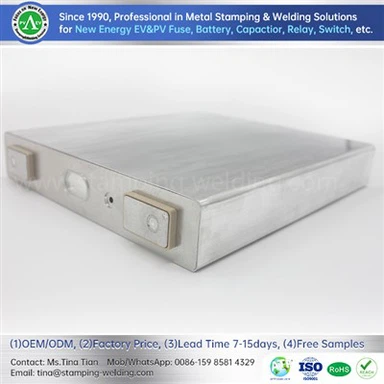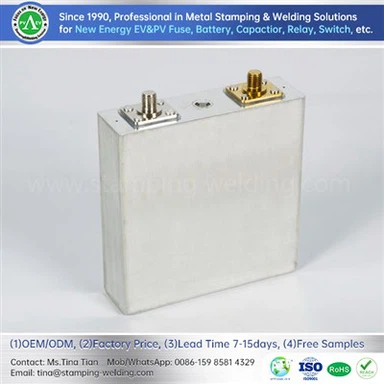


Packs Aluminum Housing
The Packs Aluminum Housing is a structural casing designed for prismatic lithium-ion batteries, power batteries, and energy storage cells; it primarily provides mechanical protection for internal components, spatial positioning, sealing interfaces, and thermal management support. To meet the requirements of EV power batteries and ESS energy storage cells regarding lightweight design, structural stability, and long-term reliability, the housing is manufactured using aluminum alloys suitable for battery casing applications through processes such as deep drawing, stamping, sizing, precision trimming, welding, and surface treatment. For designs requiring laser sealing with a cover plate, the flatness of the housing's open end, dimensional consistency, and edge quality directly impact the subsequent welding quality and sealing performance.
- Fast Delievery
- Quality Assurance
- 24/7 Customer Service
Product Introduction
What is a Packs Aluminum Housing?
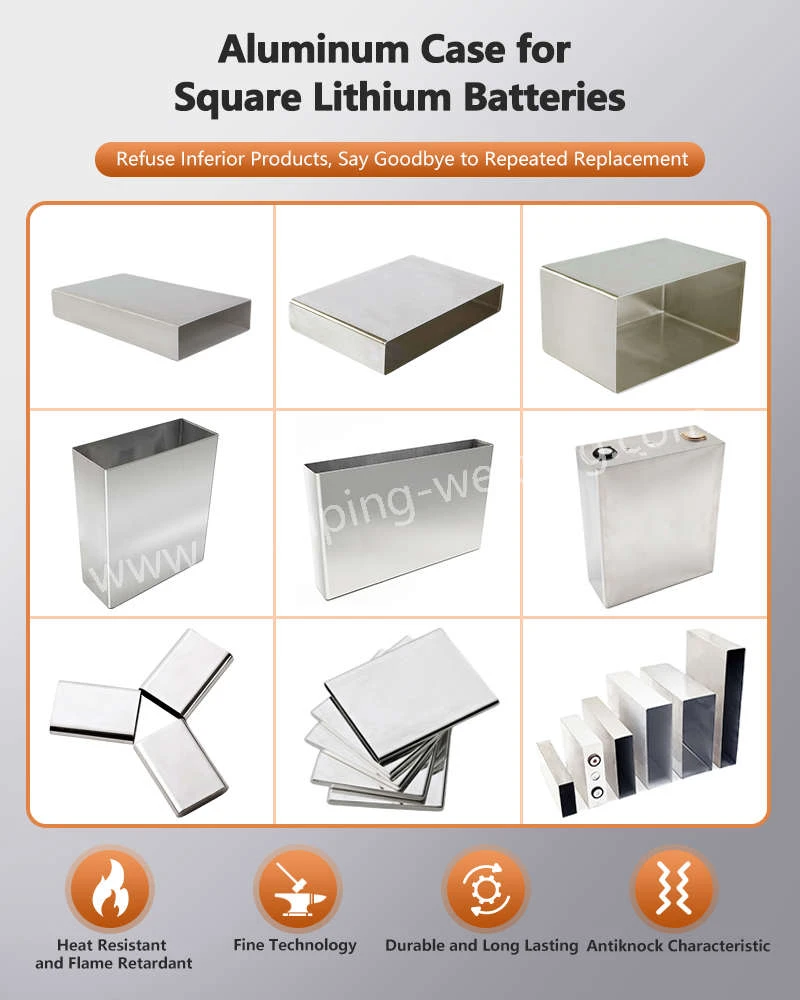
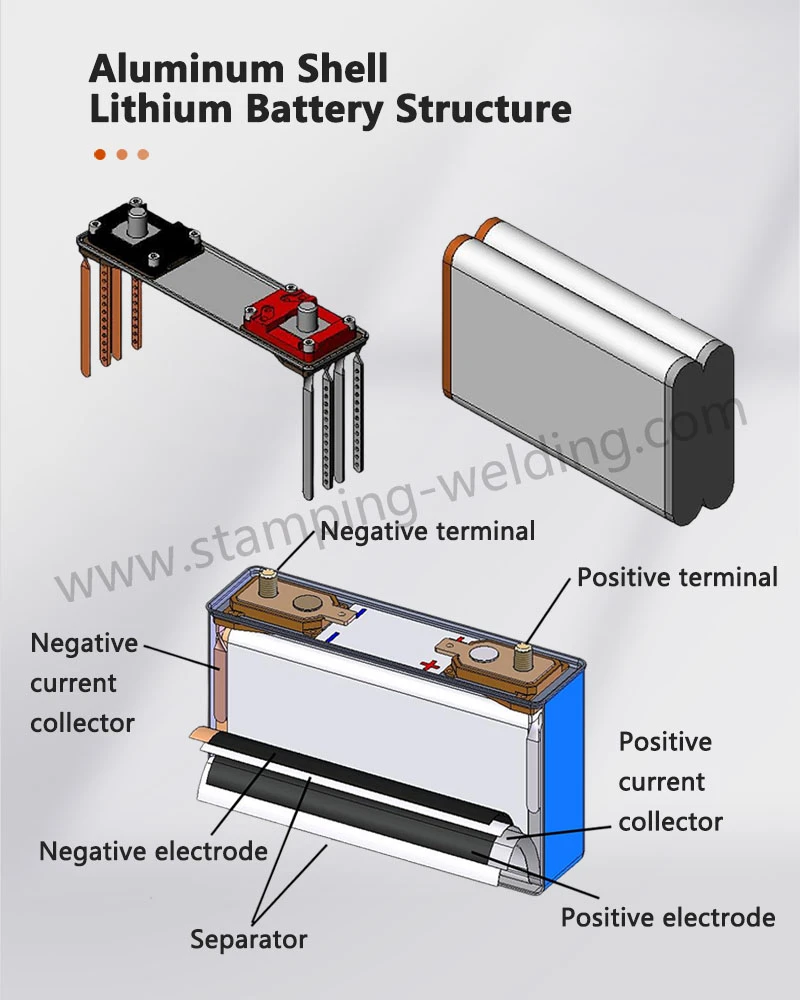
Aluminum alloy housings for prismatic lithium batteries typically consist of a main body and a mating cover plate section. Depending on the specific requirements of the battery cell structure, provisions may also be made for terminals, electrolyte filling ports, safety pressure-relief mechanisms, and positioning features.
Key structural elements include:
Aluminum Battery Housing - Main body of the prismatic cell
Top Cover Interface - Connection area between the housing and the cover plate
Sealing Edge - Area for laser welding and sealing
Terminal Position - Mounting area for positive and negative terminals
Vent / Safety Area - Designated area for the safety pressure-relief mechanism
Positioning Features - Structures for positioning during module assembly
Reinforcement Area - Localized reinforced zones designed to meet structural load requirements
This structural design integrates considerations for cell protection, sealing, assembly, and downstream battery pack integration, rather than focusing solely on the dimensional forming of the housing.

Manufacturing Advantages and Production Processes: From Aluminum Ingots to Airtight Housings
The manufacturing precision and consistency of aluminum alloy housings directly determine the assembly quality and long-term reliability of the battery pack. Our production workflow encompasses the following key stages:
Aluminum Profile Extrusion
High-quality aluminum billets are extruded through dies to form profiles. The uniformity of wall thickness, flatness, and internal microstructural density of the profiles serve as the foundation for subsequent processing.
Precision CNC Machining
After cutting, the profiles undergo CNC machining to create features such as end-face milling, sealing grooves, mounting holes, threaded holes, and explosion-proof valve interfaces. Cutting parameters and cooling are strictly controlled during machining to prevent deformation and burr formation.
Welding and Joining
Depending on structural requirements, friction welding, laser welding, or TIG welding is used to join end plates and base plates to the profiles. Welding processes undergo parameter validation to ensure weld integrity and strength.
Surface Treatment
Processes such as anodizing, conductive oxidation, sandblasting, or powder coating are selected based on functional requirements. Degreasing and oxide layer removal are performed prior to surface treatment to ensure coating adhesion and uniformity.
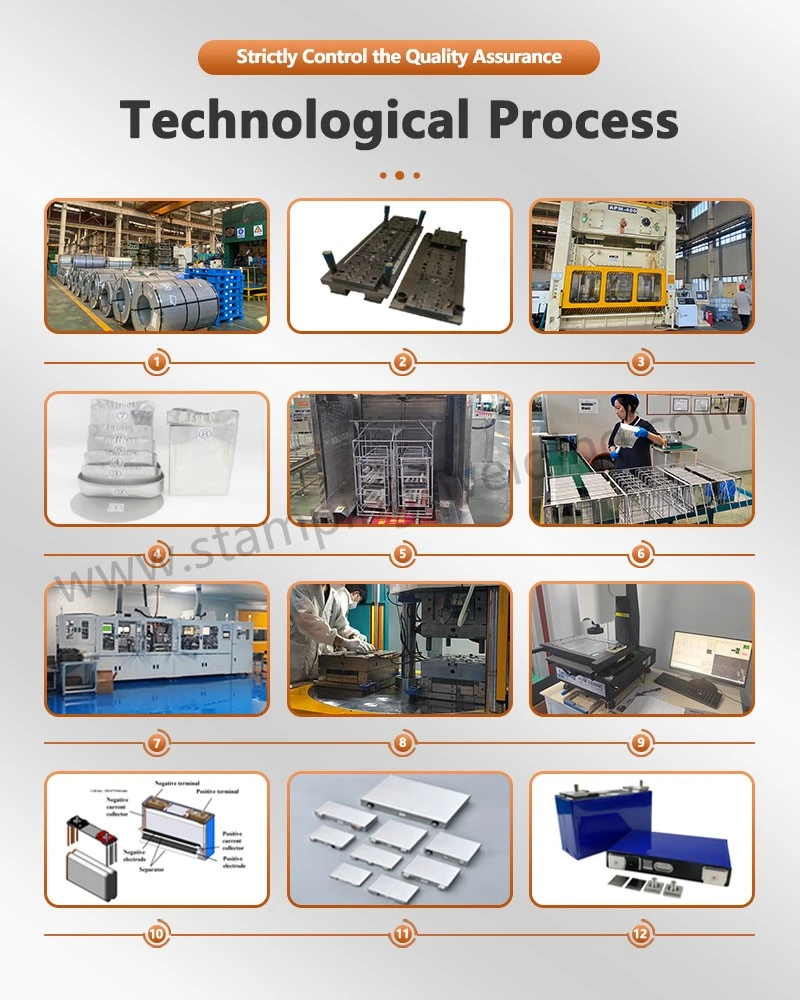
Design Advantage: Integrating the housing into the system rather than treating it as an obstacle
| Integrated Cover Plate Functionality | The cover plate can feature pre-configured mounting points for terminals, explosion-proof pressure relief zones, electrolyte filling ports, and sensor wiring apertures, thereby reducing the need for secondary processing by the customer and streamlining the assembly chain. |
| Expansion Allowance | To accommodate changes in cell thickness during long-term cycling, module side plates and end plates can incorporate elastic compensation structures or compression clearance, preventing cell swelling damage caused by rigid constraints. |
| Assembly-Friendly Design | Features such as chamfered openings, positioning bosses, and error-proofing (poka-yoke) elements ensure precise cell insertion and module stacking in a single step, minimizing manual assembly errors and handling damage. |
| Defined Pressure Relief Path | The orientation of explosion-proof zones and the clearance for venting are confirmed with the customer during the design phase to ensure functionality is not compromised by obstruction from adjacent components after assembly. |
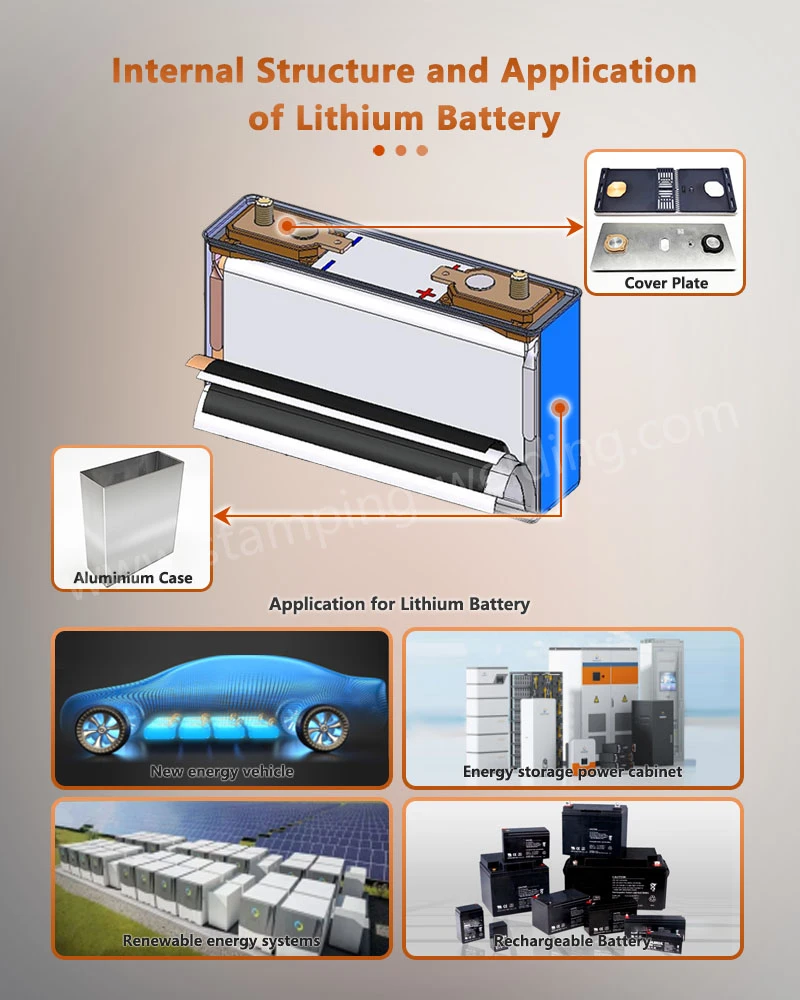
Application-Specific Selection Criteria
New Energy Vehicle (NEV) Power Batteries
Stringent requirements regarding vibration, mechanical shock, and thermal runaway propagation; priorities include casing rigidity, burst pressure, pressure relief consistency, and weld reliability, with validation aligned to standards such as GB 38031 and UN 38.3.
Energy Storage Cells (Large-Capacity Prismatic)
Demands for long service life and large dimensions, alongside long-term static stacking; priorities include dimensional consistency, wall thickness uniformity, long-term airtightness, and resistance to electrolyte corrosion.
Small-Scale Motive Power and Light Electric Vehicles
High sensitivity to delivery schedules and costs; requires compatibility with standardized dimensions, readily available inventory, and rapid production line changeovers.
Specialized Applications
Exposure to combined stressors such as corrosion, vibration, and extreme temperature fluctuations; necessitates upgraded material specifications, enhanced coating systems, and more rigorous validation protocols.
Frequently Asked Questions
1. What materials are typically used for aluminum battery pack housings?
-
Common options include aluminum alloys such as Al 3003 and Al 5052. The specific material is selected based on factors like forming depth, mechanical properties, corrosion resistance requirements, and welding methods; Al 3003, in particular, is well-suited for deep-drawn prismatic battery housings.
2. Can prismatic aluminum battery housings be customized to specific dimensions?
-
Yes. Dimensions such as length, width, height, wall thickness, opening size, corner radii, positioning features, and specific hole locations can all be customized (OEM) to match the client's battery cell design.
3. What manufacturing processes are used for aluminum battery housings?
-
Depending on the housing structure and production volume, a combination of processes-such as deep drawing, stamping, sizing, precision trimming, CNC machining, and laser welding-may be employed. Deep drawing is the standard manufacturing method for integrated prismatic housings.
4. How is the sealing performance of the aluminum battery housing ensured?
-
Sealing performance depends not only on the final welding process but also on the flatness of the housing opening, edge condition, fit with the cover plate, and laser welding parameters. Consequently, strict dimensional and process controls are required throughout the entire workflow, from forming and trimming to welding.
5. Do you offer OEM/ODM development services for battery housings?
-
Yes. Clients can provide 2D drawings or 3D CAD data. We evaluate the product structure to determine the appropriate materials, forming methods, tooling designs, manufacturing processes, and mass production feasibility, providing support for both prototyping and volume production stages.
contact us
For new projects, we recommend that procurement and engineering teams provide 2D drawings, 3D CAD models, material specifications, target production volumes, and application details simultaneously during the inquiry stage; this enables a more accurate assessment of materials, manufacturing processes, and mass production feasibility.
If your project requires a balance of dimensional consistency, forming stability, and welding reliability for battery housings, we can provide customized OEM solutions-focusing on engineering design and manufacturing processes-rather than simply competing on low price.
Hot Tags: Packs Aluminum Housing, Aluminum Battery Housing, Prismatic Lithium Battery Aluminum Case, Prismatic Battery Case, Lithium Battery Aluminum Housing, Aluminum Battery Case