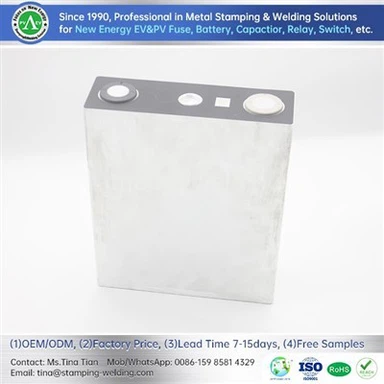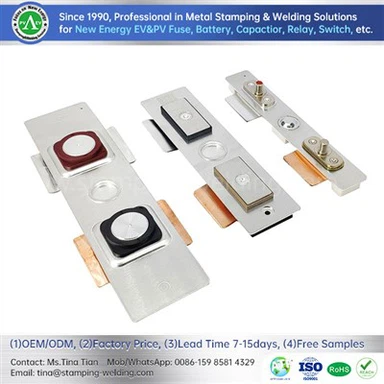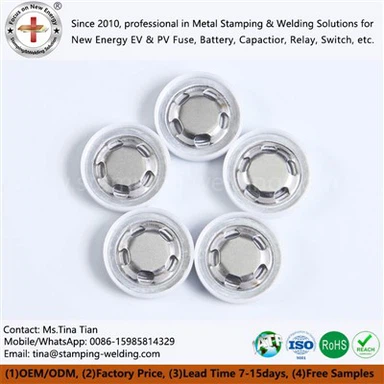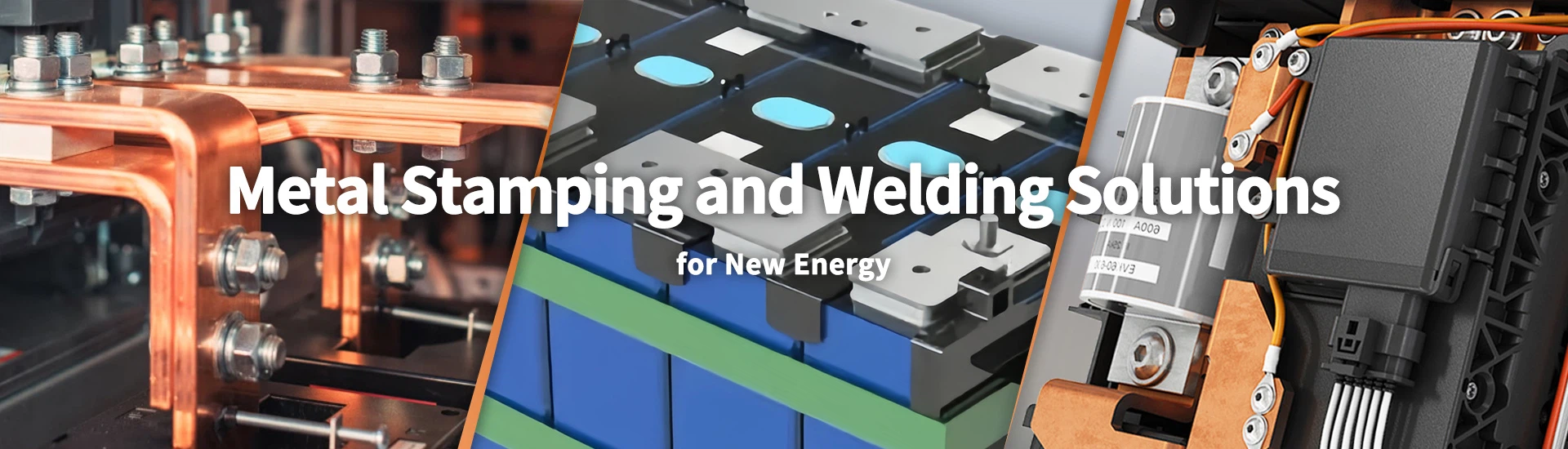
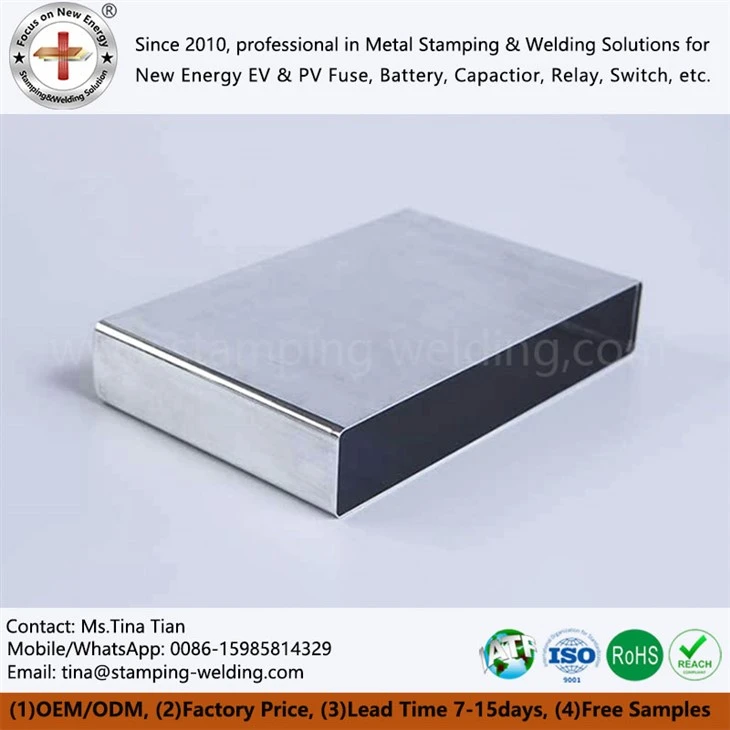

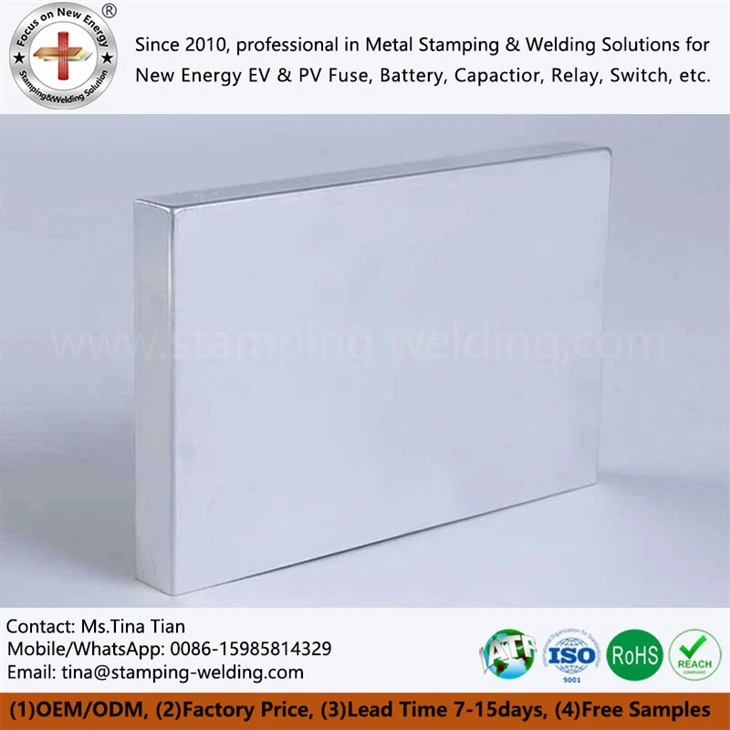
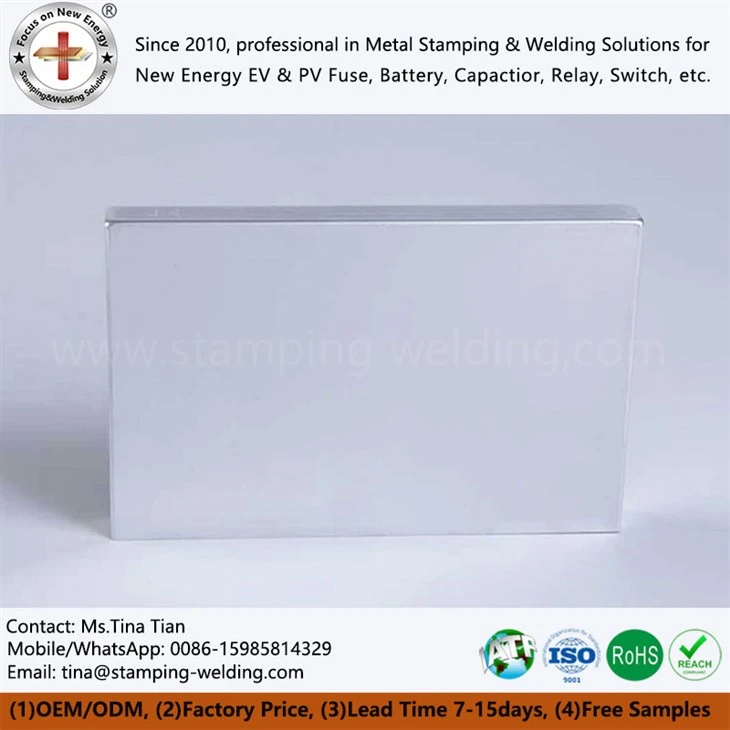
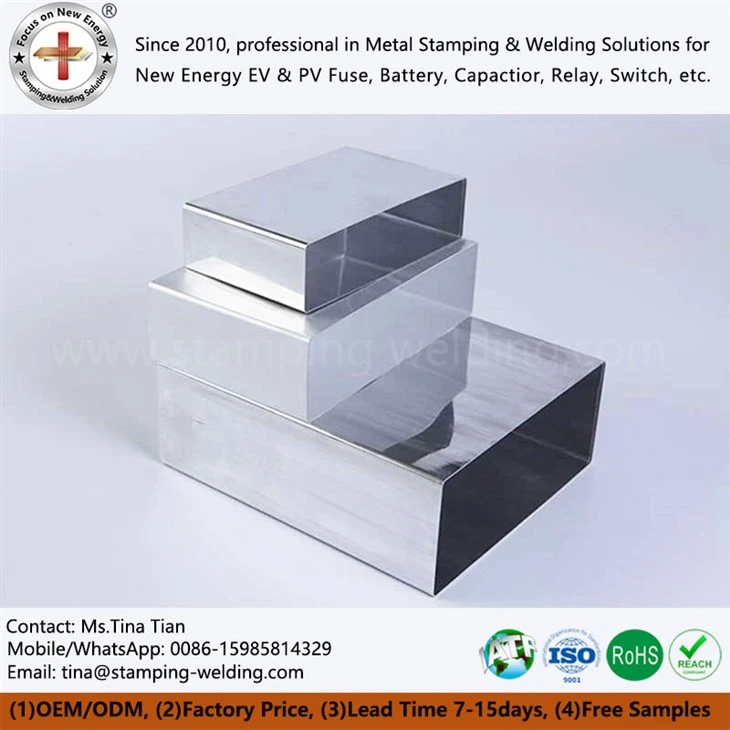
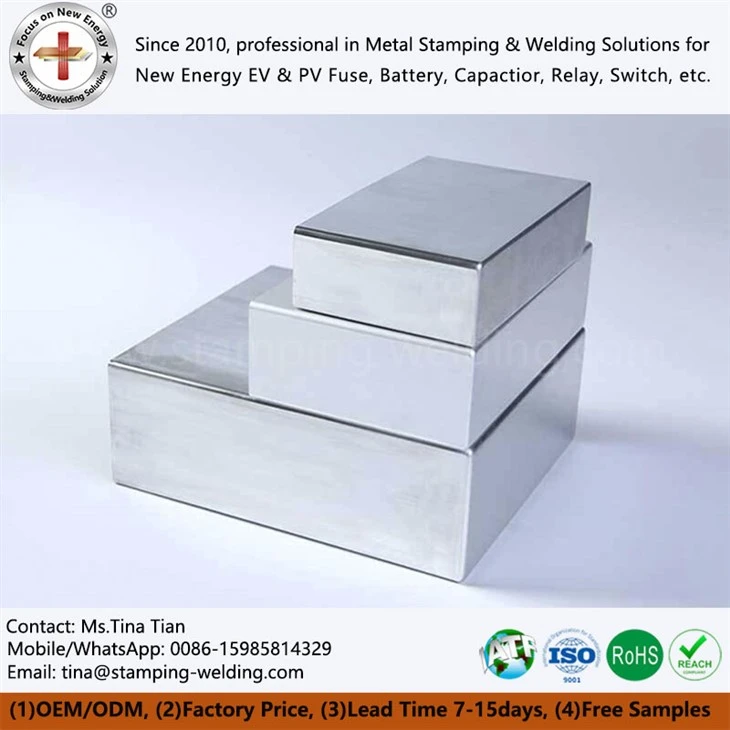
Prismatic Lithium Ion Battery Aluminum Shell
The Prismatic Lithium Ion Battery Aluminum Shell is a core structural component of the battery cell assembly. Far more than a simple protective shell, it serves multiple functions, including housing the internal cell, providing mechanical support, facilitating heat conduction, isolating the cell from the external environment, and interfacing with the cover plate during subsequent welding processes. Catering to the sectors of new energy vehicle (NEV) power batteries, energy storage systems, and industrial power supplies, Xiamen Apollo offers prismatic aluminum shells that are custom-developed based on specific cell dimensions, structural designs, and assembly requirements. Manufactured primarily from aluminum alloy sheet, these shells are formed through a series of processes—including precision stamping, deep drawing, shaping, trimming, punching, and subsequent precision machining—to create a stable prismatic structure, supporting OEM/ODM development tailored to the client's specific cells, cover plates, and encapsulation processes.
- Fast Delievery
- Quality Assurance
- 24/7 Customer Service
Product Introduction
This aluminum casing for prismatic lithium-ion batteries is a precision component designed for structural stability and functional performance. Its core function is to counteract the physical deformation and stress-induced degradation that occur during the battery cell's charge-discharge cycles through optimized structural design.
The product boasts four unique core features that create a distinct competitive advantage over standard aluminum casings, steel casings, and pouch-cell structures. First, it features stress-adaptive dissipation: a heterogeneous structural design disperses the expansion stress of the cell, preventing the bulging and cracking caused by stress concentration at the casing corners, thereby supporting long-cycle operations. Second, it ensures long-term sealing stability: the flatness and perpendicularity of the casing opening are precision-engineered to maintain a secure seal over time, preventing seal failure caused by operational vibrations or temperature fluctuations. Third, it offers broad operational compatibility: balancing lightweight design with structural toughness, it meets the lightweighting requirements for electric vehicles while also withstanding the long-term static pressure loads typical of energy storage power stations. Fourth, it exhibits electrochemical inertness and stability: the material does not release active substances or interfere with the cell's electrolyte system, ensuring the stability of the internal electrochemical environment throughout the product's lifecycle.

Battery Pack With Aluminum Housing Technical features: Five "time dimensions" engineering variables
Respiratory fatigue and corner stress concentration
The stress concentration of the rolled pole group is obvious at the corners, and the rounded R design is too small and can easily become a source of fatigue; the laminated pole group expands more uniformly, but puts forward higher requirements for the anti-bulging stiffness of the large surface.
01
Stiffness window, not higher is better
If the shell is too soft, the large surface will bulge under the expansion force, causing the liquid cooling contact thermal resistance to increase and the module size to be out of tolerance; if the shell is too hard, the expansion force will be completely transmitted back to the pole piece, which may compress the porosity of the separator, induce uneven distribution of electrolyte, and even risk lithium precipitation.
02
Creep and clamping force attenuation
Aluminum materials and buffer components will undergo creep under long-term compression, and the preload force will slowly decay, manifesting as an increase in contact thermal resistance and fretting wear under vibration conditions. It is necessary to reserve compensation for creep during the design stage, rather than just meeting the initial preload.
03
Flatness drifts after cycling
The factory flatness is qualified, but it does not mean that it will still be qualified after a thousand cycles. The really valuable metric is "flatness retention after cycling" - this determines whether the liquid cooling interface is still effective during the middle and later stages of its life.
04
Inner wall interface stability
The shell is at the positive electrode potential, and the inner wall passivation film and functional coating need to be stable for a long time under the combined action of electrolyte, temperature, and potential to inhibit lithium corrosion of aluminum and micro short circuits induced by metal foreign matter.
05

LiFePO4 Soft Pack Cell Design Advantage: Engineered for "Geometry of the Future"
Reinforcing Ribs on Large Surfaces
Enhances resistance to bulging deformation through localized ribbing or micro-structures, suppressing outward bulging without significant weight gain.
Equal-Strength Wall Thickness Gradient
Optimizes thickness gradients across the bottom, sidewalls, and opening based on stress distribution, eliminating unnecessary weight associated with uniform over-thickening.
Fillet and Corner Strategy
Employs larger fillet transitions and localized reinforcement for winding processes, while prioritizing overall flexural rigidity for lamination processes.
Controlled, Safe Failure Mode
Coordinates the casing burst pressure with the safety valve opening pressure to ensure the valve opens before the casing ruptures.

Frequently Asked Questions for Prismatic Cell Case
1. What material is commonly used for prismatic lithium battery aluminum casings?
-
The 3003 series aluminum alloy is a common choice for prismatic lithium battery casings due to its excellent formability, corrosion resistance, thermal conductivity, and overall mechanical properties. The specific material grade should be validated based on the battery cell structure, forming process, and welding requirements.
2. Can the aluminum casing be customized to our battery cell design?
-
Yes. We can develop custom prismatic aluminum casings based on customer-provided 2D engineering drawings, 3D models, or cell dimensions. This includes specifications for external dimensions, wall thickness, openings, flanges, hole locations, and the structural interface with the cover plate.
3. How is a prismatic battery aluminum casing manufactured?
-
The typical production process involves blanking, pre-forming, multi-stage deep drawing, sizing, trimming, punching, cleaning, and quality inspection. The specific process flow is adjusted based on the material, casing depth, structural complexity, and production volume requirements.
4. Is the battery casing suitable for laser welding?
-
Yes. Prismatic battery aluminum casings typically require welding to the cover plate for sealing. Therefore, key parameters such as the flatness of the opening area, edge condition, and dimensional consistency are strictly controlled during manufacturing to ensure compatibility with the customer's subsequent laser welding process.
5. What information should we provide for a custom battery aluminum casing?
-
We recommend providing 2D/3D drawings, aluminum alloy material specifications, casing dimensions, wall thickness, annual volume requirements, cover plate structure, and the intended welding method. If the product is still in the development stage, providing cell dimensions and application details allows our engineering team to further evaluate potential forming solutions.

contact us
We possess comprehensive engineering capabilities-spanning alloy material selection, precision mold development, multi-stage deep-draw forming, and full-scope quality inspection-and can provide structural optimization recommendations and customized solutions aligned with your Pack Aluminum Housing designs. We invite you to submit your technical requirements, and our engineering team will provide a tailored solution within 24 hours.

Hot Tags: Prismatic Lithium Ion Battery Aluminum Shell, Prismatic Battery Aluminum Shell, Lithium Battery Aluminum Case, Prismatic Lithium Battery Case, Lithium Ion Battery Aluminum Case, EV Battery Aluminum Shell, LiFePO4 Battery Aluminum Case