
A Year-on-year Increase Of 19%! Large-scale PV Installation Costs in India 'surge' in Q1 2022
May 31, 2022
According to Mercom India Research's Q1 2022 report on the Indian photovoltaic market, the average installation cost of large-scale photovoltaic (PV) systems was approximately INR 43.5 million per megawatt (approximately USD 560,500/MW). This represents a 19% increase compared to INR 36.6 million per megawatt (approximately USD 471,600/MW) in the same period last year, and a slight increase of 1.4% compared to INR 42.9 million per megawatt (approximately USD 552,900/MW) in Q4 2022.
In Q1 2022, India installed 2.7 GW of large-scale PV systems, a 23% increase compared to 2.2 GW in Q4 2020, and a 53% increase compared to 1.75 GW in Q1 2020. The report shows that large-scale PV systems accounted for 85% of all PV systems installed during this period, while rooftop PV accounted for 15%. Depending on the photovoltaic (PV) modules used, the installation cost of large-scale PV systems fluctuated between INR 40.6 million/MW (approximately US$523,300/MW) and INR 45.9 million/MW (approximately US$591,600/MW) in the first quarter.
The report also noted that in the first quarter of 2022, the average selling price of polycrystalline PV modules produced in China increased by 25% year-on-year, while the average selling price of monocrystalline PERC modules increased by 20% year-on-year. Similarly, the average selling price of polycrystalline PV modules produced in India increased by 26% year-on-year, while the average selling price of monocrystalline PERC modules increased by 20% year-on-year. With the Basic Customs Duty (BCD) taking effect in India on April 1, 2022, many PV developers stockpiled 10 GW of PV modules in the first quarter, which stabilized PV system costs to some extent. However, as Indian PV module manufacturers rely heavily on PV cells imported from China, the industry generally expects the overall cost of Indian PV projects to rise significantly.

Furthermore, the Directorate General of Trade Remedies (DGTR) of India has proposed extending the anti-dumping duties on textured tempered glass (photovoltaic glass) imported from China for two years and imposing anti-dumping duties on imported fluorinated backsheets for five years. If these measures are approved, the cost of modules using imported photovoltaic glass and fluorinated backsheets will increase, thereby driving up the overall cost of photovoltaic projects.
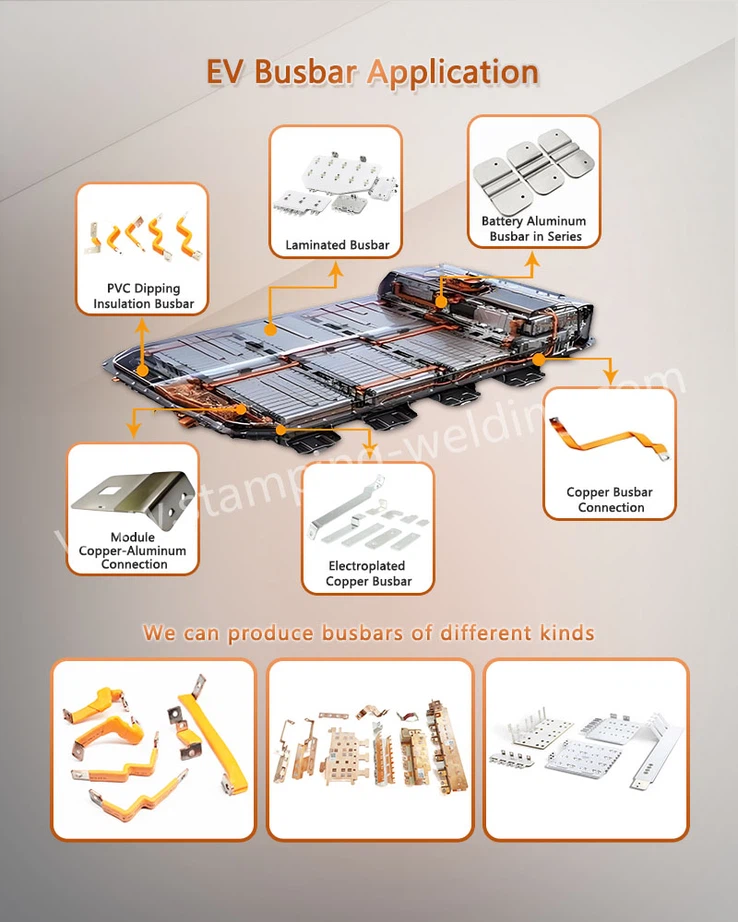
In this market environment, the demand for high-performance metal components for photovoltaic systems and new energy equipment is constantly growing. Our company's copper busbars, laminated busbars, and flexible busbars perfectly meet the current requirements of Indian photovoltaic projects for high-reliability electrical connections, effectively supporting the safe and stable operation of large-scale photovoltaic systems and helping photovoltaic projects gain greater advantages in cost control and performance optimization.
contact us