Aluminum Stamping in The New Energy Photovoltaic Industry
May 24, 2025
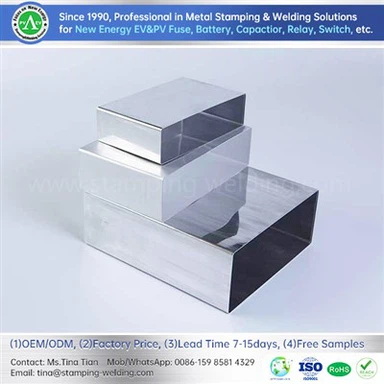
Aluminum stamping is a specialized manufacturing process that involves using dies and presses to shape aluminum sheets or coils into various components. By applying high pressure, the aluminum material deforms according to the design of the die, enabling the production of parts with precise geometries. This process is highly automated, making it suitable for mass production, and is widely recognized for its ability to create complex shapes efficiently while maintaining dimensional accuracy.

Aluminum Stamping Processes in Photovoltaic Applications
Progressive Die Stamping
Progressive die stamping is highly efficient for mass-producing aluminum components in the photovoltaic industry. In this process, an aluminum strip is fed continuously through a series of stations within a single die. Each station performs a specific operation, such as blanking (cutting out the basic shape), piercing (creating holes for bolts or cables), bending, and forming. This sequential operation allows for the rapid production of complex parts with consistent quality. For instance, it can be used to manufacture multiple-part assemblies for photovoltaic panel mounting systems in a single stamping cycle, significantly increasing production efficiency.
Deep Draw Stamping
Deep draw stamping is utilized when creating aluminum components with deep, cup-like or box-like shapes. In the photovoltaic industry, this process might be used to produce enclosures for junction boxes or other electrical components. The process involves using a punch to force the aluminum sheet into a die cavity, gradually stretching and shaping the material. Precise control of factors like the drawing speed, punch force, and lubrication is crucial to prevent issues such as wrinkling or tearing of the aluminum sheet during the deep drawing process.
Bending and Forming
Bending and forming operations are essential for shaping aluminum into the desired structural configurations. In photovoltaic applications, bending is often used to create angled frames or brackets that need to fit specific installation requirements. Forming processes can also be used to create custom-shaped components, such as curved supports for photovoltaic tracking systems. These operations can be carried out using press brakes or specialized forming dies, and they require accurate programming and control to achieve the correct angles and shapes.
Applications of Aluminum Stamped Parts in the Photovoltaic Industry
Photovoltaic Panel Frames
One of the most common applications of aluminum stamped parts in the photovoltaic industry is in the production of panel frames. These frames provide mechanical support and protection for the photovoltaic cells. Aluminum frames are lightweight, which reduces the overall weight of the solar panels, making installation easier and less costly. Their high corrosion resistance ensures that the panels can operate efficiently for long periods in various outdoor environments without significant degradation due to rust or other forms of corrosion.
4.2 Mounting Structures
Mounting Structures
Aluminum stamped components are also widely used in mounting structures for photovoltaic systems. This includes brackets, clamps, and rails. These parts are designed to securely hold the photovoltaic panels in place, whether they are installed on rooftops, ground - mounted arrays, or in large - scale solar farms. The strength and durability of aluminum - stamped mounting structures enable them to withstand extreme weather conditions, such as strong winds and heavy snow loads, ensuring the stability and safety of the entire photovoltaic installation.
Electrical Enclosures
For protecting electrical components within photovoltaic systems, aluminum - stamped electrical enclosures are employed. These enclosures shield sensitive electronic parts like inverters, charge controllers, and junction boxes from environmental elements such as dust, moisture, and physical damage. Aluminum's good electrical conductivity can also be utilized in some enclosures to help with grounding and dissipating static electricity, enhancing the safety and reliability of the electrical systems.
4.4 Heat Sinks
Heat Sinks
In photovoltaic systems, especially those with high - power - generating components, heat sinks are crucial for dissipating excess heat. Aluminum, with its excellent thermal conductivity, is an ideal material for manufacturing heat sinks through stamping. Stamped aluminum heat sinks can be designed with complex fin structures to maximize the surface area for heat dissipation, ensuring that critical components like solar inverters operate within their optimal temperature ranges and maintain their efficiency over time.

Advantages of Aluminum Stamping in the Photovoltaic Industry
Lightweight Property
One of the most significant advantages of aluminum-stamped parts in the photovoltaic industry is their lightweight nature. Reducing the weight of components such as frames and mounting structures not only simplifies the installation process but also decreases the structural load requirements on rooftops or support structures for ground-mounted systems. This can lead to cost savings in construction and foundation work, as well as make transportation of photovoltaic equipment more efficient.
Corrosion Resistance
Aluminum naturally forms a thin, protective oxide layer on its surface, which provides excellent corrosion resistance. In the outdoor environment where photovoltaic systems operate, exposure to moisture, sunlight, and various atmospheric pollutants is inevitable. The corrosion resistance of aluminum-stamped parts ensures that the components maintain their structural integrity and functionality over the long lifespan of the photovoltaic installation, reducing the need for frequent maintenance and replacement.
5.3 Cost-Effectiveness
Cost-Effectiveness
Despite being a high performance material, metal stamping aluminum can be cost effective for the photovoltaic industry. Aluminum is widely available, and the stamping process allows for efficient mass production, reducing perunit manufacturing costs. Additionally, the long lifespan and low maintenance requirements of aluminum-stamped parts contribute to overall cost savings in the long run, making it an economically viable choice for photovoltaic manufacturers.
Design Flexibility
Aluminum stamping offers great design flexibility. The process can create components with complex geometries, allowing for the development of innovative and optimized designs for photovoltaic systems. Whether it's custom-shaped mounting brackets to fit irregular rooftops or specialized enclosures with unique ventilation and access features, metal stamping aluminum enables manufacturers to meet diverse design requirements and improve the performance and functionality of their photovoltaic products.
future trends
Advanced Alloy Development
The development of new and improved aluminum alloys will continue to be a trend. These alloys may offer enhanced properties such as higher strength - to - weight ratios, better heat resistance, and improved formability. For example, the development of new alloys specifically tailored for high-temperature applications in photovoltaic systems could further improve the performance and durability of components, especially in regions with extreme sunlight exposure.
Integration of Smart Manufacturing Technologies
The integration of smart manufacturing technologies, such as the Internet of Things (IoT), artificial intelligence (AI), and machine learning, will likely become more prevalent in aluminum stamping for the photovoltaic industry. IoT sensors can be used to monitor the stamping process in real-time, collecting data on parameters like temperature, pressure, and die wear. AI and machine learning algorithms can then analyze this data to optimize the stamping process, predict potential issues, and improve overall production efficiency and quality control.
7.3 Sustainability - Driven Innovations
Sustainability Driven Innovations
With the growing emphasis on sustainability in the energy sector, metal stamping aluminum for the photovoltaic industry will also see more sustainability-driven innovations. This includes increasing the use of recycled aluminum in stamping processes, reducing energy consumption during production, and developing more environmentally friendly manufacturing techniques. For example, new lubrication methods that are biodegradable or the use of renewable energy sources in stamping facilities can contribute to a more sustainable future for the photovoltaic industry.
contact us