Key Differences And Application Advantages Between Epoxy Powder Coating Insulated Busbar And Bare Copper Busbars
May 30, 2026
In the fields of power complete sets of equipment and new energy electrical components, copper bars, as core conductive connectors, are mainly divided into two categories based on different surface treatments and insulation methods: powder-coated insulated bars and traditional bare copper busbars. These two types of products exhibit significant differences in structural characteristics, performance, and application scenarios, making them key considerations for electrical equipment selection and cabinet design. Among them, the Epoxy Powder Coating Insulated Busbar, with its unique surface treatment process, has become a preferred accessory for compact electrical equipment, forming a distinct technological difference from traditional bare copper bars.
Insulation principle
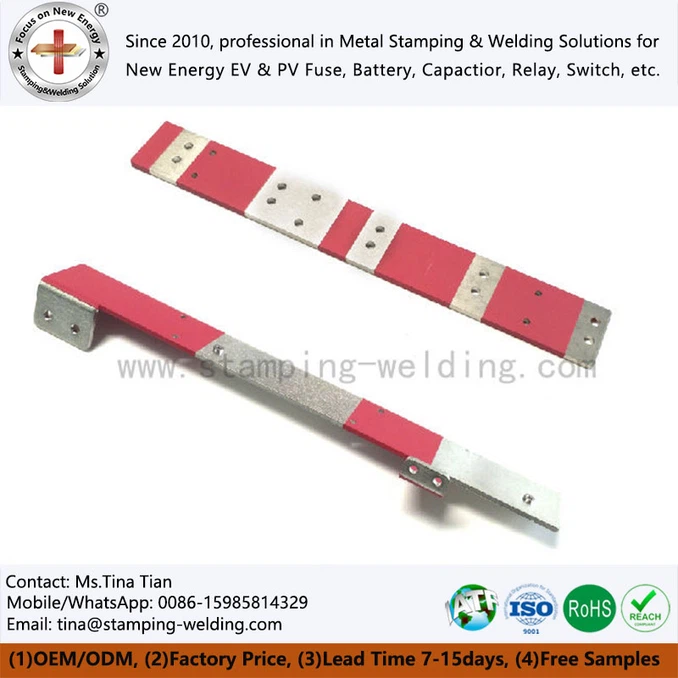
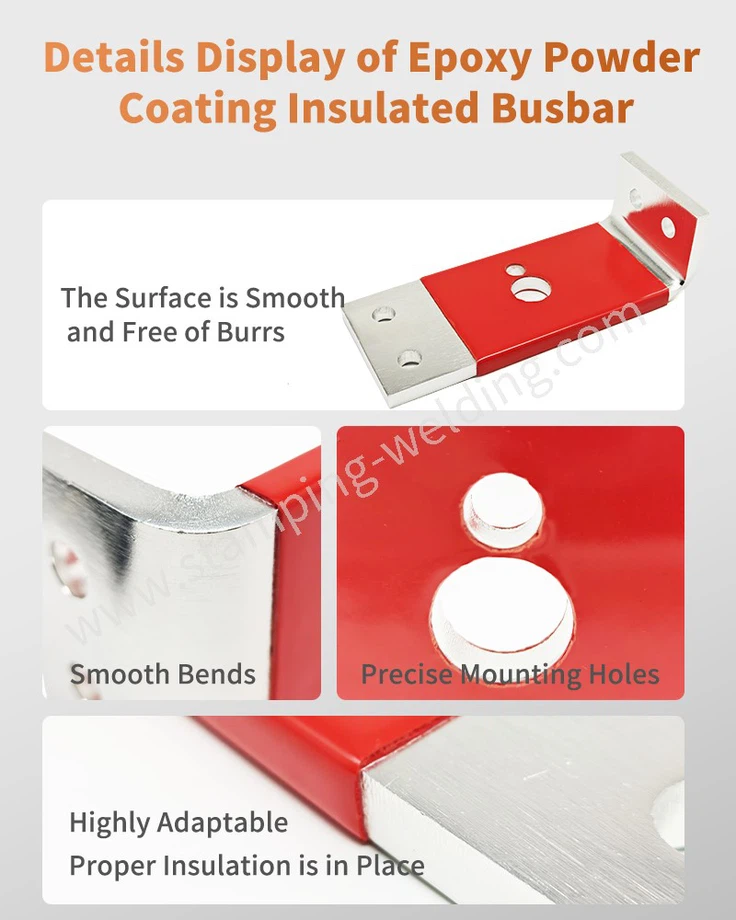
From the perspective of core structure and insulation principle, bare copper busbars are purely exposed copper conductors and do not possess insulation capabilities on their own. Insulation protection during equipment operation relies entirely on external auxiliary accessories such as phase-to-phase air gaps, insulators, and heat-shrink tubing-a classic configuration for traditional electrical equipment. In contrast, powder-coated bars utilize a professional powder coating process, uniformly coating the copper busbar surface with an epoxy resin insulating protective layer through electrostatic spraying. This integrated insulation structure allows for all-around conductor protection, fundamentally changing the way bar insulation is implemented.
Protective performance
The difference between the two types of bars is particularly evident in terms of environmental adaptability and protective performance. Bare copper busbars, exposed to air for extended periods, are highly susceptible to oxidation and corrosion, developing verdigris. They also have high requirements for the temperature, humidity, and cleanliness of the operating environment, and equipment stability drops significantly under humid and dusty conditions. In contrast, insulated bars equipped with Bar Insulating Coating Powder have a tight bond between the coating and the copper conductor, providing excellent moisture-proof, dust-proof, corrosion-proof, and shock-resistant properties. They offer greater environmental adaptability and can withstand long-term stable operation under complex conditions.
Space adaptation
In terms of equipment integration and space utilization, the addition of an insulating coating gives powder-coated insulated bars a significant advantage in compact design. Insulation-coated busbars do not require large inter-phase creepage distances or clearances, allowing for a substantial reduction in bar spacing and a smaller bending radius. This effectively compresses the overall size of distribution cabinets and complete electrical equipment sets, aligning with the current industry trend towards miniaturization and high integration of electrical equipment. In contrast, bare copper bars, restricted by electrical safety regulations, must reserve ample safety clearances, resulting in a larger overall footprint and making them difficult to adapt to the design requirements of high-density integrated equipment.
Application scenarios
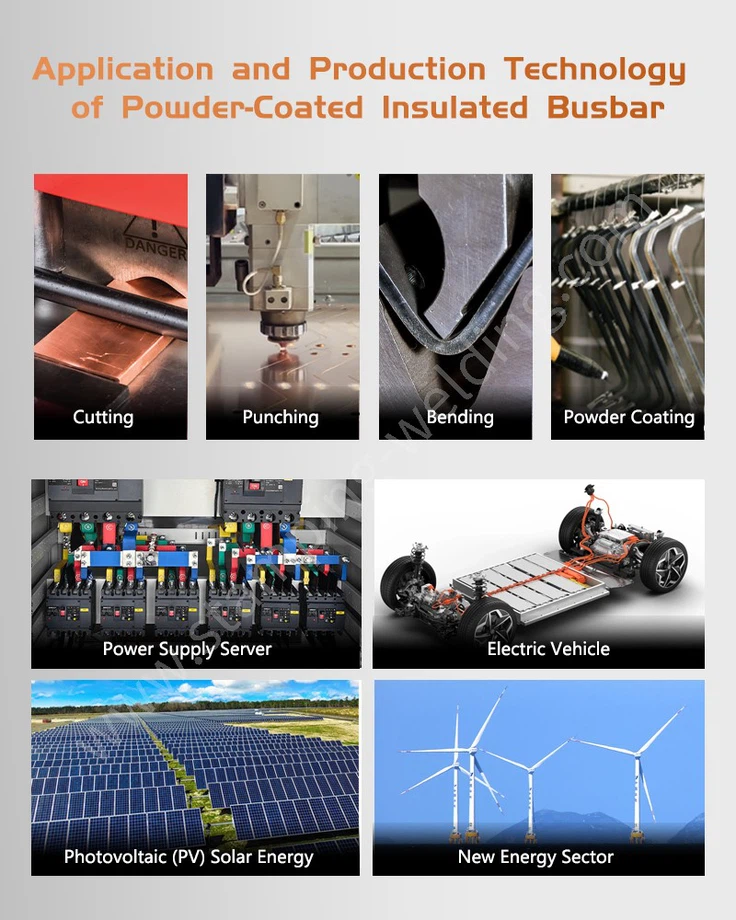
From a practical application perspective, the two types of busbars form a clear compatibility boundary. Insulated copper bars, with their high safety, high protection, and high integration, are widely used in complete sets of electrical equipment and new energy supporting equipment where space is limited, protection levels are high, and equipment integration is high. Electric vehicle bar coatings are also commonly used in the field of new energy vehicle bars, adapting to the harsh operating conditions of new energy electrical equipment. Bare copper bars, on the other hand, offer advantages such as no need for complex surface processing, lower production costs, and intuitive and convenient subsequent inspection and maintenance. They are mostly used in enclosed busbar trunking and conventional large-scale power distribution equipment where installation space is ample, cost control is strict, and high current operation is required. Maintenance personnel can intuitively inspect the conductor condition and accurately detect joint temperatures, resulting in lower subsequent maintenance costs.
Industry Summary
Overall, there is no absolute superiority or inferiority between Epoxy Powder Coating Insulated Busbar and bare copper busbars; their strengths lie only in their respective technical characteristics. Bare copper bars maintain their core advantages of high heat dissipation, low cost, and easy maintenance, making them suitable for traditional large-space, high-current operating conditions. Insulated bars, on the other hand, are precisely matched to the industry's development needs for miniaturization, high safety, and high protection. Both types of products will continue to play a core role in their respective suitable scenarios, supporting the stable operation of power and electrical equipment.
Contact Us
We can precisely adapt various Epoxy Powder Coating Insulated Busbar selection solutions to different working conditions, integration requirements, and equipment standards. For related customization, selection, and procurement needs, please feel free to contact us at any time.