Analysis Of The Differences Between Copper Busbar For Hybrid Electric Vehicles Film Capacitor And Ordinary Busbar Core
May 30, 2026
With the continuous iteration of hybrid electric vehicle and plug-in hybrid electric vehicle technologies, on-board electronic control systems are rapidly upgrading towards higher frequencies, higher power, and smaller sizes. As a core connecting component, the performance of the capacitor bar directly determines the stability and safety of the entire vehicle's electronic control system. Copper Busbar for Hybrid Electric Vehicles Film Capacitor is widely used in on-board film capacitor applications. Compared to ordinary bars used in traditional vehicles, there are significant differences in structural design, electrical performance, system integration capabilities, and environmental adaptability. It is a dedicated component adapted to the harsh on-board conditions of hybrid vehicles. Film Capacitor Busbar for HEV / EV Motor Control Unit, with its optimized structure, precisely matches the high-frequency operating characteristics of on-board inverters, solving the shortcomings of ordinary bars in the application of high-voltage systems in new energy vehicles.
Structural design differences
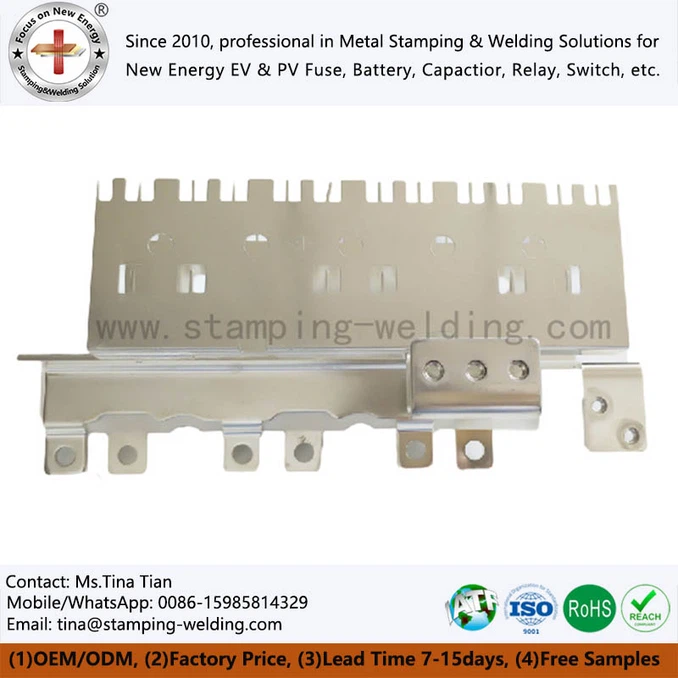
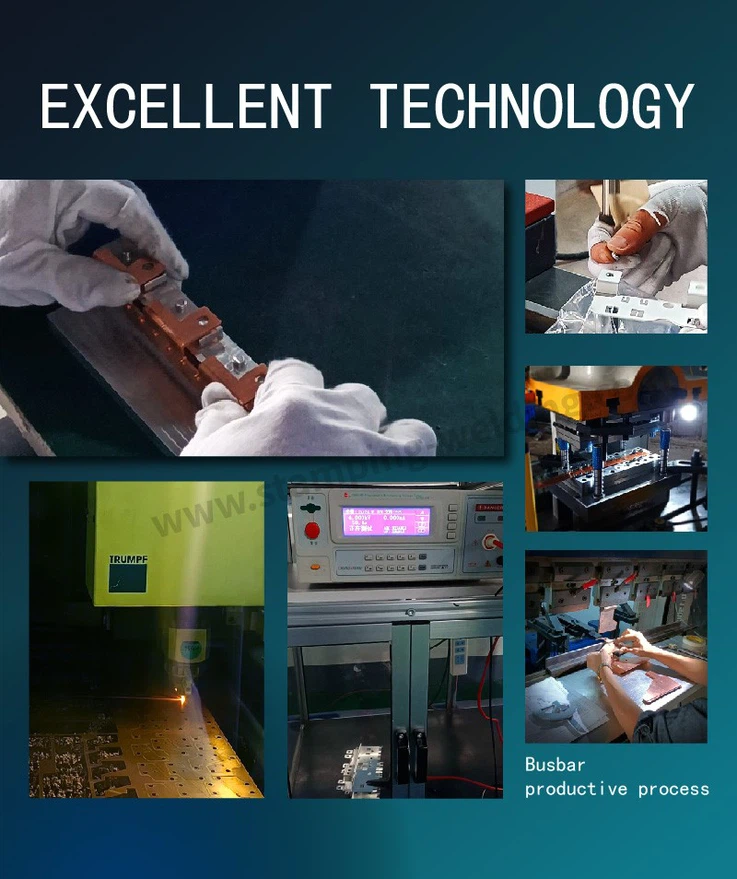
At the structural design level, the molding process and insulation methods of the two types of bars are completely different. Copper Busbar for Hybrid Electric Vehicles Film Capacitors typically employ a laminated integrated design, using multiple layers of ultra-thin metal conductors alternately laminated and heat-fused with high-end insulating films such as PET and PEN to form a complete flat, integrated structure, possessing both rigidity and semi-flexibility. In contrast, conventional bars are mostly single metal profiles, metal tubing, or ordinary cable structures, with simple and singular structural forms, relying solely on air or external insulating sleeves for basic isolation, lacking a composite laminated structure design. Automotive Bar PET Insulation, relying on a proprietary film insulation laminated structure, significantly improves insulation reliability under complex automotive operating conditions, distinguishing it from the simplified insulation mode of ordinary bars.
Electrical performance differences
The core difference lies in their electrical performance, directly adapting to the high-frequency electronic control requirements of hybrid vehicles. Hybrid vehicle inverters utilize power devices such as IGBTs and SiC, with extremely high switching frequencies, placing stringent demands on bar stray inductance control. The Copper Busbar for DC link EV Film Capacitor employs a tightly bonded stacked structure, where the magnetic fields generated by the opposing currents cancel each other out, minimizing stray inductance and effectively absorbing voltage spikes generated during device switching, protecting the stable operation of electronic control components. In contrast, ordinary bars have higher stray inductance values, easily leading to voltage overshoot, circuit oscillations, and significant electromagnetic interference in high-frequency, high-current operating environments, making them unsuitable for the electronic control system requirements of high-end hybrid vehicles.
Differences in integration capabilities
The differences in system integration align with the miniaturization and lightweighting trends of new energy vehicles. The New Energy Vehicle Film Capacitor Busbar can be physically integrated with onboard film capacitors, simplifying external connection cables of traditional equipment, significantly shortening current transmission loops, and featuring a highly compact structure that perfectly fits the limited installation space of automotive electronic control compartments. Ordinary busbars are independent, discrete components; equipment assembly requires numerous external cables and bolts for splicing and fixing, resulting in cumbersome and messy wiring, occupying more space, and failing to meet the high-density integration design requirements of hybrid vehicles, leading to relatively low overall vehicle space utilization and assembly efficiency.
Differences in heat dissipation and weather resistance
The difference in heat dissipation capacity and weather resistance under automotive operating conditions further widens the application gap between the two types of bars. The engine compartment of a hybrid vehicle operates under complex conditions; the high temperature and confined environment place extremely high demands on the heat dissipation performance of components. The Capacitor Busbar adopts a flat, open structure with a larger heat dissipation contact area, allowing it to be paired with onboard cooling structures to achieve efficient and uniform temperature dissipation, maintaining a stable high-current carrying capacity, and adapting to long-term high-power operation. Ordinary bars, on the other hand, have a concentrated structure and limited heat dissipation area, resulting in poor heat dissipation efficiency in the confined space of a vehicle. Long-term high-load operation can easily lead to excessive localized temperature rise, affecting the overall lifespan and operational stability of the electronic control system.
summary
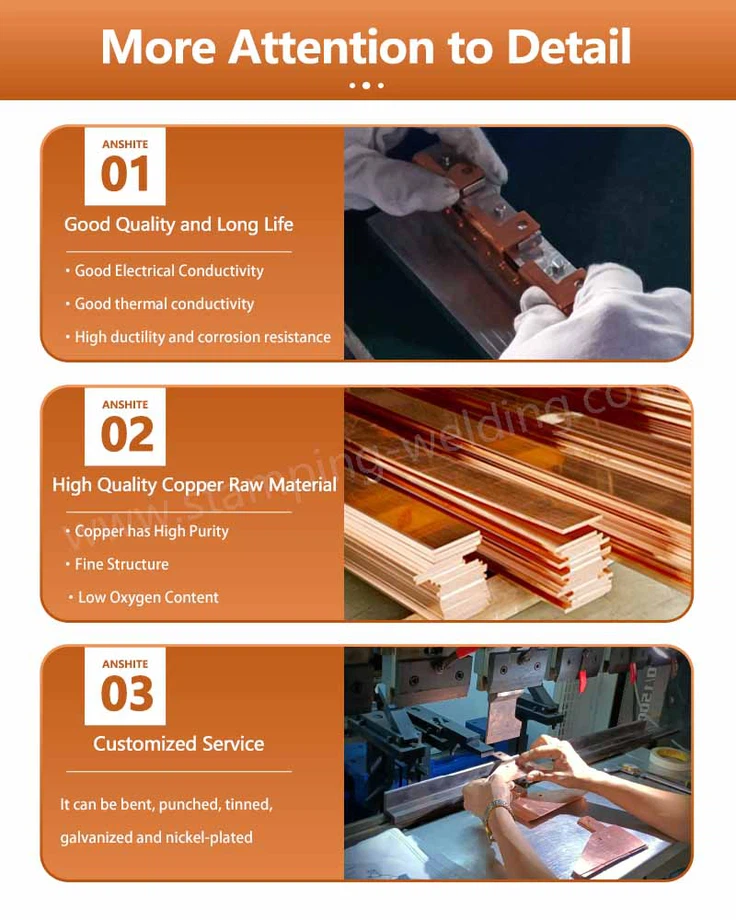
In summary, from the laminated structure to the low-inductance electrical performance, and then to the system integration and heat dissipation design, the differences between the Copper Busbar for Hybrid Electric Vehicles Film Capacitor and the traditional bar represent the key technological advancements in the evolution of high-voltage electrical systems for hybrid electric vehicles towards higher frequency, higher density, and higher reliability.
Contact Us
To address the high-frequency, high-integration, and high-heat-dissipation requirements of hybrid vehicle electronic control systems, we can provide customized solutions for Copper Busbar for Hybrid Electric Vehicles Film Capacitor, adaptable to all scenarios. Industry customers are welcome to inquire and connect.