Analysis Of The Technical Characteristics Of The Three-piece Electrical Connection Kit For New Energy: Power Connectors, FFC Flat Cables, And Flexible Braided Busbars
Jul 14, 2026
The new energy vehicle, energy storage equipment, and industrial automation industries continue to expand, and various electrical connection components have become the core carriers for the stable operation of electronic control systems. Power Connector Flat Flexible Battery Braided Busbars, FFC flat flexible cables, and flexible braided busbars each have their own functions, respectively responsible for signal and power transmission, flexible wiring in confined spaces, and high-power current conduction. The three are used together in core units such as battery modules and overall electronic control systems to build a complete high-power electrical connection system.

Basic Definitions and Structural Characteristics of Three Types of Electrical Connections
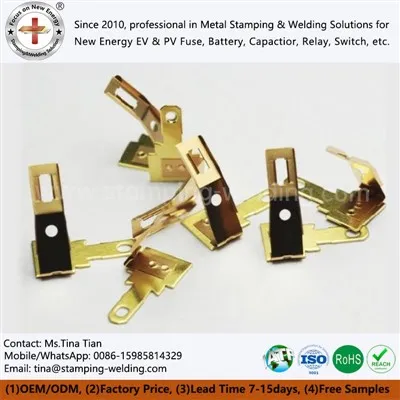
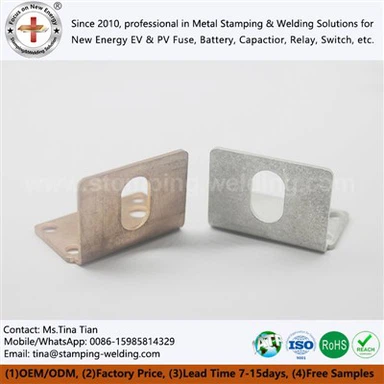
- Power connectors are used to connect power sources to loads. Internally, they rely on flexible copper conductors for conductivity, with current carrying capacity, contact resistance, and mating life as key performance indicators. In energy storage and power battery applications, sealed protection is required to prevent contact oxidation and overheating.
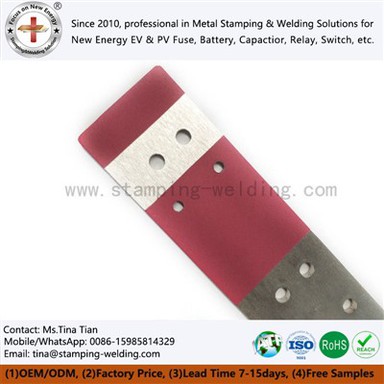
- FFC flat cables are made by sandwiching an insulating film between conductors, making them thin, lightweight, and easily bendable. Compared to flat braided shunts, they have lower manufacturing costs, better heat dissipation, and are suitable for 48V low-voltage system wiring.
- Braided busbars are made of high-purity copper braided/laminated. The mainstream model is the Braid Copper Flexible Tinned Copper Braided Connector, with a multi-layer insulation structure and a current carrying capacity of 200A-6300A, making it a mainstream solution for high-power transmission.

Development Trends and Core Technological Challenges of Power Connectors
The new generation of high-power power connectors is iterating towards miniaturization, modularity, high durability, and high density. Flexible Electrical Copper Braided Connectors are often used in conjunction with grounding components. The product development focus is on controlling contact resistance and mitigating contact fretting wear. Silver-plated contacts have better wear resistance than tin-plated structures, and with a clamping force of over 70N, they can maintain stable contact over a long period of time. The compact modular design can reduce the space occupied by PCB assembly, adapting to the miniaturization trend of electrical control equipment.
Unique application advantages of FFC flat flexible cables
FFC is compatible with automated batch assembly processes. Its neat strip structure allows for direct robotic mounting, relying on pressure-sensitive adhesive for fixation without the need for additional tooling or fixtures. While Copper Braided Ground Strap Wire Cable is mostly used for cabinet grounding, FFC focuses on low-voltage power supply and signal transmission within the equipment. Its excellent heat dissipation performance is compatible with the currently prevalent 48V vehicle electrical architecture, and in the future, it can also replace coaxial and differential data cables, meeting the dual needs of power supply and high-speed signal transmission.
Four Core Application Advantages of Braided Flexible Busbars
Laminated High Current Copper Wire Braided Flexible Connectors, as a mainstream braided busbar category, offer comprehensive performance suitable for high-power scenarios in new energy vehicles, with four core advantages. Firstly, stable operation: a fully automated integrated molding process combined with online monitoring allows for real-time control of voltage, current, and temperature. Secondly, flexible installation: the highly flexible copper braid body can adapt to complex equipment wiring, eliminating the need for intermediate joints in long-distance cabling. Thirdly, space-saving installation: the laminated insulation structure occupies only one-third the space of traditional rigid busbars, while maintaining a conductivity efficiency of over 98%. Fourthly, outstanding lightweight design: its use in vehicle battery packs can reduce weight by 15%, directly improving the vehicle's range.

Overall, power connectors, FFC flat cables, and braided flexible busbars cover low-current signals, medium and low-voltage wiring, and ultra-high-power transmission scenarios, respectively. The combination of the three can meet the electrical connection needs of energy storage, new energy vehicles, and automation equipment under all working conditions. Corresponding product solutions can be matched for different equipment power, installation space, and current carrying requirements.
Contact Us
For any Power Connector Flat Flexible Battery Braided Busbars suitable for energy storage and vehicle-mounted equipment, please feel free to contact us. We provide a one-stop service including current carrying capacity calculation, structural customization, and free sample testing.