PLC Control Cabinet Layout And Structural Design
Oct 15, 2025
In modern industrial automation, PLC control cabinets are core components for process control, signal acquisition, and device logic execution. Whether in wastewater treatment, energy management, production automation, or building and traffic control systems, programmable logic controller cabinets (PLCs) are indispensable electrical control centers in industrial control systems.
PLC Cabinet Type Selection
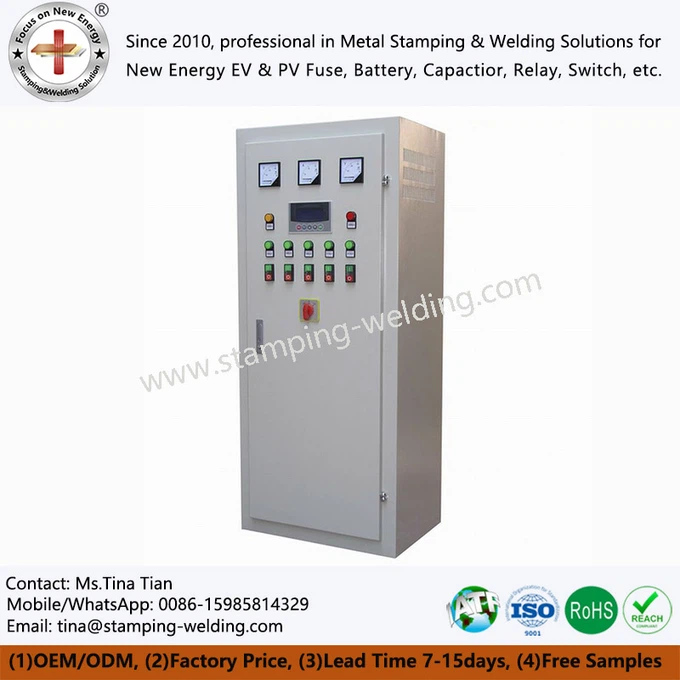
Depending on the installation environment and functional requirements, common PLC cabinet types include:
Wall-mounted PLC Cabinet: Suitable for space-constrained or light-load control scenarios;
Floor-standing PLC Cabinet: Stable structure, suitable for high-power equipment control and complex system integration;
Enclosed PLC Cabinet: Designed for dusty, humid, or high-temperature environments, protecting the internal PLC system and wiring;
Automation Control Cabinet and Industrial PLC Cabinet: Suitable for continuously operating production lines and automated control systems.
The PLC Panel Control Logic Program Stainless Steel Automatic Cabinet is particularly common in the pharmaceutical, food, and cleanroom industries, due to its stainless steel construction, which offers excellent corrosion and dust resistance.
Cabinet and Structural Design Key Points
1. Cabinet Type Selection
PLC control cabinets are often constructed as fixed, integrated cabinets (such as KB cabinets, nine-fold cabinets, and sixteen-fold cabinets) for easy installation and wiring. Compartmental or drawer-type cabinets are not recommended. For G8 Switchgear PLC Automatic Control Cabinet Panels for special applications, custom-designed cabinet door structures are required to facilitate installation and commissioning.
2. Ventilation and Cooling System
Most electric cabinets and PLC panel cabinets utilize natural convection ventilation, with filters installed at the inlet and outlet to prevent dust. For densely populated components or high-power applications, an axial fan can be installed on the top cover to assist in cooling. The ventilation system design must ensure that the internal temperature of the PLC control cabinet and power distribution panel remains within a safe range to prevent overheating of the control module.

Cabling and Wireway Design
Wireway trough width and height should be selected based on the total cable cross-section, which should be approximately 80% of the trough capacity to ensure adequate cooling space and ease of maintenance. Generally:
Control signal lines can be routed in 40-60mm wide cable ducts.
Main power lines and power cables can be routed in 80-100mm wide cable ducts.
Special signal lines (such as communication network cables and optical fibers) can be isolated and routed separately in the Control Cabinet Industrial PC to prevent interference.
In PLC System Cabinet for Sewage, municipal automation, and water treatment industries, communication signal lines and control lines should be routed in layers to ensure stable signal transmission and interference resistance.
Component Placement Principles
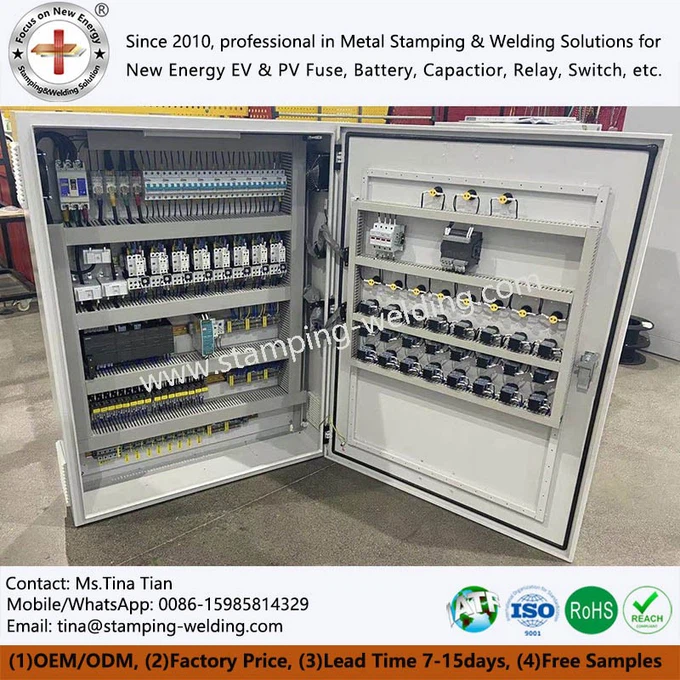
Components within a PLC cabinet generally follow the "control" layout principle (top, execution) (bottom), power (left), and signal (right) for ease of installation and commissioning.
1. Regulated Power Supply Placement
Regulated power supplies generate significant heat and should be installed in the upper portion of the cabinet to facilitate heat dissipation. 40mm cable ducts are typically used for wiring.
2. PLC and Module Placement
The PLC CPU, I/O modules, and special function modules are the core of the system and should be placed in the center for easy access. Modules are arranged from left to right for easy expansion and maintenance, complying with PLC Programming Electrical Control Panel, Power Distribution Cabinet standards. A safety distance of 100mm or greater must be maintained between modules and electromagnetic components (contactors, relays, etc.) to prevent electromagnetic interference.
3. Circuit Breaker and Relay Configuration
Circuit breakers should be installed at an appropriate operating height, typically using 60mm cable ducts for wiring. Relays and terminal blocks are typically located at the bottom or rear of the cabinet to facilitate field wiring and external signal input.
4. Network and Communication Equipment Arrangement
Communication components such as switches and fiber optic cassettes are located at the bottom of the cabinet, with ample bend radius to ensure secure connection of network cables and optical fibers. This is particularly suitable for applications requiring remote monitoring in the PLC System Cabinet for Sewage and the Automation Control Cabinet.
5. Grounding and Safety System
The grounding system consists of three components:
PE protective ground busbar: connects the rack, power supply, and cabinet;
TE anti-interference ground busbar: isolates external signal interference;
Copper braid ground connection: ensures good conductivity between rotating components and the cabinet.
In PLC control cabinets, power distribution panels, and programmable logic controller cabinets, a standardized grounding design can significantly improve the system's electromagnetic compatibility and operational stability.
6. Cabinet Layout and Mounting Panel Design
The cabinet layout should be drawn at a 1:1 scale, combining the schematic diagram and the sub-cabinet list. A 2.0-3.0mm thick aluminum-zinc plate or stainless steel is recommended for the mounting plate.
The design of the application cabinet and PLC cabinet components should meet standard equipment spacing, ventilation requirements, and maintenance access, ensuring a stable structure and a reasonable layout. For high-standard projects, modular electric cabinets and PLC panel cabinets can be used to facilitate expansion and system upgrades.
Conclusion
The layout and structural design of the electrical control cabinet not only impact the safety and reliability of system operation but also determine the efficiency and maintenance costs of automated production. Scientific wiring, proper ventilation, standardized grounding, and modular structural design can significantly improve the overall performance of industrial PLC cabinets and automation control cabinets.
In the future, in line with the Industrial Internet of Things and smart manufacturing trends, PLC control cabinets will develop towards high-density integration, remote monitoring, and intelligent maintenance, becoming the central control core of smart factories.
contact us