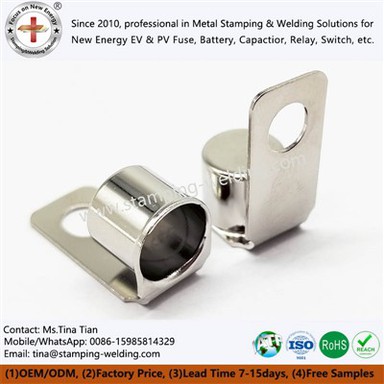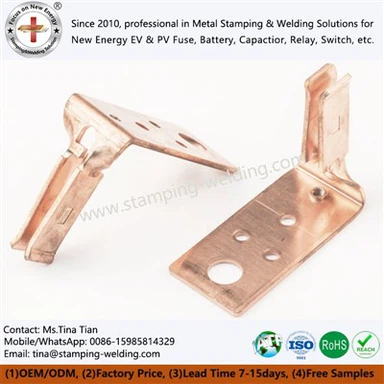
The Necessity And Performance Advantages Of Plating For Brass Solder End Cap
Jul 16, 2026
In the manufacturing of electrical fuse assemblies, the Brass Solder End Cap serves as a critical conductive connection component; consequently, its surface treatment process directly determines the fuse's electrical stability and service life. Unlike standard decorative plating, the plating process for fuse caps is a vital step in ensuring safe circuit operation-far from being merely optional. Brass substrates are highly reactive and prone to rapid oxidation when exposed to air or moisture, forming a high-resistance oxide layer that can lead to issues such as poor electrical contact, equipment overheating, and nuisance fuse blowing. A professional plating layer effectively isolates the substrate from external elements, eliminating the risk of oxidation at the source and stabilizing contact resistance.

Enhanced corrosion resistance, suitable for complex operating environments
Metal corrosion is a primary cause of failure for various electrical components operating in harsh conditions or subjected to long-term storage; however, brass tube caps can significantly enhance environmental resilience through electroplating. In industrial environments characterized by humidity, salt spray, or sulfur exposure, untreated brass terminals rapidly develop rust and pitting corrosion, leading to contact failure, premature circuit interruption, and a total loss of overload protection capabilities. The electroplated layer creates a dense physical barrier that resists corrosive agents, ensuring stable fuse performance throughout its service life and preventing circuit malfunctions or safety hazards caused by component corrosion.
Optimizing electrical welding and conductivity is a core benefit of electroplating and a key factor in the suitability of brass terminal caps for industrial assembly. During fuse assembly, welding quality directly impacts electrical continuity; bare brass substrates exhibit poor solderability, making them prone to cold joints or detachment, which compromises the stability of electrical connections. Standard electroplating treatments-such as tin or nickel plating-significantly improve solderability, making the components compatible with various assembly methods like wave soldering and manual soldering. Furthermore, high-quality plating maintains consistently low contact resistance, ensuring the smooth passage of high transient currents and meeting the operational power requirements of diverse electrical equipment.

Complies with industry safety standards and enables standardized mass production
Compliance and standardized production are core requirements in the electrical accessories industry, and electroplating is essential for brass pipe end caps to pass industry safety standard tests. International safety standards for fuses-such as IEC 60127-explicitly mandate that brass fuse end caps undergo protective electroplating treatments, such as nickel or tin plating. Unplated, bare-metal components fail to pass specific tests regarding resistance to soldering heat, operational durability, and environmental resilience, rendering them ineligible for market circulation or mass-scale application; furthermore, the electroplating process serves as a crucial foundation for ensuring product compliance with industry specifications and enabling standardized mass production.
Diverse application scenarios
The industry employs tailored plating solutions to meet the diverse application requirements of brass fitting caps. Nickel plating offers the best cost-performance ratio, balancing hardness and corrosion resistance, and is commonly used for the end caps of standard ceramic tube fuses. Tin plating provides excellent solderability at a low cost, making it suitable for various soldering and assembly scenarios. Silver plating delivers superior electrical conductivity, catering to specialized high-frequency and high-current applications, thereby comprehensively addressing the demands of various operating conditions.
Overall, electroplating is a critical process for ensuring the electrical performance, corrosion resistance, and regulatory compliance of various Brass Solder End Cap, directly determining the safety and reliability of circuit protection components.
Contact Us
If you are looking for electroplating solutions precisely matched to your specific operating conditions and wish to obtain high-quality, standardized Brass Solder End Cap, please feel free to consult our professional team for customized product selection and technical support.