Tinned Copper Busbar Vs Bare Copper Busbar: Technical Comparison & Industrial Applications
Jun 24, 2025
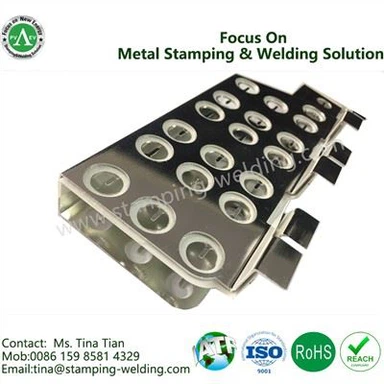
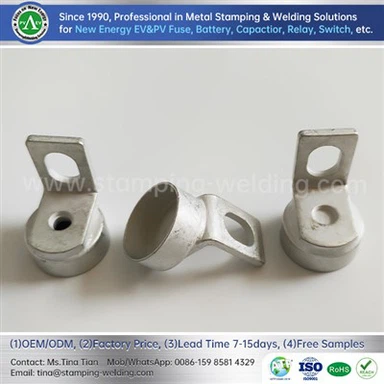
In new energy power transmission systems, Tinned Copper BusBar and Bare Copper Busbar demonstrate distinct performance characteristics as core conductive components. The former utilizes Busbar Coating technology to apply tin plating, while the latter maintains raw copper surfaces. With global renewable energy capacity growing 15% annually (IEA 2023 data), tin plating demonstrates unique advantages in enhancing equipment durability, particularly in harsh environments like offshore wind farms and photovoltaic storage systems where Tin Plated Copper Busbar has become the mainstream choice.

Material Properties
Conductivity: Bare copper busbars achieve initial conductivity of 58 MS/m (ICA standard) with 99.9% purity. Although the 5-15μm tin layer on Tinned Copper BusBar causes minimal conductivity reduction, it effectively prevents oxidative degradation. Long-term tests show a 5-year resistance increase below 2% for tin-plated versions, compared to 8-12% for bare copper.
Corrosion Resistance: The tin layer from Busbar Coating enables Tin Coated Copper BusBar to excel in salt spray tests. ASTM B117 results show 720-hour corrosion resistance for plated samples, six times longer than bare copper (120 hours). This makes them ideal for offshore platforms and chemical plants.

Manufacturing Process
Leading Tinned Copper BusBar suppliers employ four-stage precision manufacturing:
1. Substrate Preparation: Cold-rolled copper with 0.05mm flatness tolerance.
2. Pretreatment: Acid pickling and activation ensure surface cleanliness ≤0.8mg/m².
3. Plating Process
4. Hot-dip: 10-50μm tin layer at 230±5℃.
5. Electroplating: Methanesulfonic acid system with 3-8A/dm² current density.
6. Post-treatment: Micro-arc oxidation creates dense oxide layer (Ra≤0.4μm).
Compared to bare copper production, tin plating increases energy consumption by 15% but reduces lifecycle costs by 40% (IEEE-18 calculation).

Application Fields
1. PV Inverters:
Tinned Copper BusBar occupies 78% market share (SPV 2024)
2. Energy Storage:
65% application rate in battery pack connections.
3. Rail Transit:
Tin plating meets EN 50155 2000V withstand voltage requirements for traction converters.
4. Data Centers:
Tin layer stabilizes contact resistance, ensuring 99.999% power reliability.

Competitive Advantages
As specialized Tinned Copper BusBar suppliers, we deliver three technological breakthroughs:
1. Gradient Coating:
Tin concentration gradients (100% to 60%) optimize conductivity/corrosion balance.
2. Laser Etching:
20% current capacity increase with 15% weight reduction.
3. AI Inspection:
Machine vision detects 0.01mm² coating defects.
Industry Trends
1. Composite Coatings:
Graphene-tin hybrid coatings (projected 2026) will enhance Busbar Coating thermal conductivity to 500W/mK.
2. Green Manufacturing:
Cyanide-free plating reduces wastewater by 90%, complying with EU RoHS 3.0.
3. High-Voltage Development:
With 800V architecture adoption, Tin Plated Copper Busbar arc resistance becomes R&D priority.
contact us