Types, Characteristics And Selection Guidelines For Tin-Plated Copper Busbars
Jul 11, 2025
Tin - plated copper busbars, though not the most eye - catching components in electrical systems, play a crucial connecting role. They not only need to conduct electric current stably to ensure efficient power transmission, but also are directly related to the long - term safety and reliable operation of the entire electrical facilities.

Therefore, before applying tin - plated copper busbars in a project, a comprehensive assessment must be carried out. The key aspects to focus on include: the type of the electrical system (industrial, commercial or civil), the required current - carrying capacity, the surrounding environment (temperature, humidity and corrosive factors), installation space constraints, and whether they comply with relevant electrical safety standards and regulations.
This article will introduce the main types of tin - plated copper busbars, explain their characteristics, and define their applicable scenarios. It aims to help you select a suitable tin - plated copper busbar solution for the electrical projects of factories, commercial buildings or other facilities.
Different Types
1.Solid Tinned copper busbar: A single solid copper bar with a tin coating, designed for high-current applications like power substations. It ensures stable conductivity and strong corrosion resistance, suitable for fixed installations.
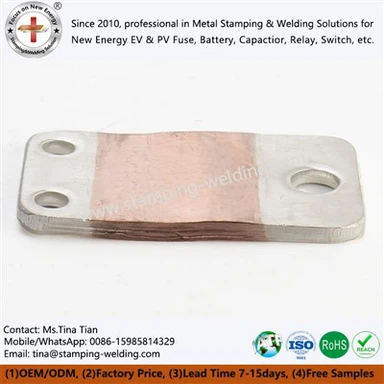
2.Laminated Tin-coated copper busbar: Consists of multiple thin copper layers bonded together, offering flexibility for tight spaces. Its structure enhances heat dissipation, ideal for renewable energy systems.
3.Custom-shaped Tin-electroplated copper bus: Precisely formed via electroplating to match unique designs, used in specialized machinery where standard sizes don't fit, ensuring perfect integration.
Product features
| High conductivity |
Retains copper's excellent electrical performance; the tin layer minimizes resistance, ensuring efficient power transfer, a trait shared with Tin-clad copper busbar. |
| Corrosion resistance | Tin coating resists oxidation and moisture, similar to copper strip with tin plating, suitable for harsh environments. |
| Easy soldering | Tin layer facilitates strong, reliable joints, simplifying installation in electrical systems. |
|
Dimensional stability |
Maintains precise shapes under temperature changes, critical for tight-fit setups. |
| Longevity | Combines copper's durability with tin's protection, especially evident in Tin-electroplated copper bus for extended service life. |
Selection Recommendations
1.Application scenario: For high-current fixed installations (such as substations), solid busbars are preferred. For tight spaces or flexible setups (such as solar inverters), laminated types are more suitable.
2.Environmental conditions: In corrosive or humid environments, prioritize busbars with thicker tin coatings to enhance corrosion resistance.
3.Electrical requirements: Match the busbar's current-carrying capacity to the system's power demands to avoid overheating or inefficiency.
4.Cost-effectiveness: Balance performance needs with budget, opting for custom shapes only when standard types cannot meet specific design requirements.
Our company's advantages
Choosing our Tin-plated Copper Busbar brings distinct advantages. We hold multiple patents for innovative tin-plating technology, ensuring superior quality and performance. Customers consistently praise our products for stable conductivity and long service life, with many long-term partnerships built on reliability. Our strict quality control and tailored solutions further set us apart, making us a trusted choice.

contact us