




HDHC Tinned Copper Busbar
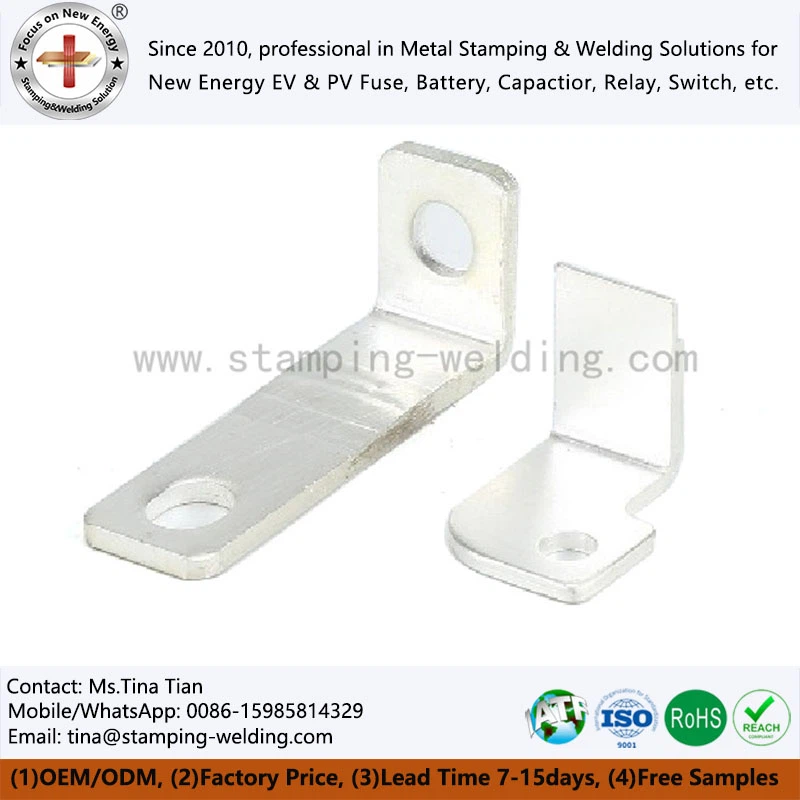
HDHC tinned copper busbar is a precision conductive component that achieves "high conductivity+high strength" dual high characteristics through precise coupling of cold work hardening and annealing processes. The L-shaped bent part shown in the picture has a bright and dense tin plating layer at the end, and retains the metallic luster of the hard substrate in the middle, achieving a functional zoning of "soft wetting of the connecting surface+high rigidity of the structural surface".
- Fast Delievery
- Quality Assurance
- 24/7 Customer Service
Product Introduction

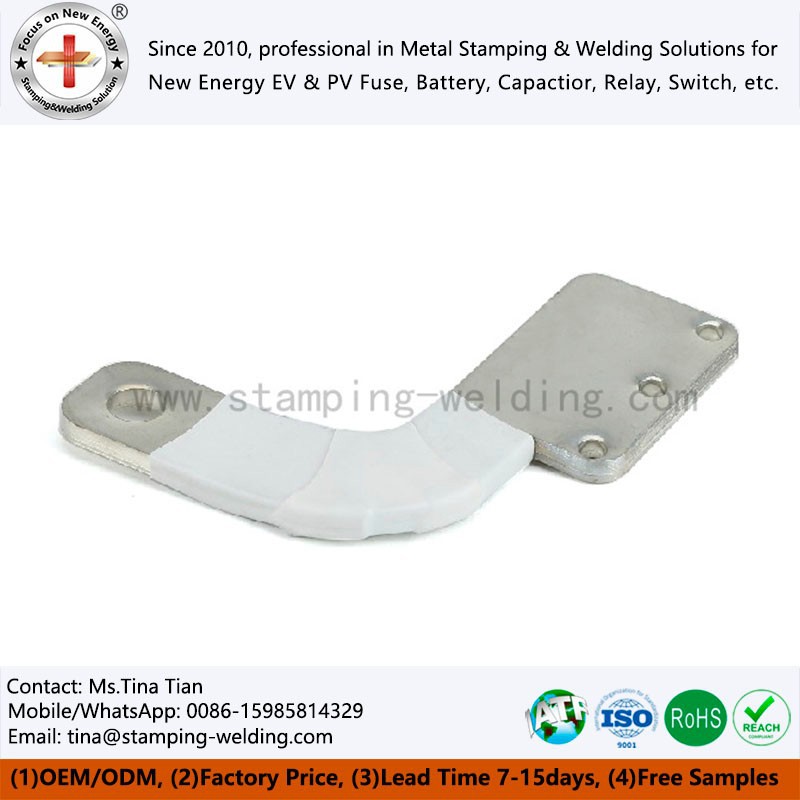
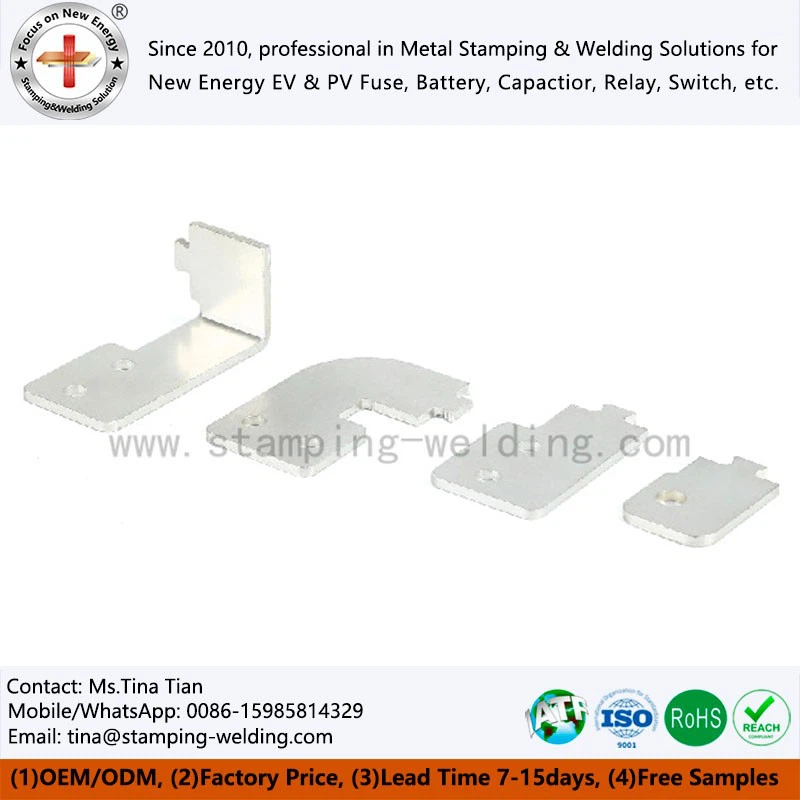
HDHC tinned copper busbar is an upgraded product of traditional copper busbars, which improves conductivity and mechanical strength through hard drawing technology. Combined with tin plating and integrated insulation design, it solves the performance bottleneck in high-power scenarios. It is a customized high current conductive component designed for high-end electrical scenarios such as new energy, electricity, and rail transit. It is made of high-purity hard copper as the substrate and is made through precision stamping, bending, and professional tin plating processes.
Product advantages
Ultimate electrical performance
Galvanized busbar resistance ≤ 0.00001 Ω, with extremely low resistance to minimize power loss, reduce voltage drop in the distribution system, and improve the overall operational efficiency of the electrical system. This stable low-resistance characteristic also effectively controls temperature rise during long-term high-current operation, extending service life and enhancing system safety.
Super strong mechanical performance
Busbar coating substrate has a hardness of 80~110HV and a tensile strength of 245-345MPa. It has high mechanical strength and can withstand mechanical stress and vibration in industrial environments. It is not easy to deform or crack, and is suitable for vibration scenarios such as new energy vehicles and rail transit.
Excellent environmental adaptability
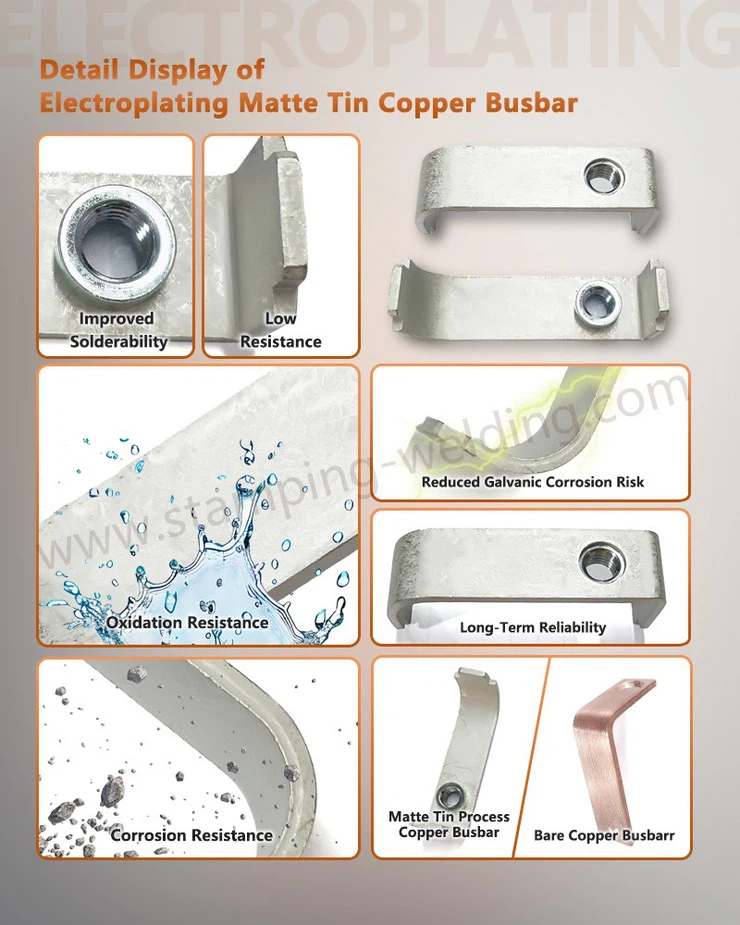
The dual protection of tin plating layer and insulation layer enables the Tin plated copper busbar to have excellent corrosion resistance and oxidation resistance, and can operate stably for a long time in harsh environments such as humidity, acid and alkali, high and low temperatures (-45 ℃ to+150 ℃).
Customized process
Requirement Submission and Engineering Review
Upon the customer's submission of electrical parameters (voltage, current, environment), mechanical interface drawings, and certification requirements, our engineering team assesses the Busbar tinned copper's current-carrying capacity, temperature rise control, insulation coordination, and mold feasibility, then issues a technical proposal.
Free sample production
Once the technical solution is verified, we will offer 1-10 free samples (the exact quantity varies based on complexity). The Copper tinned busbar samples will adopt the same mold and process specifications as mass production. Every sample will undergo comprehensive performance testing covering resistance, insulation, and voltage withstand capabilities to ensure alignment with bulk product standards.
Customer testing and verification
We offer free samples (quantity based on project needs). The Tin plated copper bar adopts standardized mold and process specifications, ensuring stable performance. All samples undergo strict performance testing covering voltage withstand, current resistance, temperature control, etc., to meet international quality standards.
Batch Delivery
Once the customer approves and locks the mold, mass production commences. Standard orders ship in 7-10 days; for new stamping dies and tooling, sample lead time is 10-20 days. Rigorous quality checks are performed throughout production to guarantee consistent dimensions, plating thickness and performance for all units. Ensuring stable product quality.

Application scenarios
Solar Photovoltaic System
Tin coated copper busbar is suitable for photovoltaic power plants, household photovoltaics, photovoltaic inverters, and combiner boxes. It serves as the core connecting conductor for solar panel series and parallel connection, optimizing power conversion efficiency.
Energy Storage System
Tinned copper flat bar is used for lithium-ion energy storage battery clusters and energy storage container distribution units, supporting stable transmission of high voltage and high current from 3500-5000VDC, achieving efficient distribution of electrical energy.
Electric Vehicle Charging Infrastructure
The Galvanized busbar covers charging stations and distribution modules, ensuring safe transmission of high currents ranging from 100-2000A. It is suitable for outdoor charging facilities in high, low, and humid environments, ensuring charging efficiency and operational safety.
Smart Grids and Microgrids
As the interconnection core between renewable energy, energy storage equipment, and distribution networks, it enhances the elasticity and flexibility of the power grid, simplifies complex power grid wiring, and adapts to the high reliability and low loss conductivity requirements of smart grids.

FAQ
Q: What does HDHC stand for? How is it different from ordinary copper busbars?
A: HDHC is the abbreviation of High Density High Conductivity. Compared with ordinary pure copper busbars, HDHC copper busbars undergo a more stringent grain control process, and the conductivity can reach more than 101% IACS, while ordinary busbars are usually between 97%-100% IACS. Under the same cross-sectional area, the HDHC busbar has lower resistance per unit length and generates less heat.
Q: Why is tin plating needed? Can't you just use bare copper?
A: Bare copper busbars will form uneven oxide films in the air, causing contact resistance to increase with time and temperature fluctuations. The role of the tin plating layer is to provide a stable, low-impedance connection interface, which is especially suitable for the following scenarios: when overlapping with aluminum equipment terminals (to prevent electrochemical corrosion of copper and aluminum), in high-temperature and humid environments (to prevent copper oxidation), and in corrosive places such as chemical plants.
Q: Does the tinned copper busbar have a larger carrying capacity?
A: Yes. Due to the higher conductivity of the HDHC base material, it can carry about 3%-6% higher current than ordinary copper busbars under the same temperature rise limit and heat dissipation conditions. This means that engineers can choose a HDHC busbar with a smaller cross-section to meet the same current carrying requirements, or obtain more capacity margin while maintaining the same cross-section.
Q: What should you pay attention to when bolting?
A: Never sand the tin plating around the connection holes - this will destroy the protective layer and expose the copper base. The correct way is to use a non-woven cloth dipped in absolute alcohol to clean the oil stains without applying conductive paste. The tightening torque should be performed with a torque wrench according to the equipment instructions. Excessive torque will break the tin plating layer, and if the torque is too small, the contact resistance will be unstable.
contact us
Inquiry does not constitute a binding commitment to place an order. We sincerely welcome all kinds of inquiries about our HDHC tinned copper busbar, prices, specifications and related services, and will reply to you with professional and detailed information in a timely manner.

Hot Tags: hdhc tinned copper busbar, China, manufacturers, suppliers, factory


