




Flexible Busbar
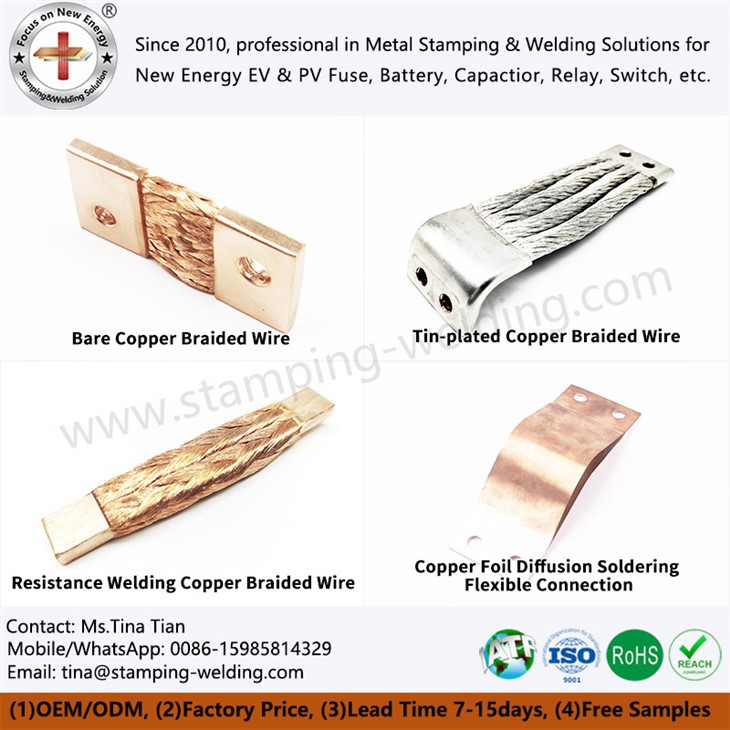
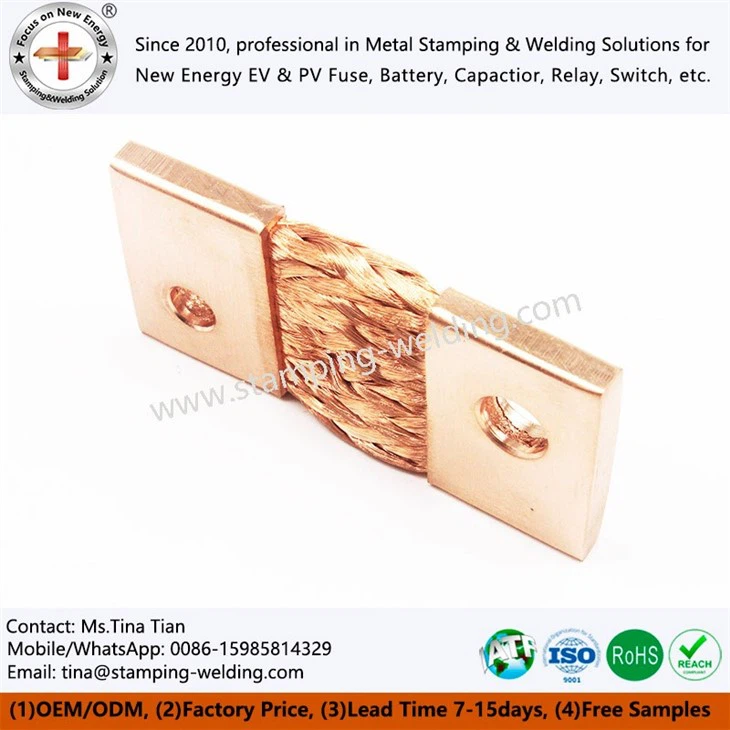
Xiamen Apollo specializes in the R&D and manufacturing of Flexible Busbars. Our core product lines include Bare Copper Braided Wire, Tin-plated Copper Braided Wire, Resistance Welding Copper Braided Wire, and Copper Foil Diffusion Soldering Flexible Connection. Our service network covers the fields of electric power, the new energy industry, rail transit systems, industrial equipment manufacturing, and data center infrastructure. Relying on the three core competitiveness of high conductivity, strong corrosion resistance, and customized service capabilities, we continue to provide safe, reliable, efficient, and energy-saving electrical connection system solutions to global customers.
- Fast Delievery
- Quality Assurance
- 24/7 Customer Service
Product Introduction
Overview Of Product Series
Our company focuses on the research, development, and production of Flexible Busbars, covering four series: Bare Copper Braided Wire, Tin-plated Copper Braided Wire, Resistance Welding Copper Braided Wire, and Copper Foil Diffusion Soldering Flexible Connection, meeting the needs of multiple fields such as power, new energy, and industrial equipment. The Copper BusBars take high conductivity, corrosion resistance, and customized services as their core advantages to provide customers with reliable electrical connection solutions.

Product Classification And Characteristics
1. Bare Copper Braided Wire

1.1 Material advantages and characteristics
Material: high-purity T2Y2 copper foil (conductivity ≥98%), surface nickel/tin plated, oxidation and corrosion resistant.
Structure: multi-layer copper foil + resistance diffusion welding, terminal hole precision stamping (tolerance ±0.1mm), support M6-M12 bolt fixing.
Insulation method: optional heat shrink tube (temperature resistance 125℃) or silicone sleeve (temperature resistance 200℃), more resistant to high temperature and aging than traditional PVC.
1.2 Technical parameters
Cross-sectional area: 10-300mm²|current carrying capacity: 200A-3000A|resistivity: ≤0.022μΩ·m
1.2.1 Conductivity of terminal hole: adopts overall nickel plating process (nickel layer thickness 3μm), terminal hole contact resistance <0.05mΩ (industry standard 0.1mΩ), supports 400A continuous high current.
1.2.2 UL 2251-2024 certification: passed the terminal hole salt spray test (96 hours without corrosion), the insulation layer tracking resistance index CTI>600 (reaching FV-0 flame retardant grade).
1.2.3 Modular adaptation: The terminal hole spacing is compatible with ISO 8536-2 standard (±0.1mm accuracy), supporting plug-and-play

Generational advantages compared to traditional complex connections (copper busbars/cables)
| Scenario pain points | Hard connection defects | Flexible connection busbar disruptive value |
| Vibration fatigue (cell expansion) | Rigid copper busbar stress concentration (lifespan <5 years) | 0.1mm ultra-thin copper foil + flexible structure (100,000 bends without breakage) |
| Assembly efficiency (manual welding) | Each connection takes 2 minutes (pre-welding required) | Terminal hole + bolt direct connection (single hole assembly 15 seconds) |
| Space adaptation (special-shaped layout) | Hard busbar requires customized bending (mold fee >50,000) | Preformed soft connection + standard terminal hole (compatible with 90% vehicle platform) |
1.3 Production process
Red copper foil slitting → resistance diffusion welding → terminal punching → electroplating → insulation treatment → quality inspection → packaging and shipment.
1.4 Application scenarios
New energy battery pack, UPS power cabinet, power switch cabinet.
Scenario value: solve three high-frequency failure scenarios
2. Tin-plated Copper Braided Wire

2.1 Material advantages and characteristics
Material: 0.1mm ultra-fine oxygen-free copper wire braided, tinned surface (thickness ≥5μm), strong oxidation resistance, and 20% improvement in conductive stability.
Flexibility: 360° bending without deformation, better seismic performance than copper busbar.
Insulation method: silicone molding (IP67 protection) or braided tube wrapping, compared with PVC insulation, oil resistance, high and low-temperature resistance (-50℃~200℃).
2.2 Technical parameters
Wire diameter: 10-50mm|Current carrying capacity: 100A-1500A|Resistivity: ≤0.023μΩ·m
Comparison of the core advantages of nickel-plated copper foil/hard busbar
| Failure scenarios | Nickel-plated copper foil flexible connection | Tin-plated braided wire flexible connection |
| High-frequency vibration (motor jitter) | Foil delamination (50,000 breaks) | Braided wire cross-locking (500,000 times without broken strands) |
| Wet and hot corrosion (coastal conditions) | Microporous corrosion of nickel layer (72h in salt spray) | Dense protection of tin layer (192h in salt spray) |
| High current temperature rise (3C fast charging) | Contact resistance 0.1mΩ (temperature rise 8℃) | Braided structure multi-contact conductivity (resistance 0.06mΩ, temperature rise 4℃) |
Braiding density: 16 strands × 7 wire structure (OEM customization is welcome), cross-sectional area tolerance ±1%, current capacity of 450A/mm² (national standard 300A/mm²), and third-party temperature rise test report (with CTP battery pack measured data) is provided.
Tin plating adhesion: ASTM B577-2024 standard is implemented, the tin layer does not fall off in the peeling test, and the interface metallographic diagram under the microscope is provided.
Dynamic fatigue certification (if necessary): Pass ISO 6469-3 (electric vehicle safety) vibration test, and the braided wire breakage rate is less than 0.5% after 500,000 cycles (industry average 2%).
2.3 Production process
Copper wire braiding→Tinning→Terminal crimping→Insulation packaging→Salt spray test→Finished product inspection.
Application scenarios

3. Resistance Welding Copper Braided Wire

3.1 Material advantages and characteristics
Material: high-purity copper braided tape (copper content ≥ 99.9%), squared end (aluminum/copper material) cold-pressed, low contact resistance.
Structure: Flat design, saving installation space, heat dissipation efficiency is 30% higher than round wire.
Insulation method: double-layer heat shrink tube (flame retardant grade UL V0) or epoxy resin potting, more wear-resistant and arc-proof than traditional sleeves.
3.2 Technical parameters
Cross-sectional area: 25-200mm²|Current carrying capacity: 500A-2500A|Withstand voltage level: 1kV-10kV
| Advantages of the square pressing process | Different from traditional round braided wire, the square pressing process flattens the braided wire into a rectangular cross-section, increases the contact area by 30%-50%, reduces the internal resistance by 15%-20%, and significantly reduces the temperature rise in high current scenarios (such as charging piles, energy storage), avoiding aging or failure caused by heat. |
| Braided structure characteristics | Multiple strands of fine copper wire are woven into a mesh with a bending radius as small as 5mm. It can be freely expanded and contracted with the vibration/deformation of the equipment, avoiding the risk of hard connections (such as copper busbars) breaking due to stress concentration (especially suitable for vibration environments such as vehicles and rail transit). |
| Prefabricated terminals | Copper/aluminum terminals are crimped on both ends (tin/nickel plating is optional), plug and play, no need for on-site drilling and welding, and the single-station installation time is shortened by 70% (compared with the process of customizing and drilling traditional copper busbars). |
| Materials and processes | Copper wire is tinned (≥8μm) or nickel-plated, salt spray test exceeds 96 hours (industry standard is only 48 hours), resistant to moisture, acid, and alkali corrosion, and the life of coastal/chemical industries is extended by more than 3 times. |
| Flexible design | Supports square specifications with a thickness of 0.1-3mm and a width of 10-200mm. The terminals can be equipped with M4-M16 bolt holes to adapt to different currents (50A-5000A) and installation spaces. |
| Industry adaptation | provides dedicated solutions for scenarios such as new energy (battery pack connection), industry (inverter soft start), and automobile (motor/battery connection). For example, automotive-grade products are certified by IATF 16949. |
3.3 Production process
1. Material selection: φ0.03-0.1mm oxygen-free copper wire (purity ≥99.95%)
2. Wire drawing: multi-pass cold drawing to target diameter (tolerance ±0.002mm)
3. Weaving: 64-128 strands cross-weaving (weaving density ≥90%, pitch 3-5mm)
4. Square pressing: hydraulic forming (thickness 1-3mm, aspect ratio 3:1-5:1, tolerance ±0.1mm)
5. Resistance welding: high-frequency welding (current 8-15kA, time 0.1-0.3s, number of welding points ≥5 points/cm)
6. Forming: pre-bending (bending radius 5-10mm, angle ±2°)
7. Detection: continuity test (resistance <0.03mΩ) + appearance (no broken wire, uniform indentation)
▶ Core control: pressed square structure density (≥8.9g/cm³), welding strength (≥85% of parent material), insulation treatment (silicone/glass fiber sheath thickness 0.2-0.5mm)
(Note: ISO 9001/TS 16949 control throughout the process, 100% first piece inspection + sampling flaw detection, production cycle ≤72 hours)

3.4 Application scenarios
3.3.1 New energy vehicles/batteries: Solve vibration, thermal expansion, and space problems, ultra-fine copper wire + pressed square structure absorbs 3% expansion, resistance <0.03mΩ, pre-forming saves 40% space; core advantages: IATF 16949, CTP/CTC adaptation, customized insulation sheath.
3.3.2 Railway transit/traction: Cope with high-frequency vibration (10- 50Hz) and high current (1000A+), 100,000 bending life (30,000 times for round wire), flat heat dissipation ↑50% (-40℃~125℃), anti-EMI shielding layer; core advantages: EN 45545 fireproof, aviation terminals, vibration test report.
3.3.3 Industrial equipment/inverter: Adapt to narrow space and dynamic deformation, 1-3mm ultra-thin design, low inductance <10nH/cm, 5mm bending radius; core advantages: silver plating process (high frequency), RoHS, precision mold opening (±0.1mm).
3.3.4 Energy storage/charging pile: Withstands thermal cycles (-40℃~85℃) and high current shocks, current carrying capacity is 25% higher than round wire, salt spray for 1000 hours, ±2mm telescopic anti-loosening; core advantages: UL/CE, IP65 casing, integrated voltage terminal.
3.3.5 Medical/Aviation: Meets low EMI, lightweight and extreme environments, shielding reduces interference by 50dB (MRI), 40% lighter than copper busbar (UAV), FV-0 flame retardant (aviation); core advantages: military standard certification (GJB 1217), small batch customization (50pcs or more).
4. Copper Foil Diffusion Soldering Flexible Connection

4.1 Material advantages and characteristics
Material: 0.05-0.2mm ultra-thin electrolytic copper foil, flexible without dead angle after lamination welding, and even current distribution.
Lightweight: The thickness is only 1/3 of the copper busbar, and the weight is reduced by 60% under the same current carrying capacity.
4.2 Technical Parameters
Number of layers: customizable | Current carrying capacity: 300A-5000A | Resistivity: ≤0.021μΩ·m
| Features | Technical Parameters | Procurement Value (Scenario Correspondence) |
| T2 Copper Purity | 99.9%+ (National Standard>99.85%) |
1. Resistance as low as 0.0175Ω·mm²/m (40% lower than brass), the temperature rise of new energy vehicles is reduced by 12℃ during fast charging 2. Raw materials are certified by IATF 16949 |
| Ultra-thin foil thickness | 0.05-0.3mm (optional) |
1. 0.1mm foil thickness: flexible bending radius is only 3mm, suitable for battery CTP/CTC compact space (traditional copper busbars require 15mm bending) 2. Energy storage thermal expansion absorption: single foil ductility reaches 3%, and multi-layer stacking anti-expansion ability is increased by 5 times |
| Grain refinement process | Average grain <50μm | Anti-fatigue life exceeds 100,000 times (50,000 times for ordinary copper foil), and the failure rate is reduced by 92% in the vibration environment of rail transit. |
4.3 Production process
Copper foil slitting → laser welding → surface passivation → insulation coating → X-ray flaw detection → electrical performance test.

4.4 Application scenarios
Electric vehicle electric drive system, precision instruments, aerospace equipment.
| Scenario | Pain point | Copper foil advantage (0.05-0.1mm) | Procurement point |
| New energy vehicle | Battery expansion/vibration | Absorb 5% deformation, resistance 0.015mΩ, save 30% space | IATF certification, FPC resistant to 150℃ |
| Energy storage liquid cooling | High current/hot and cold cycle | Current carrying capacity increased by 40% (200mm²→1200A), salt spray 1500h | IP67 casing, integrated temperature sensor |
| Industrial inverter | High-frequency loss/space | High-frequency resistance reduced by 30%, thickness 1-2mm, EMI reduced by 40dB | Silver plating process, bending ±0.05mm |
| Medical MRI | EMI/lightweight | Shielding reduced by 60dB, weight copper bar 1/3, epoxy anti-corrosion | Biocompatible, bending 2mm |
Our Production Strength
1. Group strength base
Large-scale operation of two main businesses
New energy field: annual revenue of 120 million (including factory), serving leading customers such as CATL and BYD
Low-voltage electrical field: annual revenue of 80 million (including factory), covering ABB and Schneider supply chain
Group support: 7 major workshops (stamping/welding/mold/CNC/cold heading/electroplating/automation), with a production capacity elasticity of 200%
30 years of technical genes
The core team originated from "Xiamen Hongfa" (the world's No. 1 relay), with 30 years of experience in electrical connection.
Provide "product + cost reduction solution + new industry technology" trinity service.
2. Full process technology barriers
8 core process matrices
Cold heading: silver contact/relay core (accuracy ±0.02mm)
Stamping: capacitor busbar/fuse contact (0.1mm ultra-thin copper foil process)
Welding: laser welding (penetration depth 0.8mm) + vacuum diffusion welding (battery shell)
Stretching: lithium battery aluminum shell (wall thickness 0.3mm, yield 99.2%)
Bending: sheet metal (minimum R0.5mm, flatness ±0.1mm)
Electroplated: gold/silver/nickel/tin (salt spray test over 1000h, RoHS compliant)
CNC: precision terminal (coaxially ±0.01mm)
Laser cutting: fast proofing (24h sample, saving 90% mold fee)

3. Global service network
| Region | Service node | Core value |
| Europe | Spain, Barcelona | Provide pre-sales and after-sales technical support, quick response |
| Middle East | Iran, Tehran | |
| Southeast Asia |
India, New Delhi Malaysia's largest port city Port Klang Pelabuhan, Malaysia |
|
| Northeast Asia | Japan, Tokyo |
4. Ultimate delivery commitment
Free samples: 1-2 days (regular) / 20-30 days (new mold, including mold)
Bulk order: 15-20 days (after payment, support 7 days of expedited delivery)
contact us

Hot Tags: Flexible Busbar, Flexible Copper Busbar, Flexible Busbar Manufacturer, Copper Foil Flexible Busbar, Laminated Flexible Bus Bar, Flexible Copper Connector, Flexible Busbar for EV Battery, Energy Storage Flexible Busbar, High Current Flexible Busbar, Customized Flexible Busbar Supplier


