

Copper Electrical Fuse Contacts For Pv Fuse
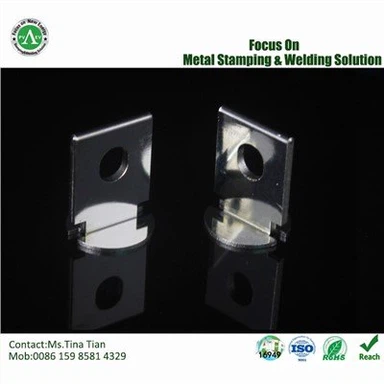
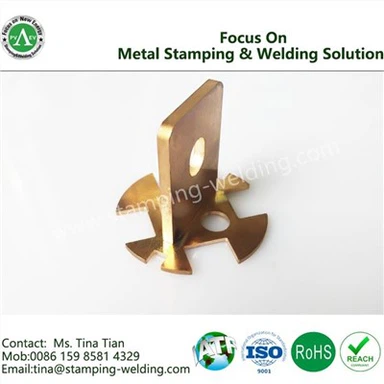
Fuse Copper Contacts are key components for fuses, usually made of high-quality copper. It is located at both ends of the fuse and is an important element that triggers the fusing action when an overcurrent or fault occurs. Copper fuse contacts have excellent electrical and thermal conductivity and reliability, and can quickly open circuits while maintaining low energy loss, protecting circuits and equipment from overload or failure.
- Fast Delievery
- Quality Assurance
- 24/7 Customer Service
Product Introduction
Products Description
Fuse Copper Contacts are key components for fuses, usually made of high-quality copper. It is located at both ends of the fuse and is an important element that triggers the fusing action when an overcurrent or fault occurs. Copper fuse contacts have excellent electrical and thermal conductivity and reliability, and can quickly open circuits while maintaining low energy loss, protecting circuits and equipment from overload or failure.
The advantages of copper material in the use of fuses:
1. High conductivity: Copper has higher electrical conductivity, which allows it to transmit current more efficiently in circuits and reduce energy loss compared to brass.
2. Excellent thermal conductivity: The thermal conductivity of copper is also better than that of brass. It can conduct and dissipate the generated heat faster and maintain a stable temperature of the contacts.
3. Wear resistance: Compared with brass, copper has better wear resistance, and can withstand high current and frequent operation in the fuse, prolonging the service life.
4. Oxidation resistance: Copper has good oxidation resistance and can be more stable in high temperature and high humidity environments, reducing the impact on electrical conductivity due to oxidation.

Product testing method
Copper fuses are widely used in power systems, electronic equipment, automotive electrical systems and other fields. The main reasons for its use include:
1. High reliability requirements: The electrical and thermal conductivity of copper fuses enable them to respond quickly and disconnect the circuit when overloaded or faulty, ensuring safe and reliable operation of circuits and equipment.
2. Low energy loss: The low resistance of the copper fuse ensures that the power loss is minimized under normal conditions and improves the efficiency of the circuit.
3. Adapt to different current loads: Copper fuses can be made with different specifications and rated currents according to different application requirements, and are suitable for fusing protection under various current loads.
4. Self-recovery characteristics: Copper fuses have self-recovery characteristics, which can automatically restore the conductive state after disconnecting the circuit, avoiding frequent replacement and maintenance.
5. Wide application: Copper fuses can be used in various electrical equipment, such as motors, transformers, power supplies, etc., to meet the needs of fusing protection in different field
surface treatment process
The surface treatment process of copper fuses can adopt different methods to increase the corrosion resistance, aesthetics and functionality of the product. The following are common copper fuse surface treatment processes:
1. Electroplating: Electroplating is a method of depositing metal on the surface of copper. Common electroplating methods include zinc plating, nickel plating, chrome plating, etc. Electroplating provides a protective metallic coating that effectively prevents copper fuses from being damaged by oxidation and corrosion.
2. Spraying: Use a spraying process to coat a layer of special paint or protective paint on the surface of the copper fuse. This method can increase the corrosion resistance of copper and also change the appearance color of copper.
3. Anodizing: Anodizing is a surface treatment commonly used on aluminum, but can also be applied to copper. This process forms an oxide film that increases the hardness and corrosion resistance of the copper surface.
4. Polishing: Polishing is to polish the surface of copper by mechanical or chemical methods to make it smooth and bright. Polishing not only improves the aesthetics of the product, but also reduces microscopic defects on the surface, which helps to improve the corrosion resistance of the copper fuse.
5. Sandblasting: Sandblasting is to use a high-pressure sandblasting machine to spray abrasives on the surface of copper to remove surface oxides and dirt, making it cleaner and smoother.
quality assurance
Our EV Fuse Contact Tin comply with UL/IEC regulation for photovoltaic systems and EU RoHS directive, lead free and halogen free.
We are approved with international quality and environmental management system as IATF16949, ISO9001, ISO14001, ISO14064, ISO50001.


contact us
Thank you for showing interest and supporting our company! Should you have any inquiries or require further information about our products and services, we are more than willing to assist you.
You can contact us through the following channels.
We are eager to establish a long-lasting partnership with you and deliver outstanding products and services. Thank you once again for your visit, and we eagerly anticipate engaging with you soon!

Hot Tags: copper electrical fuse contacts for pv fuse, China, manufacturers, suppliers, factory, Electric Fuse Outer Cap, End Cap And Contact Fuze Welding Components, Fuse Contact And End Caps Components, Fuse Link Welded Components, Fusible Link Outer End Cap And Terminal, Outer Cap And Automotive Fuse Terminals