Aluminum Busbars: Lightweight and high-performance evolution under the wave of electrification
Apr 18, 2026
Against the backdrop of global energy transition and the "dual carbon" goal, electrical connection systems are undergoing a profound transformation from simply pursuing conductivity to comprehensively considering energy efficiency, lightweight design, and cost control. Aluminum Busbars, as core components in power distribution systems for collecting and transmitting large currents, are gradually shifting from being a "substitute" for copper conductors to a "preferred choice" for specific applications. These rectangular or irregularly shaped long conductors, made of aluminum or aluminum alloys, are redefining the "highway" of power transmission due to their density being only about 37%-40% that of copper and their significant cost advantage.

Breakthrough in materials science: From pure aluminum to high-performance alloys
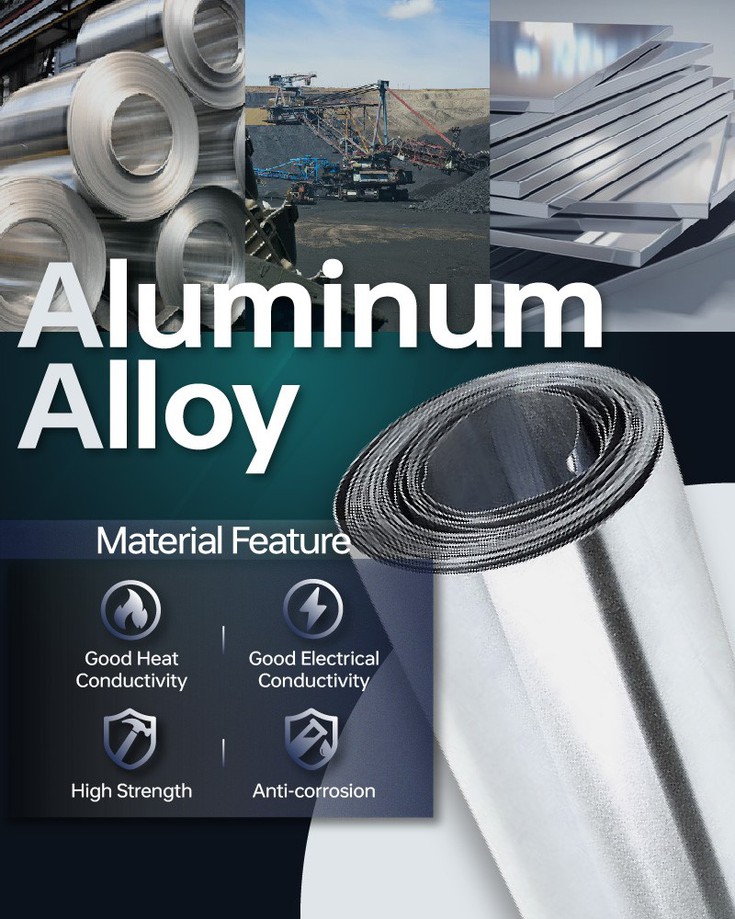
Traditionally, aluminum was considered to have lower electrical conductivity than copper, but its physical properties are being continuously explored through advancements in materials science. Modern busbars are no longer limited to ordinary industrial pure aluminum, but are evolving towards specialized alloys with high strength and high conductivity. For example, 6101 aluminum bars have become star materials in the field of power transmission due to their excellent conductivity and good mechanical strength; while 6101-T61 aluminum bars, after specific heat treatment, further enhance their tensile strength and heat resistance, enabling them to withstand greater short-circuit current surges.
Furthermore, 6061 aluminum busbar, as a typical Al-Mg-Si alloy, has secured a place in complex connectors due to its excellent machinability and corrosion resistance. To overcome the problem of increased contact resistance caused by easy oxidation of aluminum surfaces, tin-plated aluminum bus bar technology has been widely adopted. Through surface plating treatment, it ensures long-term stability and low contact resistance at the connection interface, enabling it to adapt to harsher industrial environments.
Application restructuring driven by new energy
The explosive growth of the new energy vehicle industry has opened up entirely new application areas for busbars. Inside the battery packs of electric vehicles, space is extremely limited and weight is a critical factor. Aluminum bars for cell connection, due to their lightweight properties, can effectively reduce the overall weight of the battery system, thereby increasing the vehicle's driving range.
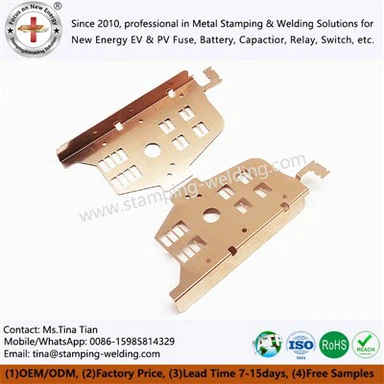
Meanwhile, with the iteration of battery technology, the demand for flexible aluminum connections is increasing. These aluminum flexible connections are typically made of multiple layers of aluminum foil laminated and welded together. They can effectively absorb the thermal expansion and contraction stress during battery charging and discharging, as well as vibrations during vehicle operation, preventing connection points from loosening or breaking. As a key component, the Electrical Aluminum Busbar Flexible Joint solves the problem of rigid connections being unable to cope with complex deformations, becoming a crucial link in ensuring the safe operation of power batteries.

Future Trends: The Rise of Customization and Composite Materials
Looking ahead, the Aluminum Busbars industry will exhibit a trend towards high customization and composite material integration. Customized bars will no longer be simple cutting and drilling, but will provide integrated connection solutions based on customers' electrical cabinet layout, heat dissipation requirements, and current carrying capacity.
Meanwhile, copper-aluminum composite busbars, a derivative product combining the high conductivity of copper and the lightweight properties of aluminum, are emerging in the high-end power distribution field. They retain the low cost and lightness of the aluminum core while solving the electrochemical corrosion problem associated with direct aluminum-copper connections through a copper surface layer. For a forward-thinking aluminum bar manufacturer, mastering the processing technology of this composite material will be a core competitive advantage in the future market.
In conclusion, bars are undergoing a technological upgrade from "replacing copper with aluminum" to "superior copper with aluminum." Whether as a basic aluminum busbar electrical power connector or as a complex flexible component, aluminum plays an irreplaceable role in building efficient, green, and safe modern power networks due to its unique physical and economic advantages.
Contact Us
Facing the dual challenges of material innovation and customized design, we are committed to providing you with lightweight and energy-efficient Facing the dual challenges of material innovation and customized design, we are committed to providing you with lightweight and energy-efficient Aluminum Busbars connection solutions. Please feel free to contact us for professional technical support. connection solutions. Please feel free to contact us for professional technical support.