Analysis of Laminated copper busbar technology in modern power distribution systems
Apr 01, 2026
Research and development background and core positioning of Laminated copper busbar technology
In the process of upgrading modern distribution systems to high power and high reliability, the inherent defects of traditional discrete busbars have gradually become a key bottleneck restricting the stable operation of the system. The parasitic inductance of traditional discrete busbars is too large. At the moment when the power switch is turned off, the transient voltage generated by it will be superimposed with the DC circuit voltage, posing a serious threat to the insulation of power switch devices and motors.
To address the pain points in this industry, Laminated flexible busbar technology has emerged. With its core advantages such as low inductance and low impedance, it has become a core technology solution to replace traditional discrete busbars in modern distribution systems and is widely used in various power conversion scenarios.
Structural composition and core features
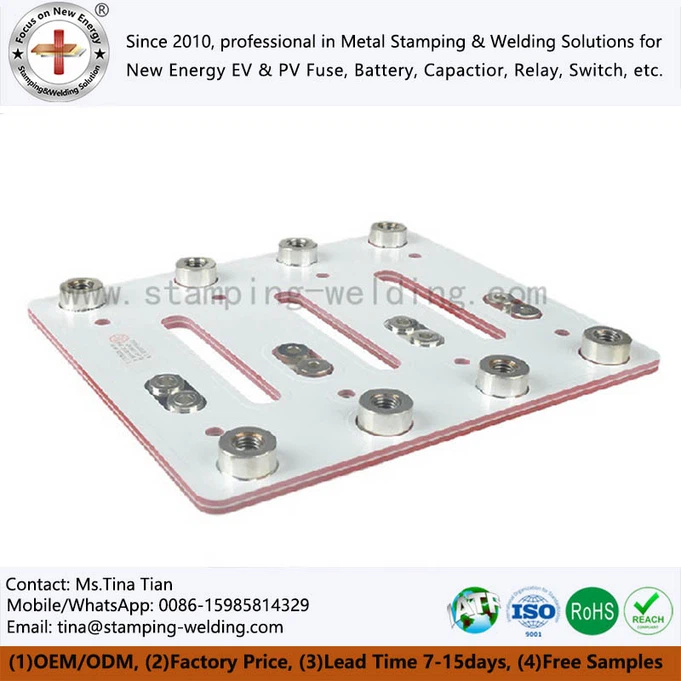
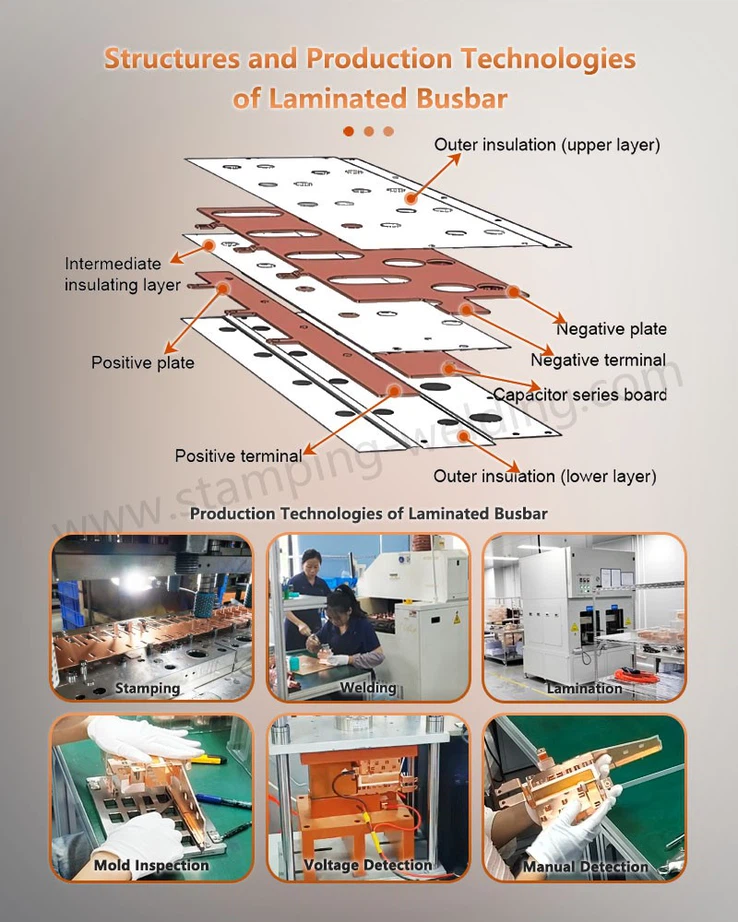
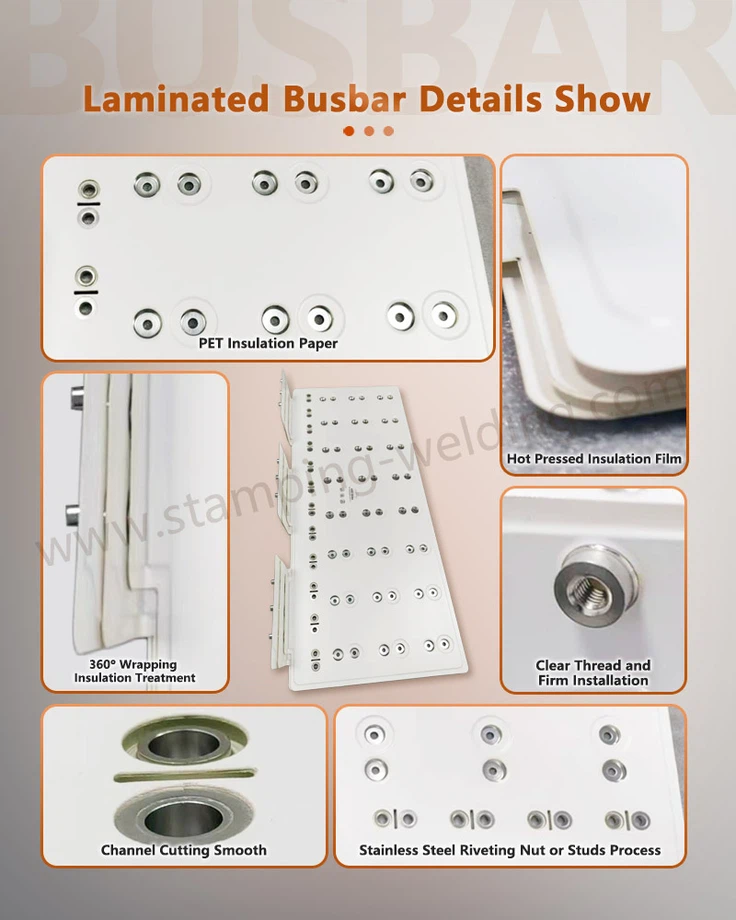
Laminated copper busbar, also known as laminated busbar, is composed of a core structure consisting of alternating layers of flat copper conductors and insulating films coated with thin adhesive. The exposed edges are sealed with insulating medium to form an integrated composite structure.
This special structure endows the stacked busbar with distinct core features: firstly, it adopts a multi-layer copper plate design, which can flexibly adjust the number of layers according to the needs of the distribution system and adapt to different power transmission requirements.
The second is to achieve fully enclosed insulation compression, with the insulation film tightly adhered to the copper conductor, preventing the formation of air gaps and ensuring the insulation performance of the Laminated copper bar.
The third is the use of single unit packaging technology, which has a compact overall structure, is easy to install, and can effectively protect against external interference. At the same time, it has inherent capacitance, which can achieve low inductance and low impedance operation, effectively reduce transient voltage drop, suppress oscillation, reduce electromagnetic interference, and provide guarantee for the stable operation of the distribution system.
Common types and scene adaptation
Based on the differences in insulation structures, Laminated bus bar for telecom are mainly divided into two common types, which are adapted to different working conditions and accurately match various distribution scenarios.
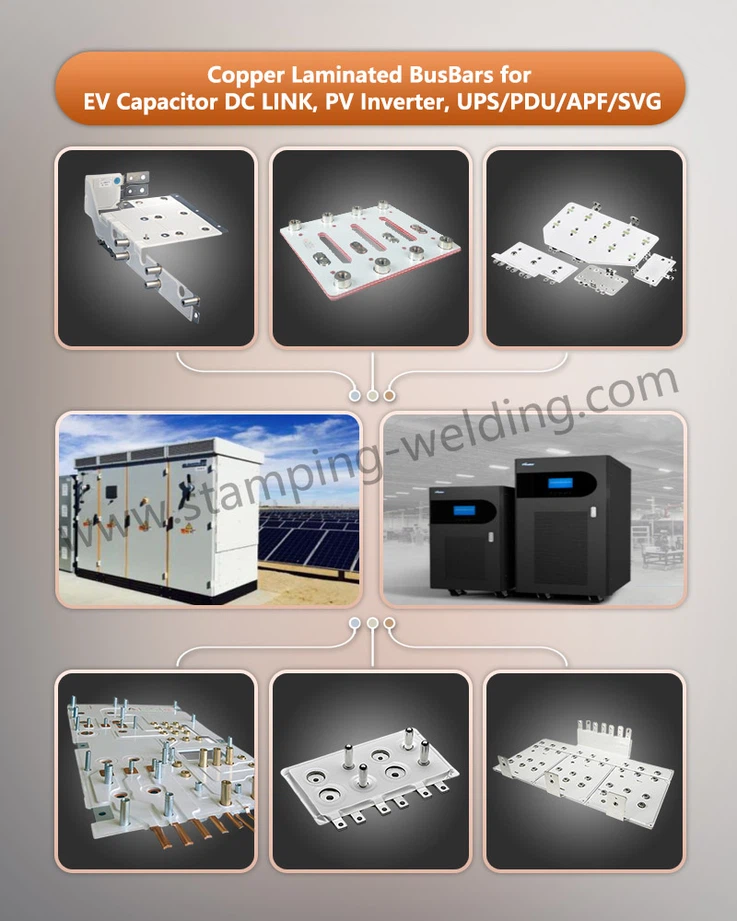
The first type is a multi-layer copper plate+internal insulation laminated structure, which has a long-term working temperature of no more than 105 ℃ for insulation and is suitable for relatively mild working conditions. It is widely used in industrial frequency converters, UPS equipment, photovoltaic converters, and inland wind power converters, and can meet the connection and insulation requirements in conventional power conversion processes.
The second type is a multi-layer copper plate+fully enclosed compression structure with internal and external insulation, which also requires the insulation to have a long-term working temperature not higher than 105 ℃. However, the Laminated bus bar for high current inverter has stronger environmental adaptability and is suitable for harsh working conditions, including large and small railway traction converters, mining and marine drive converters, as well as complex offshore wind power converters. It can effectively resist the impact of harsh environments on the performance of busbars.
Core advantages and application value
The reason why Laminated bus bar for mounting structure of capacitor bank can gradually replace traditional discrete busbars lies in its three outstanding advantages, which greatly improve the reliability and economy of modern distribution systems.
Firstly, the advantage of low distribution inductance is significant. The positive and negative conductors of the same circuit are pressed together, and the distributed inductance cancels each other out. At the same time, the sealed installation holes increase the creepage distance, further reducing the inductance, which can effectively prevent the induced high voltage generated during the switching of power semiconductor components from piercing through the components. It can also reduce or eliminate bypass capacitors, fully exerting the maximum efficiency of power components and avoiding the problems of efficiency reduction, loss increase, cost increase, and large equipment volume caused by the need for parallel absorption capacitors in traditional busbars.
Secondly, the partial discharge rate is extremely low. Traditional discrete busbars are prone to air gaps between the internal insulation and copper plates at different voltage levels under high voltage conditions, which can cause partial discharge and lead to rapid insulation aging. Replacement is required after about 5 years, significantly increasing the cost of components and after-sales service; The insulation layer of Laminated busbar connectors is completely bonded to the copper plate after hot pressing with adhesive, without any air gap. Before leaving the factory, it undergoes 100% partial discharge rate testing, and the insulation life exceeds 25 years, which can achieve maintenance free operation throughout the entire service life of the inverter.
Thirdly, it has outstanding resistance to harsh environments. Traditional discrete busbars are prone to problems such as loose connections, insulation moisture breakdown, and dust accumulation crawling and electrical breakdown in vibration, salt spray, and dust environments; The Laminated busbar for electric car, with its high-strength overall bonding structure, ensures long-term stability and can reduce the thickness of copper bars under the same current. Coupled with elastic compensation brackets, it can effectively resist the adverse environmental effects such as vibration, salt spray, and dust, ensuring the long-term stable operation of the distribution system.
Contact us
If you have any questions regarding the selection of Laminated copper busbars, scene adaptation, or technical consultation, please feel free to contact us at any time. We will provide professional technical support and customized solutions to assist in upgrading and optimizing your power distribution system.