Analysis of production process and market prospects of Epoxy powder coated busbars
Apr 13, 2026
Overview of Epoxy powder coated busbars
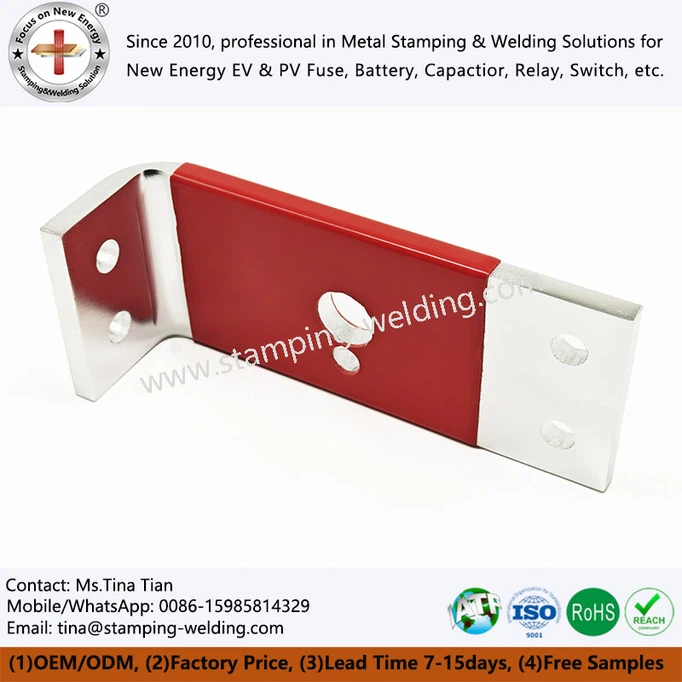
Epoxy powder coating insulated busbar is a core power component that relies on electrostatic adsorption and high-temperature curing principles to uniformly adhere epoxy resin powder to the surface of conductive busbars such as copper and aluminum bars, forming a dense insulation protective coating. It is mainly used for insulation isolation, anti-corrosion protection, and safe distribution of high-voltage electrical circuits.
The entire Insulation coating busbar is formed by professional spraying technology, consisting of conductive substrate, epoxy insulation coating, surface treatment layer, etc. With stable insulation performance, strong adhesion, high and low temperature resistance, environmental protection and high efficiency, it has become a key conductive connector in the fields of new energy, power equipment, rail transit, etc. Its process level and application scenarios are also continuously expanding.
Epoxy powder coated busbars core production process flow
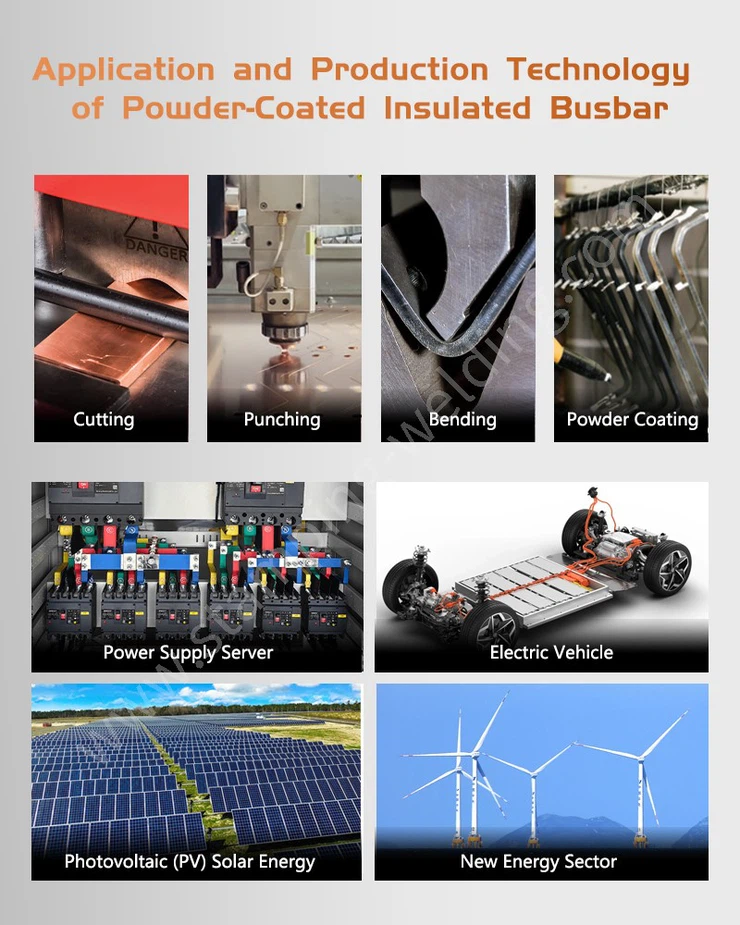
The manufacturing of Electroplating and powder coating busbars is a systematic engineering process that mainly includes four key steps: substrate pretreatment, powder coating, high-temperature curing, and molding testing. Each process requires strict process control to ensure the reliability of busbar insulation and conductivity stability.
In the process design stage, technicians need to combine electrical performance requirements to complete the planning of busbar structure dimensions, spray thickness, curing parameters, etc., clarify core indicators such as electrostatic spraying, powder uniformity, and insulation layer adhesion, while taking into account the assembly accuracy, temperature resistance, and later use safety of Epoxy powder coat busbar. The substrate pretreatment process mainly uses high-purity copper bars as raw materials, and removes surface oxide layers and impurities through processes such as cleaning, polishing, and degreasing. The surface flatness is strictly controlled, laying the foundation for the firm adhesion of the coating.
Entering the spraying and curing stage, the epoxy powder is uniformly adsorbed on the surface of the Epoxy bus bar coating through electrostatic spraying equipment, and then enters the curing furnace for high-temperature melting and solidification, forming a continuous and dense insulation protective layer, with a focus on ensuring that the coating has no pinholes, no sagging, and no missed spraying. After molding, it enters the comprehensive testing stage, where insulation performance, mechanical strength, and dimensional accuracy are verified through voltage withstand testing, adhesion testing, thickness testing, and temperature rise testing to ensure that the busbar meets the actual power system usage standards.
Market Application Status
Currently, the Busbar coating with epoxy coating powder market maintains a steady growth trend, with applications covering multiple high-end industries such as new energy power, energy storage equipment, high and low voltage distribution cabinets, and rail transit. In power batteries and photovoltaic energy storage systems, busbars mainly undertake high-voltage and high current transmission and insulation protection functions, effectively improving system safety and service life; Used for electrical connections in compact spaces in industrial control and distribution equipment, improving wiring efficiency and insulation reliability; In the fields of rail transit and industrial control power supply, it is widely used for long-term insulation distribution under high vibration and alternating high and low temperature conditions.
There are various types of Busbar insulation coating powders available in the market, ranging from standard straight rows to customized shaped bent rows, which can meet different voltage levels, current capacities, and installation space requirements. Currently, the market is mainly supported by the demand for new energy and power equipment, and the overall process maturity is high, forming a relatively stable supporting pattern.

Industry Development Trends
In the future, Epoxy power coating insulated busbars will continue to upgrade towards high insulation, high precision, lightweight, and integration. Against the backdrop of continuously improving electrical safety requirements, products will further optimize coating uniformity and curing processes, improve voltage resistance and flame retardancy, and meet higher standards of electrical safety requirements. The level of automation production continues to improve, and the popularity of integrated solutions such as precision stamping, intelligent spraying, and online detection has increased, which can achieve efficient and stable mass production and reduce consistency fluctuations.
At the same time, the customization level of Epoxy spray copper bus bar continues to deepen, allowing for three-dimensional molding and integrated design according to the system structure, adapting to highly integrated equipment such as battery packs, energy storage cabinets, and motor controllers. The application scenarios are also continuously extending outward, and emerging fields such as new energy vehicles, integrated wind solar storage, and data center UPS are rapidly increasing their demand for highly reliable insulated busbars, opening up new growth opportunities for the industry.

contact us
If you have any related needs in the selection of Epoxy powder coated busbars, customized structural design, or insulation process solutions, please feel free to contact us at any time. We will provide you with professional technical consultation and one-stop solutions to help you ensure the stable implementation of your power and electrical projects.