Analysis of professional knowledge in tinned copper busbar industry
May 27, 2026
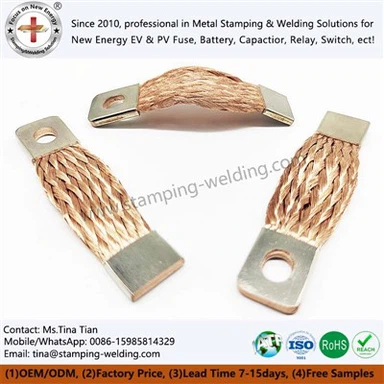
Tin-plated copper busbar is a conductive busbar-like component that uses high-purity copper as a base and is evenly covered with a layer of metallic tin on the surface through electroplating or hot plating processes. Copper itself is a metal material with the second highest electrical conductivity in nature after silver. It has extremely low resistivity and excellent machining properties, so it is widely used as the main conductor in power transmission and distribution systems. However, copper is prone to oxidation reactions when exposed to the air for a long time, and a dark copper oxide film will gradually form on the surface. Although this oxide film can prevent the internal copper from continuing to oxidize to a certain extent, its electrical conductivity is much lower than that of pure copper. If it appears on the contact surface of the electrical connection, it will cause the contact resistance to significantly increase, thereby causing local heating and energy loss. By covering the surface of the copper bus with a layer of tin, the copper matrix can be effectively isolated from corrosive media such as oxygen and moisture in the air, thereby preventing oxidation of copper and greatly improving the corrosion resistance of the busbar.
In addition, the tin plating layer can also significantly improve the welding performance of the busbar, making the busbar easier to operate in situations where welding connections are required, and the solder joints are stronger and more reliable. Among many conductive materials, Galvanized busbar usually refers to galvanized busbar, while Tin Plated Copper Busbar specifically refers to tin-plated copper busbar. The latter is more widely used in the field of electrical engineering due to its better conductivity and weldability. The tin layer and the copper matrix have good metal bonding force and will not peel off due to thermal cycles or mechanical vibrations, which ensures the long-term stable operation of the busbar. In power distribution cabinets, switch cabinets and various types of electrical complete equipment, Tin Coated Copper BusBar has become the preferred solution for engineering designers due to its stable contact performance and weather resistance.

Process flow
The manufacturing process of tinned copper busbars involves multiple technical links, and the quality control of each link directly affects the performance and service life of the final product. The first step is the selection of raw materials. High-purity electrolytic copper is usually used as the base material. The purity of copper is required to reach more than 99.9% to ensure excellent conductive properties. The microstructure of the copper material will also affect the adhesion of subsequent coatings, so copper bar blanks with uniform grains and no internal defects should be selected. The second step is surface pretreatment, which is crucial. The surface of copper strips often contains residual oil stains, naturally formed oxide layers and tiny attached particles during the rolling process. If these contaminants are not completely removed, they will seriously affect the bonding strength between the tin layer and the copper matrix. Surface cleaning usually uses chemical cleaning or electrochemical cleaning, combined with acidic activation treatment, to make the copper surface show a fresh and clean metallic luster. In some high-end manufacturing processes, ultrasonic cleaning is also used to remove residue from tiny gaps. The third step is the tin plating process. According to different process principles, tin plating can be divided into two methods: electroplating and hot plating. Electroplating is based on the principle of electrolysis. A copper bar is used as a cathode and is immersed in an electrolyte containing tin ions. Under the action of a DC electric field, the tin ions are reduced and deposited on the surface of the copper bar to form a uniform and dense tin layer.
The advantage of electroplating is that the thickness of the tin layer is easy to control and has good uniformity, which is suitable for occasions that require high dimensional accuracy. Hot plating is to immerse the copper bar treated with plating flux into high-temperature molten tin liquid, hold it for a certain period of time and then slowly lift it out, so that the liquid tin can evenly adhere and solidify into a tin layer under the action of surface tension. The thickness of the hot-dip tin plating layer is usually larger than that of the electroplating layer and has better corrosion resistance, but the thickness uniformity is slightly inferior to that of electroplating. In mass production, Flat Copper BusBar uses hot-dip tin plating process to obtain a thicker protective layer, which is suitable for outdoor or highly corrosive environments. The fourth step is the post-processing process, including cooling, cleaning, polishing and drying. Cooling should be done by natural cooling or air cooling to avoid excessive stress in the coating caused by rapid cooling. Cleaning is to remove the residual plating flux or electrolyte during the tin plating process and prevent these chemicals from corroding the plating or copper matrix during long-term storage. Polishing can remove tiny burrs and flow marks on the surface, making the busbar look smoother and more beautiful, while also helping to reduce contact resistance. After the production of Tin Plated Copper Bar is completed, sampling inspection is required, including coating thickness measurement, adhesion cross-hatch test, salt spray corrosion test and appearance inspection, etc. to ensure that each batch of products meets the delivery standards.

Application areas
With its excellent conductivity, corrosion resistance and weldability, tinned copper busbars are widely used in various electrical equipment and power systems, becoming an indispensable basic conductive material in modern industry. In the field of power distribution, tinned copper busbars are the core conductive components in power distribution cabinets, switch cabinets, capacitor compensation cabinets and power boxes. As main busbars and branch busbars, they bear the important task of safely and efficiently distributing electric energy from the incoming line to each outgoing circuit. In power transformers, tinned copper busbars are used for the outgoing terminal connections on the low voltage side and for the neutral point ground connection. In the field of industrial automation, tinned copper busbars appear in various control cabinets, PLC cabinets, inverter cabinets and servo drive systems to ensure that the control system obtains stable power supply and at the same time ensures the reliability of the signal shielding grounding system. In the field of rail transit, tinned copper busbars are used in power distribution systems on subway platforms, high-voltage connections within train traction converters, and grounding busbars for signaling equipment.
In the field of new energy, tinned copper busbars are particularly widely used. For example, in solar photovoltaic power generation systems, tinned copper busbars are used to connect the DC and AC side connections between PV strings and combiner boxes, combiner boxes and inverters, and inverters and step-up transformers. Photovoltaic systems are usually installed on outdoor rooftops or ground power stations and are exposed to sunlight, rain, and drastic temperature changes for a long time. The weather resistance provided by the tin plating layer effectively protects the copper matrix and extends the service life of the system. In electric vehicle charging facilities, tinned copper busbars are used in power distribution modules inside charging piles to carry out energy transmission tasks during high-current charging. In the field of wind power generation, tinned copper busbars are used in converter cabinets in the engine room and distribution cabinets at the bottom of the tower. hdhc tinned copper busbar, as a type of high-quality tinned copper busbar, is usually used in high-current applications that require high conductivity and corrosion resistance.
In addition, in building electrical engineering, tinned copper busbars are used as floor distribution trunks in high-rise buildings and as main grounding busbars in equipotential bonding systems. In communication base stations and data centers, tinned copper busbars are used for the connection of power distribution units and backup battery packs. Tinned copper busbars also play a key role in industrial electric heating equipment, electrochemical rectifiers and large welding equipment. These extensive applications fully prove the irreplaceability of tinned copper busbars in the field of electrical engineering, and its reliability and durability have been fully verified in decades of engineering practice. Due to its stable performance, copper tinned busbar has become a recommended conductive material in many industry design specifications and standard drawings.

Development trend
Looking at the overall development trend of the industry, the market demand for tinned copper busbars has always maintained steady growth. Relying on the industry trends of infrastructure improvement, industrial upgrading, and new energy expansion, it has become a rigidly needed material in the electrical supporting field. Industry production standards continue to be standardized, all types of products follow unified electrical standards and process specifications, and product consistency and stability are greatly improved. Product prices are mainly affected by market fluctuations in copper and tin basic raw materials. Products with different specifications and tin plating thicknesses are suitable for different levels of application scenarios, and the overall cost performance is better than most similar conductive protective materials. As the electrical industry iterates toward intelligence, greenness, and high-end, environmentally friendly tin plating processes and high-precision automated production technology continue to upgrade, and the conductive efficiency, protective performance, and mechanical properties of busbars are continuously optimized, which can accurately adapt to the upgrade needs of smart grids, new energy equipment, and high-end industrial control equipment, allowing busbar tinned copper products to continue to adapt to the high-end development trends of the industry.
contact us
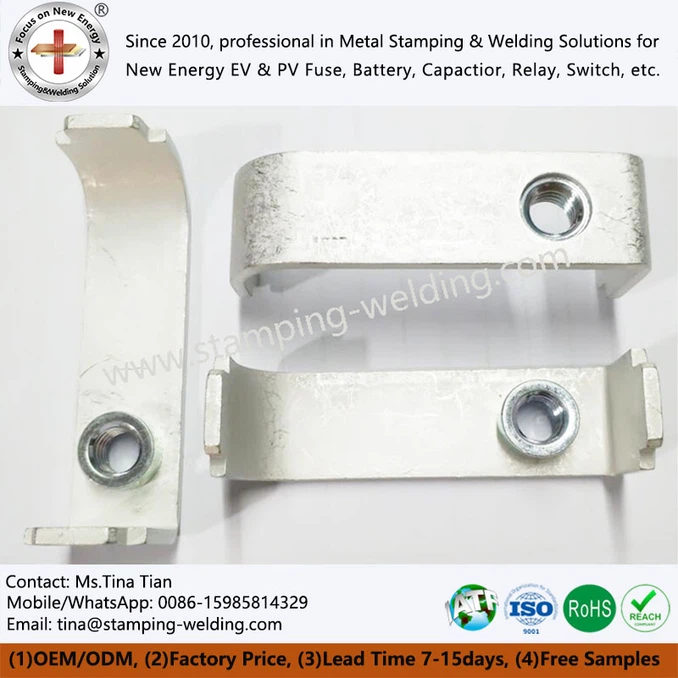
We support customizing Flat Copper BusBar with different sizes, coating thicknesses and hole arrangements according to customer drawings, and can provide third-party inspection reports. You are welcome to send technical drawings or purchasing requirements to our sales team, and we will provide you with professional technical support and stable supply guarantee.