


Application of Copper End Caps Round in HVAC and Refrigeration Systems
Sep 16, 2026
What are round copper end caps?
Round copper end caps are common components used to seal and protect the ends of copper pipes and copper piping systems. Depending on their structural design, they are generally categorized into internal caps and external caps.
Simply put, an internal cap fits against the inner wall of the copper pipe, whereas an external cap fits over the outside of the pipe. Specific structural designs, dimensions, and installation methods vary according to the application and manufacturing standards.
In the HVAC and refrigeration industries, copper pipes perform critical functions such as transporting refrigerant, connecting equipment, and facilitating heat exchange; consequently, the sealing and protection of pipe ends must also meet relevant engineering requirements.

Primary Functions of Copper Caps (Internal and External) in HVAC Systems
HVAC systems typically consist of a compressor, condenser, evaporator, expansion device, and various copper pipes and fittings.
During installation, manufacturing, and maintenance, copper pipes may require temporary or permanent sealing. Depending on the system design, copper caps (both internal and external types) serve the following functions:
1. Sealing Copper Pipe Ends
When a section of copper pipe no longer requires a connection, the pipe end can be sealed using an appropriate cap.
This practice is common during equipment manufacturing, piping system modifications, and HVAC system maintenance.
2. Pipe End Protection
If pipe ends remain open for extended periods during transportation, storage, or installation, dust, moisture, and other foreign matter can enter the piping.
For refrigeration systems, the internal cleanliness and dryness of the piping are critical; therefore, protecting pipe ends is a key consideration during manufacturing and installation.
3. Piping Modification and Maintenance
During the maintenance of air conditioning, cold storage, and refrigeration equipment, existing piping layouts may need to be reconfigured.
In such cases, certain sections of piping may need to be sealed or isolated, and copper caps serve as a solution for capping off these pipe ends.
Why are copper tubes widely used in HVAC and refrigeration systems?
Copper is prized for its excellent thermal conductivity, ductility, and workability, making it a long-standing choice for piping systems in air conditioning and refrigeration equipment.
Excellent Thermal Conductivity
Copper possesses high thermal conductivity, making it ideal for equipment and piping systems that involve heat exchange.
Since air conditioning units, refrigeration equipment, and certain heat pump systems require efficient heat exchange, copper tubing is a common choice for piping.
Excellent Workability
Copper is highly ductile, allowing it to be shaped through processes such as bending, flaring, stamping, and drawing.
This makes it an excellent material for manufacturing copper fittings, such as internal and external copper caps.
Suitable for Brazing and Welding
Copper piping systems can be joined using brazing, soldering, or other appropriate methods depending on the specific application.
In refrigeration piping, the quality of the connection directly impacts the system's sealing performance; therefore, precise dimensional matching between the cap and the tube, as well as the joining technique employed, are critical.

How to Select Round Copper End Caps for HVAC Applications?
When selecting copper caps (internal or external), relying solely on the product diameter is not recommended.
1. Verify Copper Tube Dimensions
First, confirm the actual outer diameter, inner diameter, and wall thickness of the copper tube.
2. Consider the Operating Environment
Different applications have varying requirements, such as:
Residential air conditioning
Commercial air conditioning
Central air conditioning
Cold storage
Refrigeration equipment
Heat pump equipment
3. Determine the Connection Method
Verify product suitability based on the intended installation method:
Brazing
Soft soldering
Mechanical connection
Other specified joining processes
4. Consider Pressure and Temperature
For applications in refrigeration systems, selection must also take into account the system's operating pressure, operating temperature, and the type of refrigerant used.
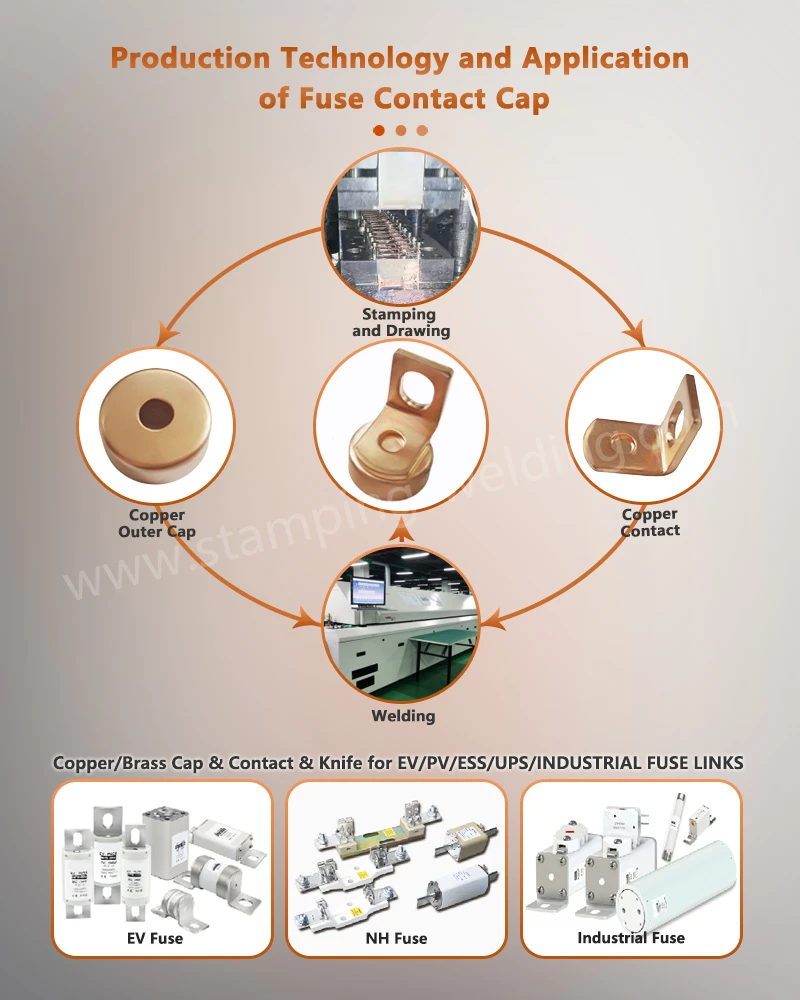
Trends in Copper Pipe Caps for the Refrigeration Industry
With the ongoing development of air conditioning, cold chain logistics, commercial refrigeration, and heat pump equipment, copper tubing and copper fittings continue to offer significant application potential.
For manufacturers of copper pipe caps, future customer priorities will extend beyond price to include:
· Dimensional accuracy
· Material stability
· Product consistency
· Surface quality
· Cleanliness
· Packaging methods
· Customization capabilities
For OEM equipment manufacturers in particular, stable dimensional tolerances and batch-to-batch consistency are crucial for automated assembly processes.
Contact Us
Different HVAC and refrigeration projects may impose varying requirements regarding tube diameter, wall thickness, dimensional tolerances, and manufacturing processes for copper inner and outer caps; therefore, confirming customized specifications is a crucial step in the procurement process. If you have requirements for the customization or bulk procurement of copper outer caps for industrial power fuses, please contact us and provide detailed drawings and product specifications. We will assist you in evaluating manufacturing processes, specification compatibility, and pricing options.


