Application of PVC Dip-Coated Insulated Busbars in Power Batteries for New Energy Vehicles
Sep 15, 2026
As the new energy vehicle market continues to grow, power battery systems are evolving toward high voltage, high current, high integration, and lightweight designs. As critical internal electrical connection components, busbars facilitate functions such as current transmission, module interconnection, and high-voltage power distribution.
Compared to traditional cables, copper busbars offer advantages such as compact structure, excellent electrical conductivity, superior heat dissipation, and ease of fabrication. Consequently, they are widely used in new energy vehicle power batteries, high-voltage power distribution units, motor control systems, and other high-voltage electrical applications.
Insulation protection is a crucial factor influencing the safety and reliability of busbar systems. PVC dip-coated insulated busbars feature a continuous insulating layer formed on the copper surface; this allows the copper conductor to maintain excellent conductivity while minimizing the risk of accidental contact with surrounding conductive components.

What is a PVC dip-insulated busbar?
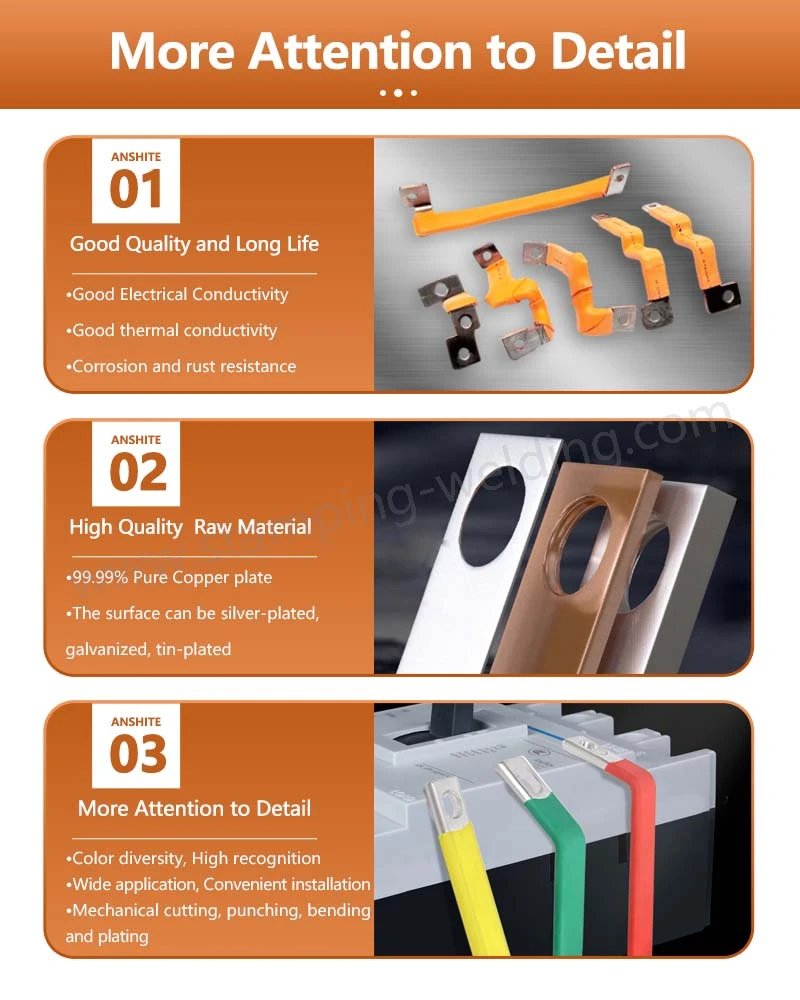
PVC dip-insulated busbars typically utilize a copper busbar as the conductive core, which is shaped through processes such as cutting, punching, and bending, followed by a dip-coating process to apply a PVC insulation layer to the surface.
Its basic structure can be described as follows:
Copper conductor + PVC insulation layer + Electrical connection terminals
The copper conductor transmits the electric current, while the PVC insulation layer primarily provides electrical isolation and surface protection.
As the internal space within new energy vehicle power battery packs is often limited, busbars cannot simply employ a uniform linear design; instead, they must be custom-designed to fit the spatial constraints of battery modules, housings, and other electrical components.
Why do power batteries require insulated busbars?
Power batteries in new energy vehicles typically operate in high-voltage environments. As platforms evolve from 400V to 800V or even higher, power battery systems demand stricter standards for electrical connections and insulation safety.
If copper busbars remain exposed, additional measures-such as partitions, protective covers, or other structural elements-are required to ensure adequate electrical clearance.
Using insulated busbars can simplify certain insulation and protection structures while reducing the risk of accidental contact between exposed conductors.
For battery packs, busbars generally must meet the following requirements:
Good electrical conductivity
Sufficient current-carrying capacity
Reasonable temperature rise levels
Stable insulation performance
Good mechanical strength
High space utilization
Reliability under vehicle vibration conditions
Therefore, busbar insulation is not merely a matter of adding a layer of plastic; it is a critical component in the design of high-voltage connection systems for new energy vehicles.
Application of PVC-Dipped Busbars in Power Battery Packs
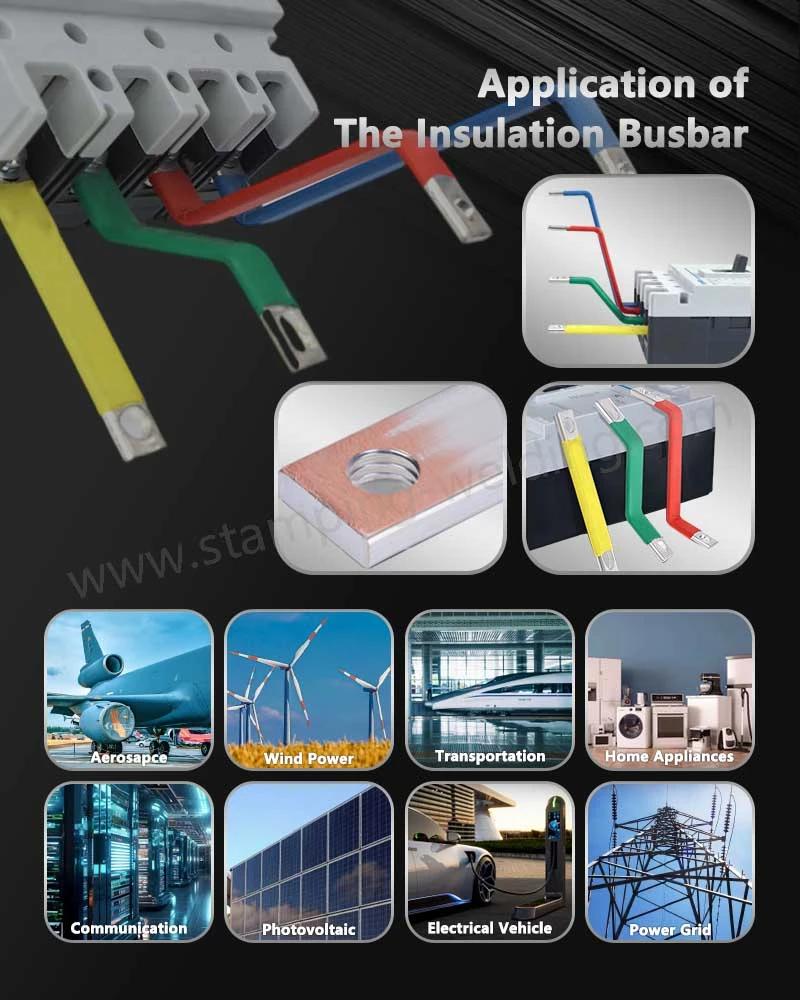
Power battery packs represent a key application area for PVC dip-coated insulated busbars.
Busbars must be custom-configured to the battery structure for connections between battery modules, between the battery system and the BDU/PDU, and within certain high-voltage circuits.
For instance, a busbar may require multiple bends to clear the battery casing, connectors, and other structural components.
Applying the insulation layer via a dip-coating process after the copper busbar has been formed allows the product to take on a custom shape that matches the specific installation layout.
This design approach is particularly well-suited for battery systems where space is limited.
The Role and Engineering Selection of PVC Dip-Insulated Busbars in Next-Gen NEV Power Batteries
Plastic-dipping copper busbars represent a key solution for high-voltage connection systems in new energy vehicle (NEV) power battery packs.
By combining copper busbar fabrication with dip-insulation processing, it is possible to achieve an integrated design that addresses electrical conductivity, insulation, and structural customization.
As NEVs evolve toward higher voltages, greater integration, and lighter weights, busbar products will continue to undergo optimization in terms of materials, structural design, and manufacturing processes.
When selecting busbars, power battery manufacturers, automotive component suppliers, and high-voltage system engineers must comprehensively evaluate factors such as current, voltage, temperature, spatial constraints, insulation, and mechanical reliability to determine the optimal busbar structure and insulation solution.
FAQ:Application ofPlastic Dipping Copper Busbar in Power Batteries for New Energy Vehicles
What are the advantages of PVC dip-coated busbars for EV battery applications?
+
-
Key advantages include reliable electrical insulation, protection against accidental contact, customized shapes and dimensions, good space utilization, and suitability for complex battery-pack structures.
Can PVC dip-coated insulated busbars be customized for different EV battery packs?
+
-
Yes. Busbars can typically be customized in terms of copper material, thickness, width, length, hole positions, bending angles, terminal configuration, and PVC insulation coverage according to the battery-pack design.
How does a PVC dip-coated busbar compare with a heat-shrink insulated busbar?
+
-
PVC dip coating forms an insulation layer directly around the busbar, which can be advantageous for customized and complex-shaped busbars. Heat-shrink insulation is generally simpler to process and can be convenient for certain applications. The best solution depends on voltage, temperature, geometry, insulation requirements, and production conditions.
What factors should be considered when selecting an insulated busbar for an EV battery pack?
+
-
Important factors include operating voltage, current rating, copper grade, busbar dimensions, insulation thickness, operating temperature, flame-retardant requirements, surface treatment, mechanical strength, and available installation space.
Contact Us
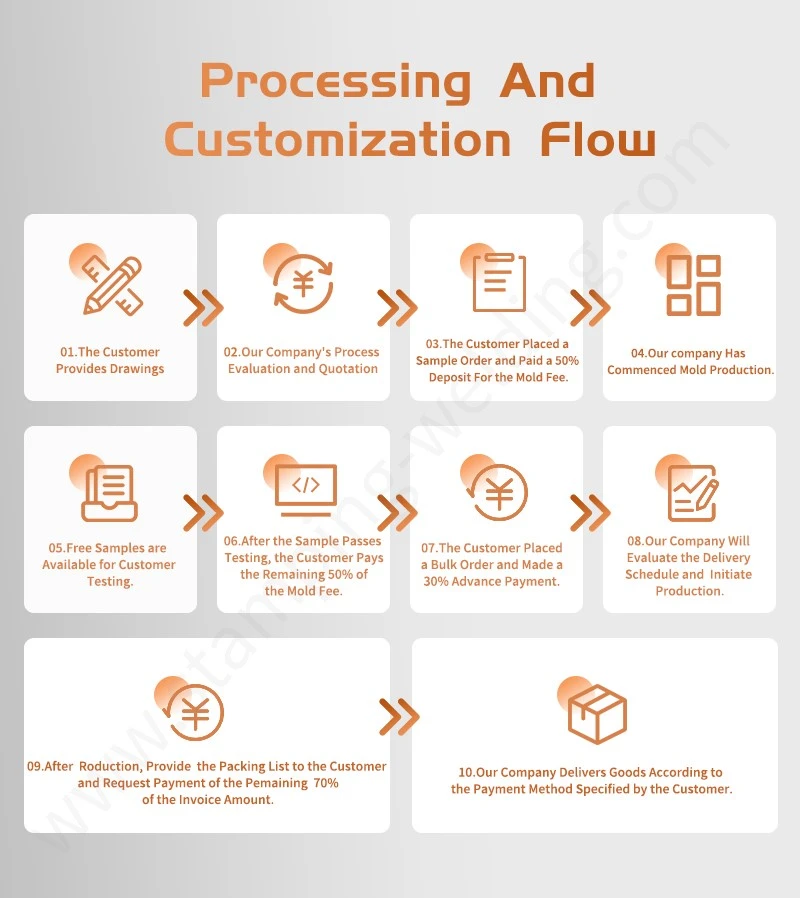
Send us your drawings or specifications today, and let our engineering team help you develop a customized PVC dipping insulated battery busbar connector solution for your EV battery pack.