Braided copper wire safety specifications and application guidelines
Mar 26, 2026
Braided copper wire safety specifications and application guidelines
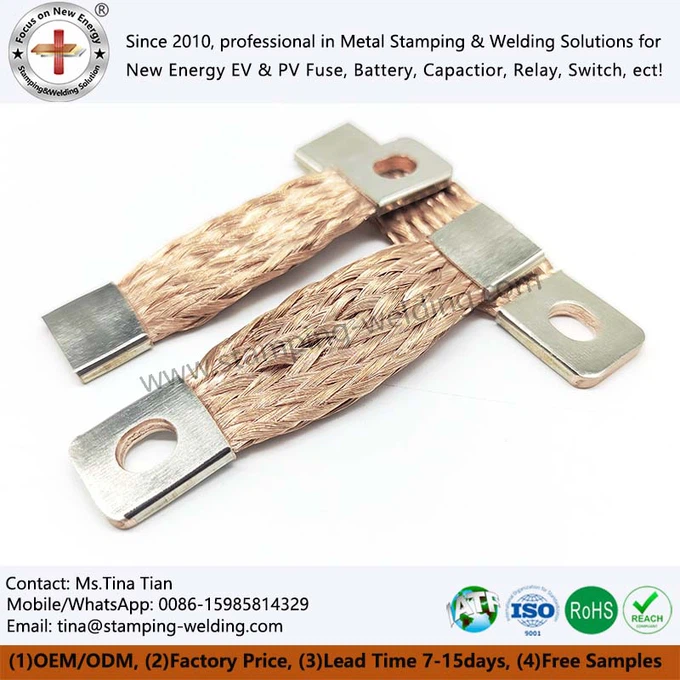
The core characteristics of Copper power braid revolve around flexible conductivity and strong adaptability, which can be accurately matched according to different industry working conditions to meet the needs of diverse scenarios. The core features of the product include: high conductivity, woven with high-purity electrolytic copper wire, conductivity close to pure copper, low and stable resistance value, and the ability to carry high current transmission; Excellent flexibility, able to bend and twist freely, suitable for complex installation spaces, while also possessing good fatigue resistance, able to bend repeatedly without easily breaking the strands; Reliable mechanical performance, outstanding tensile and compressive strength, can effectively compensate for equipment thermal expansion and contraction displacement, and avoid stress damage; Some products can undergo surface treatments such as tin plating and silver plating to enhance their anti-corrosion performance and adapt to different harsh working conditions.
The industry adaptation scenarios of Braided copper flexible wire connector cover a wide range, targeted to solve the pain points of rigid connection in various fields: in the field of power distribution, it is mainly used for cabinet grounding, cabinet door cross connection of distribution cabinets, switch cabinets, PLC cabinets, as well as flexible connection of high and low voltage sides of transformers and generators. It can also achieve soft connection between bus ducts and copper bars, eliminate stress caused by thermal expansion and contraction, and adapt to lightning protection and anti-static grounding requirements.
In the field of ships, emphasis is placed on anti salt spray and anti vibration, commonly used for grounding of ship electrical equipment, flexible connection of generator sets, and cross connection of ship compartments. Tin plated anti-corrosion products are often selected.
In the field of HVAC and refrigeration, grounding bridging is commonly used for fans, motors, and air conditioning units to prevent static electricity hazards.
In the fields of industrial automation, transportation, and new energy, it covers scenarios such as flexible power supply for mobile devices, connection of high current equipment, grounding of photovoltaic wind power and new energy vehicles, and lightning protection of steel structures. With the advantages of flexible adaptation and stable conductivity, it has become a core substitute and supplementary component for rigid connections.
Safety operation specifications before installation
The standardized preparation before installing Braided copper wire is the foundation for ensuring operational safety and product lifespan, and strict implementation of safety requirements throughout the entire process is necessary. Before starting work, it is necessary to follow the standard procedures of power-off, electricity inspection, and hanging safety warning signs. Live working is strictly prohibited to eliminate the risk of electric shock from the source.
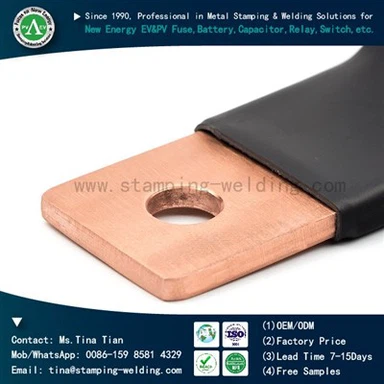
At the same time, conduct a comprehensive inspection of the status of the Flexible braided copper busbar body to confirm that there are no broken strands, loose wires, severe oxidation, cracks, or other issues. Carefully check the specifications such as cross-sectional area, length, and terminal aperture to ensure that they match the equipment requirements completely. It is strictly prohibited for small-sized products to carry high currents to avoid overloading and causing faults; In addition, the contact surface of the connection should be polished clean to thoroughly remove the oxide layer and oil stains. If necessary, conductive paste should be applied to reduce the contact resistance and ensure the conductivity stability after connection.
Key points for installation and operation safety control
The installation and daily operation of Copper braided flexible connectors should take into account both mechanical protection and electrical safety, and avoid various hidden risks. During installation, bolts should be evenly stressed and tightened diagonally to prevent copper nose cracking and deformation of braided wires. Braided wires should not be forcibly stretched, twisted, or bent at sharp angles to avoid copper wire breakage. At the same time, they should be kept away from sharp edges to prevent the outer skin from being scratched.
After connection, an appropriate amount of activity allowance should be reserved to compensate for the displacement caused by thermal expansion and contraction of the equipment, prevent force breakage, and strictly prohibit direct overlapping of copper and aluminum materials. Copper-aluminum transition terminals must be used to avoid electrochemical corrosion. Daily operation inspections should focus on monitoring multiple indicators to ensure that the operating temperature of the Flexible braided custom connector does not exceed 70 ℃, there is no overheating, redness, ignition, discharge, abnormal noise, or odor, no looseness, oxidation, blackening, or broken strands, and the insulation sheath is intact without damage or aging, eliminating the risk of electrical leakage and ensuring the continuous and stable operation of the system.

Maintenance, replacement, fire prevention, and electric shock safety
Post maintenance and replacement operations must strictly follow safety procedures, while also providing comprehensive fire and electric shock protection. Before replacing the Insulated flexible copper bars, it is necessary to cut off the power again to verify that there is no risk of live charging; If the product experiences erosion, blackening, or breakage exceeding 10%, it must be immediately replaced as a whole and it is strictly prohibited to continue using it after repair; When cleaning the contact surface, proper protection should be taken to prevent copper shavings and metal wires from falling into the cabinet and causing short circuits.
The operating tools should ensure good insulation to avoid accidental contact with live objects. In terms of fire and electric shock prevention, it is necessary to keep the cabinet dry, dust-free, and free of flammable and explosive materials. The area around the Flat copper braid flexible should be kept away from water and oil pipes; Operators must wear insulated shoes and gloves, and it is strictly prohibited to carry out internal operations of high-voltage cabinets and distribution cabinets alone, fully ensuring the dual safety of personnel and equipment.
contact us
If you have any questions about the selection, customization, or procurement of copper braided tapes and Braided copper wires, please feel free to communicate with us for consultation at any time. We will provide professional technical support and adaptation solutions to help your project run stably. We sincerely invite inquiries and negotiations.