Comparison of Stainless Steel Stamping Parts and Brass Stamping Parts Selection and Working Condition Adaptation Guide
Jun 21, 2026
In the fields of precision metal processing and industrial component manufacturing, stainless steel stamped parts and brass stamping parts are the two major categories of metal stamping products. The two types of products are adapted to completely different industrial conditions based on the differences in the physical and chemical properties of the base materials. The core principle of component production is to comprehensively select the material based on the performance of the base material, processing attributes, and usage costs. In the current industrial customization sector, the application coverage of Stainless Steel Stamping Parts continues to expand, becoming the mainstream material for outdoor and load-bearing components.

Anti-corrosion comparison
In terms of corrosion resistance, both types of stamped parts are suitable for conventional industrial environments, but their ability to withstand extreme environments differs significantly. Stainless steel stamped parts have excellent overall rust and corrosion resistance; mainstream grades of 304 and 316 can serve for extended periods in humid and acid-alkali environments, with only lower-grade, inferior stainless steel prone to rusting. High-grade stainless steel parts can further improve their corrosion resistance thanks to mature Stainless Steel Sheet Metal Fabrication technology. Brass substrates have excellent inherent corrosion resistance; modified nickel brass has a controllable dezincification rate of 0.05 mm/year, making it stable and adaptable to acid-alkali environments ranging from pH 2 to 12, suitable for the production of specialized chemical components.
Processing differences
Differences in processing technology and forming thresholds directly impact mass production costs. Stainless steel has high hardness and is prone to work hardening during stamping, requiring high precision in molds and equipment, resulting in significant processing losses and higher costs. It is best suited for large-scale customization of factory-customized stainless steel. Brass, on the other hand, is soft, has good plasticity, and produces smooth cross-sections. It can be processed into complex irregular structures, is easier to form, and has a higher yield rate.
The two materials differ significantly in electrical and thermal conductivity and structural strength. Stainless steel has poor electrical and thermal conductivity, making it suitable only for standard structural components. Non-standard parts can be customized through Custom Sheet Metal Stamping. It has excellent load-bearing capacity, and 304 stainless steel is suitable for heavy-duty housings in automobiles and home appliances. Brass has stable electrical and thermal conductivity, making it suitable for electrical heat dissipation components. Standard brass has relatively weak strength, but modified nickel brass, after processing and modification, can be suitable for medium to light-duty industrial applications.

Adapted scenarios
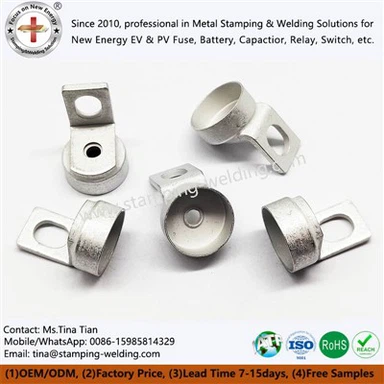
Based on industry-wide application scenarios, a standardized selection logic has been established. Stainless steel stamping parts are prioritized in high-strength load-bearing, long-term corrosion-resistant, and food and consumer goods sectors, including automotive body components, equipment support brackets, outdoor maintenance hardware, food processing machinery parts, and compliant drinking water contact hardware. For components with strictly controlled lead content in consumer goods, high-grade lead-free stainless steel is preferred. For niche, non-standard thin-walled components, Industry Custom Small Stainless Steel Sheet Metal Stamping Parts can be used for custom processing.
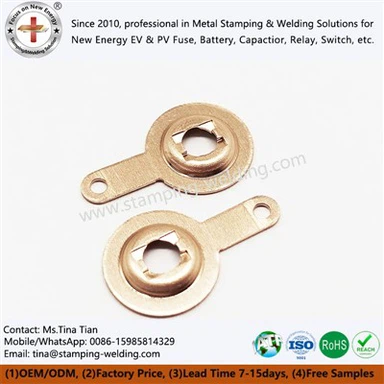
Brass stamping parts specialize in electrical precision, special wear-resistant, and irregularly shaped parts. They are suitable for conductive components such as electronic and electrical conductive contacts, built-in connectors, and industrial heat dissipation hardware. They are also suitable for high-precision irregularly shaped small hardware and wear-resistant friction components for acid and alkali conditions. High-end modified nickel brass can also replace some expensive copper-nickel alloy components, reducing procurement costs for special applications.
Selection Recommendations
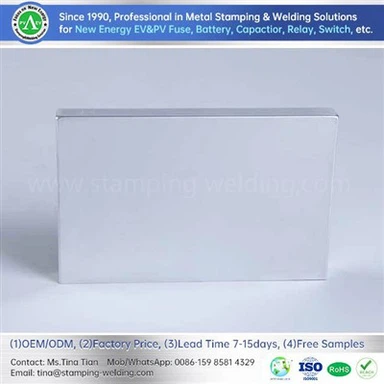
In terms of industry procurement and production selection, there is no absolute superiority or inferiority between the two types of stamped parts; the core requirement is to meet the specific working conditions. For projects prioritizing structural load-bearing capacity, outdoor corrosion resistance, and food-grade compliance, 304 or higher grade stainless steel stamped parts are preferred. Irregularly shaped sheet metal components can be custom-processed using Stainless Steel Metal Plate Sheet raw materials. For projects prioritizing electrical conductivity, complex irregularly shaped integrated molding, and medium corrosion resistance in special working conditions, conventional brass is preferred. With sufficient budget, nickel brass can be upgraded to extend service life. Bending components can be paired with Stainless Steel Bending Parts, matching the entire stainless steel stamping process as needed to maximize the balance between product performance and production costs.
Contact Us
For custom Stainless Steel Stamping Parts and brass stamped parts to suit different working conditions, please feel free to contact us for a customized solution.