Comprehensive analysis of Electrical control cabinet design and layout
Apr 13, 2026
Overview, Application, and Technical Parameters of Electrical control cabinet
Fiber optic cabinets refers to a system integrated equipment with programmable controller as the control core, including PLC body, optional modules, operation console, alarm lights, buttons and other control components. These components can be customized according to actual application environments and operational requirements to achieve control, monitoring, and operation of on-site automation control systems. The Fibre distribution cabinet is an essential core component in industrial automation control, with stable and reliable performance, easy installation, and user-friendly operation. It can complete basic operations without the need for highly specialized technical personnel.
In terms of usage, Access control cabinets are widely used in factory production line control, robot control, workshop automation, mechanical automation and other scenarios. They can achieve functions such as automatic switching, detection, monitoring and control, with a compact structure, complete functions, and strong anti-interference ability. In terms of technical parameters, they mainly include PLC controller parameters, module parameters, connector parameters, console parameters, alarm light parameters, button parameters, and control parameters. These parameters need to be determined according to the actual application environment to meet different working conditions.
Cabinet type selection, ventilation system and trunking selection
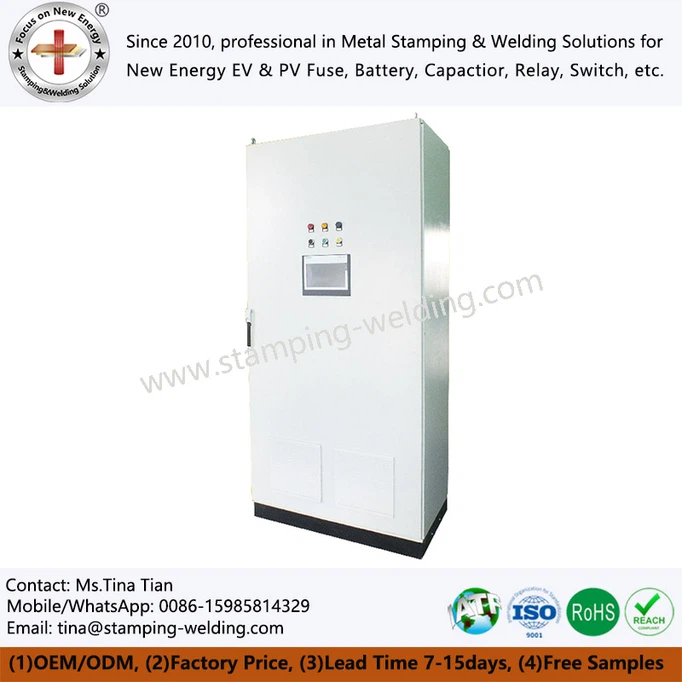
The Electrical control cabinet models suitable for loading PLCs usually use fixed cabinets, and the door panel is a whole door structure, such as KB cabinets, nine fold cabinets, and sixteen fold cabinets. GGD cabinets, fixed split cabinets, or drawer cabinets should not be used. The reason is that the components inside the PLC cabinet are mostly installed as a whole board, and if a cabinet door segmentation structure is used, it will be inconvenient for installation and debugging. If GGD cabinet must be selected, non-standard design should be carried out by merging the instrument door, front door, and lower ventilation door into a whole door, and removing the front and rear crossbeams on the cabinet frame.
In terms of the design of the Optical distribution cabinet ventilation system, it is recommended to adopt the form of front door bottom air inlet and top air outlet, and the rear door does not have air inlet and outlet holes. Ventilation filters are installed at the inlet and outlet respectively for dust prevention, with an inlet and outlet area of approximately 0.08 square meters. Given that the components inside the PLC cabinet generate relatively little heat, natural convection can be used to meet the heat dissipation requirements; If air flow needs to be accelerated, an axial flow fan can be installed on the outlet filter of the upper half of the door panel to exhaust air outward, and the cabinet top cover adopts a non porous structure. In terms of selecting specifications for cable trays, commonly used widths are 25mm, 40mm, 60mm, 80mm, and 100mm, with heights ranging from 40mm to 100mm. Grey is the preferred color.
The selection principle of Industrial control cabinet is to determine the specifications based on the sum of the volume of cables passing through the trunking (including insulation layer), which is about 80% of the trunking capacity. The remaining space is convenient for cable heat dissipation and can be calculated based on cross-sectional relationships. Usually, cables larger than 6 square millimeters should not be managed using cable trays. However, for special cables such as network cables and prefabricated cables for electronic components, they can also be placed neatly in the cabinet. The design should be based on the wire diameter and bending radius to make reasonable choices.
Specification for component layout and spacing requirements
The layout of internal components in Industrial electrical cabinets generally follows the principle of top to bottom and left to right, which is convenient for operation and maintenance. Components that are frequently operated or maintained should be installed in easily accessible locations, with a recommended ground clearance of 400 to 1800 millimeters; Components that are not frequently operated can be installed at a height of about 2000 millimeters, and the installation position of the bottom component should not be lower than 200 millimeters above the ground, otherwise it cannot be wired on site. Specifically for various components: The stabilized power supply is a heating element that does not require frequent maintenance and should be placed at the top of the cabinet with minimal wiring. The wire slot should be 40mm wide, with a clear distance of about 30mm between its edge and the slot.
When arranging the units in the Motor control cabinet, special units and input units that generate less interference should be selected adjacent to the CPU unit; The sources of interference such as electromagnetic contactors and relays in external circuits should be configured separately from the PLC, with a distance of approximately 100 millimeters or more. As the main component of the PLC system, the module needs to be regularly debugged and maintained. It should be installed in a position that is easy to operate and arranged from left to right for expansion. When there are many signal lines, an 80mm wide cable tray is usually selected. The net distance between the upper end of the rack and the cable tray is about 30mm, and the net distance between the lower end and the cable tray is about 80mm. The installation height of the circuit breaker should be convenient for operation, and there should be no devices around that hinder operation. Usually, a 60mm wide wire slot is selected, and the clear distance between the upper and lower edges of the circuit breaker and the wire slot is about 40mm. When installing, it should be arranged from the left side for expansion. Relays and terminal blocks are generally arranged in the lower front or back of the cabinet, with priority given to longitudinal arrangement of terminal blocks. Internal and external wire trays should be separated as much as possible.
Considering wiring habits, the left wire slot of the terminal is reserved for external wire access, while the right wire slot is used for internal wire management. When space is tight, two columns of terminals can share an internal or external slot, but try to avoid sharing a wire slot both inside and outside. External cable trays often contain spare cores, shielding layers, etc. for incoming wires on site, and the wire diameter is relatively thick, so larger specifications should be selected. Switches and fiber optic boxes are generally arranged at the bottom of the cabinet, and the reserved wiring space needs to fully consider the bending radius of the network cables and fibers. The top of the Control panel cabinet should be equipped with lighting fixtures, controlled by door control switches. One set should be installed on a single-sided layout, and two sets should be installed on both the front and rear sides. The door opening light should be on and the door closing light should be off.
Key points of grounding system and structural design
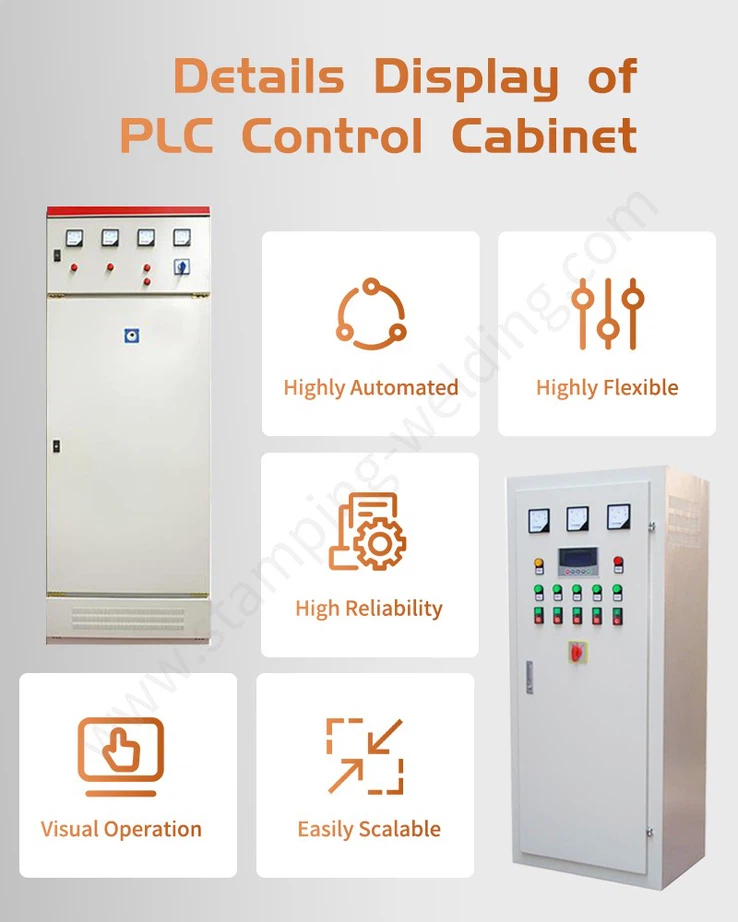
In the PLC system, all Cable distribution cabinets equipped with PLC devices should be equipped with PE protective grounding busbars and TE anti-interference grounding busbars. The PE protective grounding busbar is used to connect the PE grounding point of equipment such as racks and power supplies, and is directly connected to the cabinet; The TE anti-interference grounding busbar is insulated and installed with the cabinet, used for shielding grounding of external signal cables.
In terms of Power distribution cabinet grounding, the installation board and other structural components for installing components must be reliably fixed to the cabinet frame. The connectors used should be padded with claw type spring washers and led from the bottom of the installation board to the PE row with yellow and green wires. The grounding of the rotating components of the cabinet should be connected to the cabinet frame using copper braided tape. There is a dedicated grounding bolt on the rack for connecting PE, and the rack needs to be connected to the PE busbar. The minimum cross-sectional area of the connecting wire is 2 square millimeters.
In terms of structural design, based on the above layout principles, draw a cabinet layout diagram in combination with the schematic diagram and cabinet list. Whether it is cabinets, components, or cable trays and other auxiliary materials, the maximum external dimensions must be used and drawn in a 1:1 ratio.
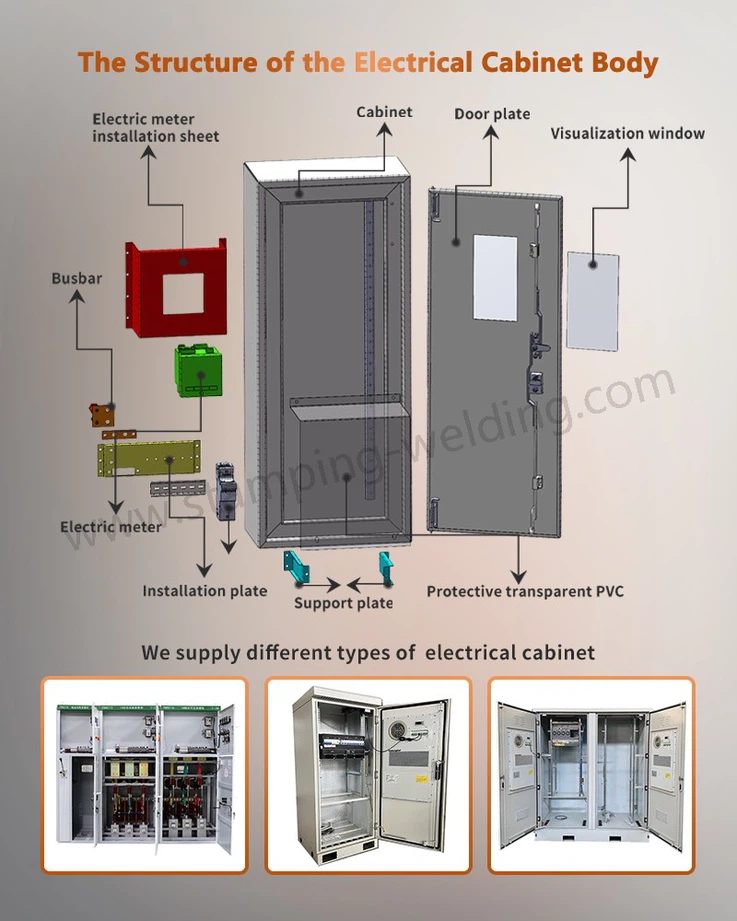
After the layout is completed, the installation board structure is designed based on the location and installation method of the components. The material of the installation board is usually aluminum zinc coated plate, with a thickness between 2.0 millimeters and 3.0 millimeters. The design of Server cabinet power distribution must be closely integrated with actual usage needs, strictly regulating technical operations, which is of great significance for achieving electrical automatic control and improving the manufacturing and design level of Outdoor fiber distribution cabinets.
Contact us
The above is a comprehensive analysis of the design and layout of the Electrical control cabinet, covering key technical points such as cabinet type selection, component layout, and grounding system. If you have any questions or specific needs during the selection, design, or customization process of the control cabinet, please feel free to contact us at any time. We will provide you with professional technical support and customized solutions.