Comprehensive guide to Electrical copper busbar design and selection: From principle to practice
Mar 18, 2026
The core role of Electrical copper busbar in low-voltage distribution system
The Busbar connector is the core conductive component of low-voltage switchgear, responsible for the key functions of energy collection, transmission, and distribution, and can be called the "artery" of low-voltage distribution systems. The rationality of its design selection directly determines the operational reliability, electrical safety performance, and comprehensive economic efficiency of the entire distribution system. An excellent busbar scheme can effectively reduce losses, minimize faults, and extend the overall service life of equipment.
With the increasing demand for industrial electricity and distribution, the design of Electrical bus bars is no longer a single specification choice, but requires systematic matching based on comprehensive electrical performance, mechanical strength, heat resistance characteristics, and on-site environment, providing reliable basis for engineering design and equipment manufacturing.
Material selection and surface treatment process
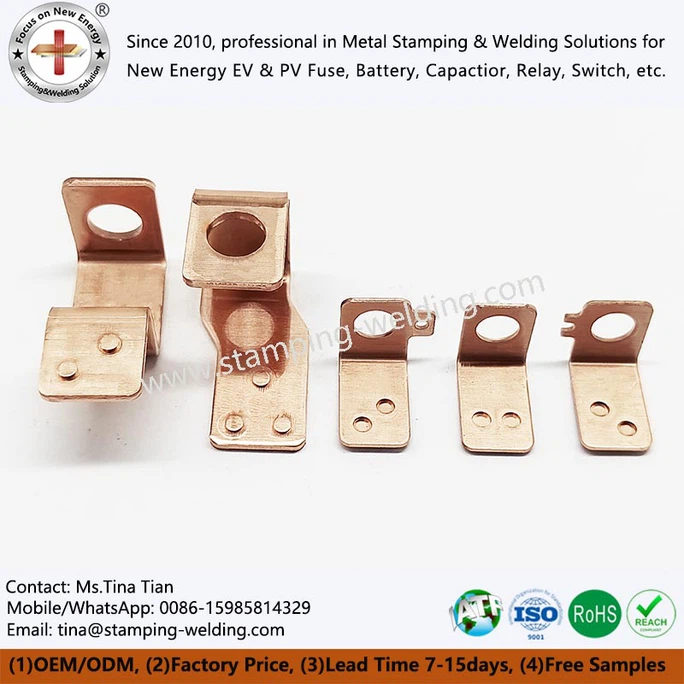
The Electrical copper busbar for low-voltage cabinets is made of high-purity electrolytic copper as the preferred material, with a copper content of not less than 99.9% and a conductivity of over 97% IACS. It is significantly better than aluminum bars in terms of current carrying capacity, mechanical strength, and corrosion resistance, and is the mainstream configuration in the industry. Copper bars comply with the GB/T 5585.1-2018 standard, using hard and highly conductive materials with uniform cross-section and stable ability to withstand continuous loads. From the perspective of the entire life cycle, the comprehensive benefits are higher.
To improve performance, Ground bus bars are usually paired with different surface treatment methods: tin plating treatment has the strongest universality, can prevent oxidation, and stabilize contact resistance; Silver plating is suitable for high demand scenarios, with better conductivity and anti-corrosion effects; Epoxy resin spraying focuses on insulation protection; Bare copper bars have a lower cost but are prone to oxidation, and are often used in dry environments and in conjunction with conductive paste. In practical engineering, tin plating+embossing or conductive paste combination is often used for connecting parts, and heat shrink tubing or insulation paint can be used for non connecting areas for protection.

Core selection principles and key design parameters
The primary basis for selecting Busbar electrical circuits is the current carrying capacity. The specifications of the incoming cabinet busbar should not be lower than the horizontal busbar current carrying capacity. The feeder cabinet should be configured according to the set current of the circuit breaker. The high-power motor circuit should be selected according to twice the rated current. The contact cabinet should be designed to match the rated current of the corresponding circuit breaker. At the same time, it is necessary to strictly meet the requirements of electrical clearance and creepage distance. The electrical clearance and creepage distance of the busbar are usually not less than 20mm. Functional units and exposed live parts also need to meet the corresponding safety spacing to ensure reliable insulation.
In practical applications, the current carrying capacity of Copper solid bus bars is affected by multiple factors and needs to be calibrated: an increase in ambient temperature will reduce the current carrying capacity, vertical placement is better than horizontal placement for heat dissipation, multi-layer arrangement, high altitude, and multi-phase proximity effects can all cause poor heat dissipation and increased resistance. Reasonable capacity reduction is necessary in design to avoid overheating problems during long-term operation.
Design points and installation requirements for different cabinet types of Power busbars
Bus bar electric designs for low-voltage cabinets with different functions have their own characteristics: the busbar of the incoming cabinet mainly has two structures: top inlet and bottom outlet, and bottom inlet and top outlet, respectively focusing on heat dissipation effect and cabinet space utilization; The total current of the busbar in the power supply cabinet needs to be calculated based on the synchronous coefficient; The cross-sectional area of the capacitor compensation cabinet busbar is selected at 1.5 times the rated current of the capacitor, and ventilation and heat dissipation are strengthened; Special cabinet types such as frequency conversion cabinets and dual power conversion cabinets need to focus on harmonic heating, wiring direction, and maintenance space.
The production and installation of High voltage busbars require standardized processes, with minimum bending radius controlled to avoid damaging the substrate. The overlap length should not be less than 1.5 times the row width to ensure contact area, and burrs should be removed after drilling to prevent partial discharge. High strength bolts are used for connection and the tightening torque is strictly controlled. Insulated supports are used for fixation to ensure stable spacing, ensuring the mechanical stability and electrical reliability of the busbar operation from the manufacturing process.
contact us
The design and selection of High current contacts for low-voltage cabinets are highly specialized and directly related to the safety, stability, and long-term benefits of the distribution system. Only by accurately matching the working conditions can hidden dangers be avoided and costs be controlled. If you have any Electrical copper busbar selection consultation, customized design or bulk procurement needs, please feel free to contact us at any time to obtain exclusive technical solutions and accurate quotation support.