Comprehensive knowledge analysis of Electrical bus bar: materials, characteristics, applications, and answers to core questions
Apr 10, 2026
Core specifications for copper use in the power industry and basic understanding of copper bars
In the power industry, the selection of Electrical bus bars is based on high-purity copper, and the mainstream grades are divided into two categories: T2 electrolytic copper and TU1/TU2 oxygen free copper. Among them, T2 electrolytic copper has a purity of not less than 99.90%, outstanding cost-effectiveness, and is the most widely used category, suitable for most scenarios such as busbar, busbar, grounding copper busbar, etc. TU1/TU2 oxygen free copper focuses on low loss, high temperature resistance, and is suitable for high voltage, ultra-high voltage cables, and high-frequency equipment with higher performance requirements.
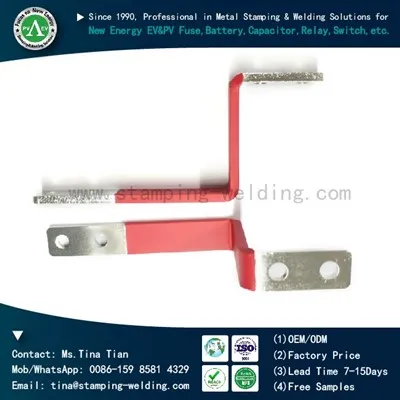
The form of Ground bus bar is divided into soft and hard states. Soft state purple copper has good ductility after annealing treatment and is used for cable cores and soft connections; Hard purple copper, after cold processing, has high strength and is used for overhead stranded wires and hard busbars. In addition, copper busbar, also known as copper busbar, is a conductor with a rectangular cross-section. Its core function is to collect the main power supply current and divert it to various branches, simplify the wiring inside the distribution cabinet, and facilitate later maintenance. Its surface color has clear industry standards and corresponds to different lines, which is an important symbol to ensure electrical operation safety.
Surface treatment technology and heat dissipation performance evaluation of Electrical bus bar
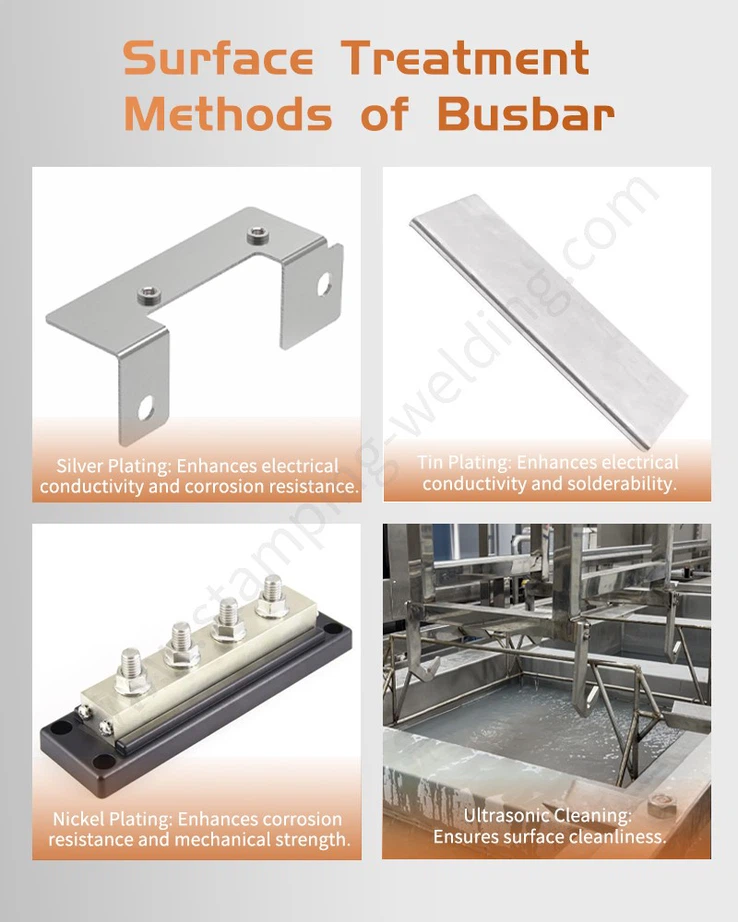
Although Busbar electrical has excellent conductivity, it is prone to react with oxygen and sulfides when exposed to air for a long time, generating an oxide layer, increasing contact resistance, and causing local heating. Therefore, it is necessary to choose an appropriate surface treatment method according to the usage scenario. Bare copper bars require no treatment and have the best heat dissipation performance, but have poor corrosion resistance and are only suitable for short-term use in dry and clean indoor environments. Tin plating is the most widely used treatment method, and the tin layer can effectively isolate air, prevent copper substrate oxidation, and improve corrosion resistance. However, the thermal conductivity of tin is much lower than that of copper, which will affect heat dissipation to a certain extent.
Silver plated Electrical copper busbars have the best performance. Silver has excellent conductivity and thermal conductivity, which can balance the heat dissipation advantage of copper bars with stable contact resistance. It is commonly used in key parts such as high-end electrical contacts, but the cost is high and the application range is limited. The core indicator for judging the heat dissipation of copper bars is temperature rise, which must strictly comply with the requirements of the national standard GB7251.1 to avoid safety hazards caused by excessive temperature rise.
Correct installation specifications for copper bars and frame circuit breakers
When connecting the Copper solid bus bar to the frame circuit breaker, relevant specifications must be strictly followed, and every detail is related to the safe operation of the power system.
Firstly, it is necessary to clarify the entry and exit methods. Whether it is from top to bottom or from left to right, it will determine the overall direction of the copper bars and the layout inside the cabinet, which needs to be determined in the early stage of design.
Secondly, it is necessary to strictly control the phase sequence and N-phase position. The A, B, and C phase sequences of three-phase electricity should not be confused, otherwise it may cause serious problems such as motor reversal. The position of the neutral line and whether side backflow is required should also be clearly marked.
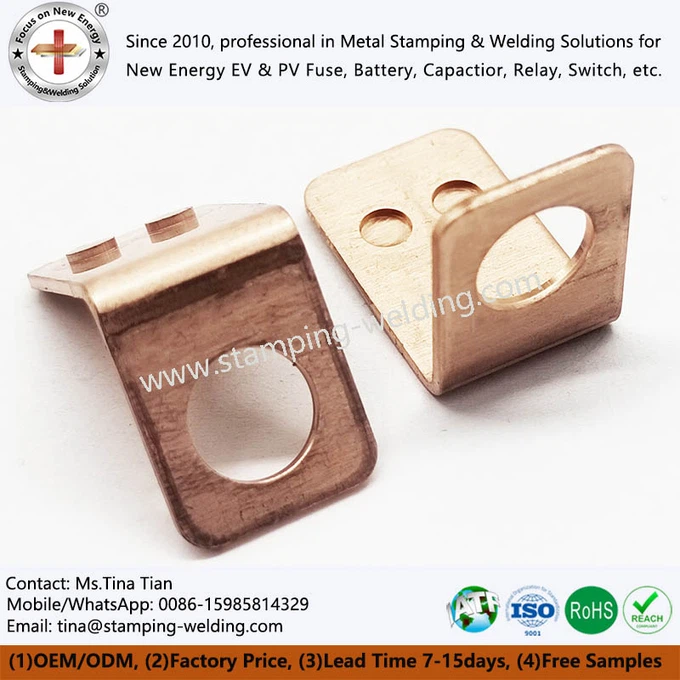
At the same time, the specifications of the Power busbar must match the carrying current, and the electrical clearance and creepage distance between live copper bars and between copper bars and grounded cabinets must comply with national standards to prevent air breakdown and arc generation. In addition, the punching of copper bars needs to be precise, and the hole position, diameter, and pattern need to be adapted to the installation requirements. Finally, it is necessary to clarify the layout of the outgoing copper bars to ensure smooth connection with external cables and busbars.
The influence of working conditions and standards on materials
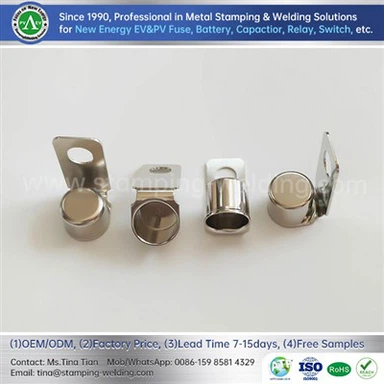
The onboard environment of new energy vehicles is characterized by high temperatures, vibrations, and potential corrosive media, which directly affect the material performance requirements of Fuse copper caps. In addition to basic conductivity, materials also need to have good heat resistance, corrosion resistance, and structural stability. The final selected material and specific indicators must match the fuse design requirements and relevant automotive industry standards and regulations.
Contact us
The selection, surface treatment, and installation specifications of High current connectors directly affect the safety and cost control of the power system. Professional technical support can help you accurately match your needs and avoid hidden dangers.
If you have any requirements for Electrical bus bar selection, customized processing, or technical consultation, please feel free to contact us at any time for exclusive solutions and professional support.