Manufacturing process and performance advantages of Aluminum flexible connections in power capacitor applications
Apr 10, 2026
Material properties and structural forms of Aluminum flexible connections
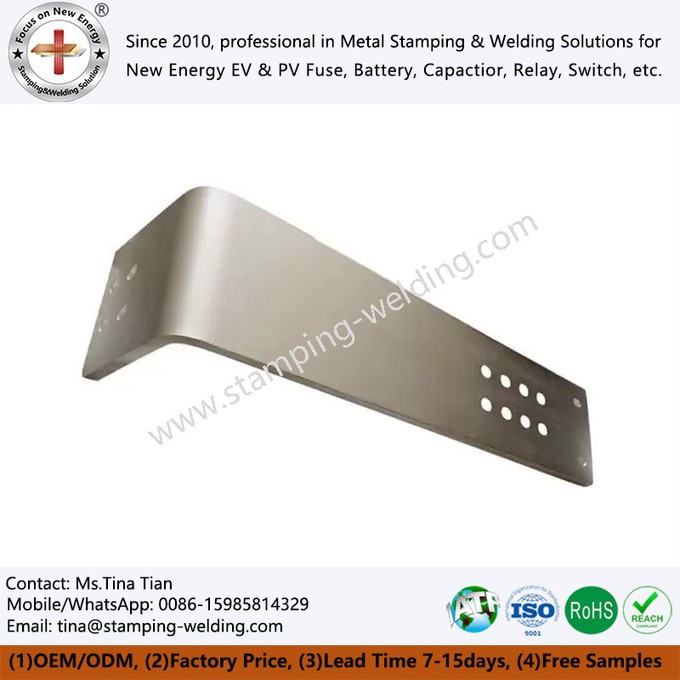
Aluminum busbar electrical power connector is a conductive component used for power transmission and distribution, made of aluminum material. Common shapes include rectangular, circular, groove, etc. It plays a key role in transmitting electrical energy from the power source to various electrical devices in the power system. Compared to copper busbars, aluminum busbars have unique performance and applicable scenarios. In terms of structure, aluminum busbars are usually formed from a single aluminum material as a whole, and are made into different cross-sectional shapes and sizes according to actual application scenarios and current carrying requirements.
For example, in distribution cabinets, rectangular Customized aluminum busbars are often used due to their large surface area and good heat dissipation performance, which can effectively reduce operating temperature; In high-voltage transmission lines, circular aluminum busbars are more common, with uniform electric field distribution, which is conducive to reducing corona discharge phenomena.
In terms of materials, aluminum busbars mainly use high-purity aluminum materials, commonly including 1060 pure aluminum and 6063 aluminum alloy. 1060 pure aluminum has good conductivity and processing performance, suitable for occasions with high requirements for conductivity and simple processing technology; 6063 aluminum alloy has higher strength and corrosion resistance while maintaining a certain level of conductivity, and is commonly used in environments with high requirements for mechanical and corrosion resistance, such as outdoor substations.
Manufacturing process flow
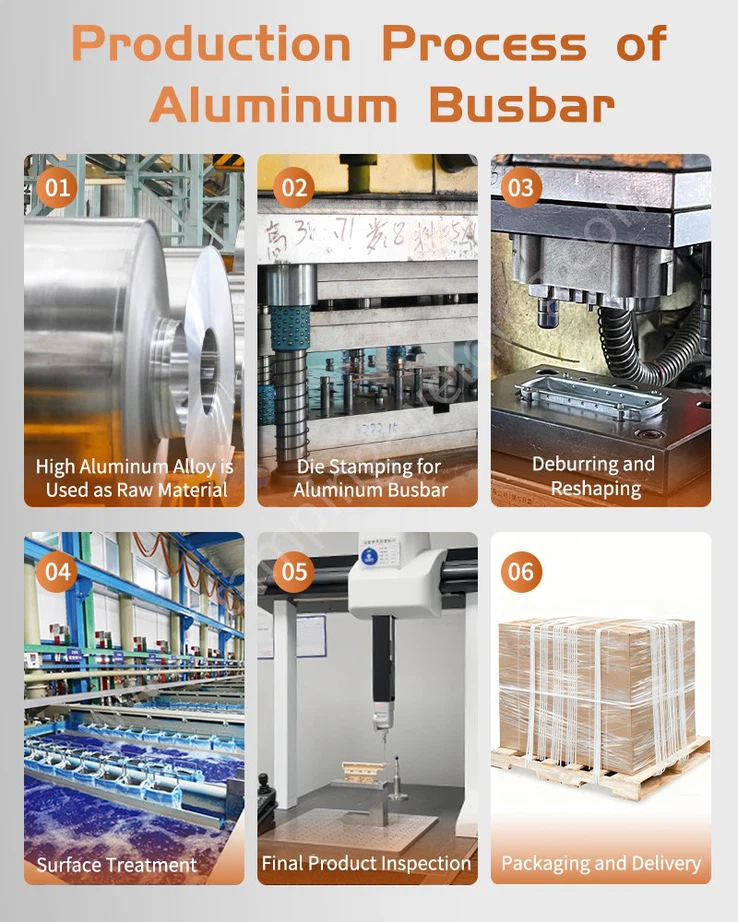
The manufacturing process of Aluminum flexible connections applications typically includes the following steps.
The first step is material selection, which involves choosing aluminum alloys with high conductivity, low resistance, and good thermal performance to ensure the efficient and reliable operation of power capacitors.
The second step is cutting and forming, using a cutting machine to cut the aluminum alloy into the desired size and shape. The busbar can be formed into various configurations such as flat, circular, or rectangular.
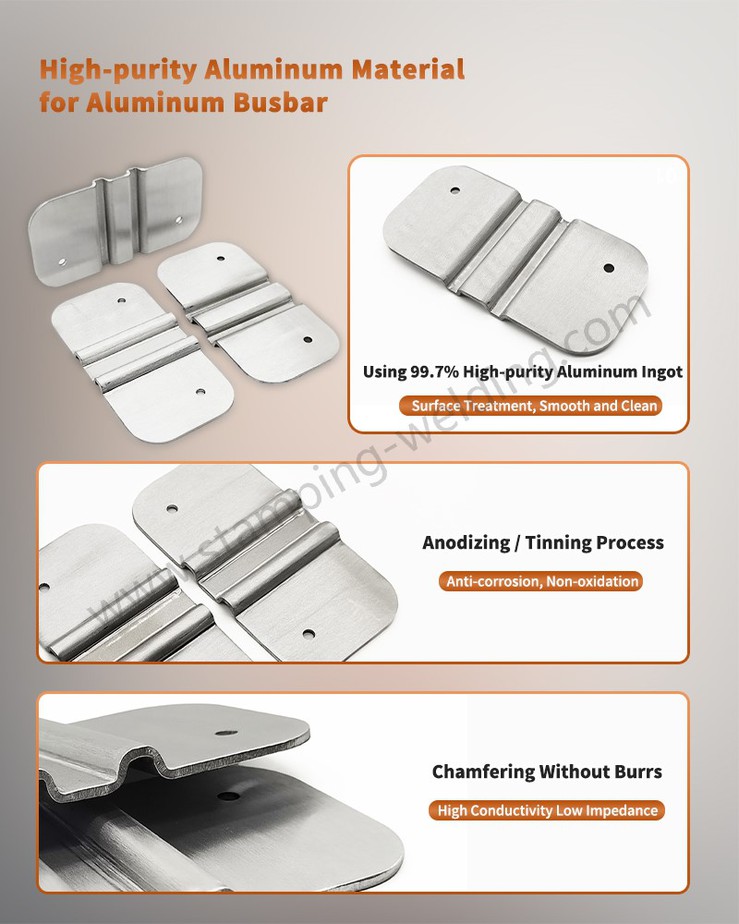
The third step is surface treatment. The surface of Tin plated aluminum bus bars is usually treated by processes such as anodizing, electroplating, or chemical conversion to improve their conductivity and corrosion resistance.
The fourth step is connection, using special techniques such as tungsten inert gas shielded welding or resistance welding to connect the busbars together. The welding process should ensure a firm and reliable connection between the busbars.
The fifth step is inspection. After connecting the 6101 T61 aluminum bus bar, it is necessary to check for cracks, pores, or other defects that may affect its performance. Any parts that do not meet the required standards should be repaired or rejected. The final step is precision machining, and the busbar can be coated or painted to provide a protective surface and improve its appearance.
This manufacturing process requires professional equipment and skilled operators to ensure the stability and consistency of product quality, and strict control of various process parameters should be implemented to ensure that the busbar meets the specified technical requirements for conductivity, resistance, and thermal performance, avoiding defects that may affect its operational reliability.
Product advantages
The 6061 aluminum bus bar exhibits multiple advantages in engineering applications. Firstly, the cost advantage is obvious. The price of aluminum is relatively low compared to copper. In large-scale power transmission and distribution projects, the use of aluminum busbars can significantly reduce material costs, especially for projects with strict cost control.
Secondly, it is lightweight. The density of aluminum is about one-third that of copper, and aluminum busbars of the same volume are lighter in weight than copper busbars. This makes aluminum busbars easier to install and maintain in situations where weight is required, such as overhead power lines or mobile equipment power supply systems.
Thirdly, it has good corrosion resistance. Aluminum naturally forms a dense layer of aluminum oxide protective film on its surface in air, effectively preventing further oxidation and corrosion of the substrate, making the Electrical aluminum busbar flexible joint have a longer service life in general environments.
Fourthly, it has good heat dissipation performance. Aluminum has a high thermal conductivity, which can quickly dissipate the heat generated when current passes through it, reduce the temperature of the busbar itself, and thus improve the safety and stability of power transmission, especially suitable for high current density application scenarios.
Summary
Aluminum bus bars for cell connections have shown significant application value in power capacitors and various power transmission and distribution systems due to their low cost, light weight, strong corrosion resistance, and excellent heat dissipation performance. Its manufacturing process covers multiple aspects such as material selection, cutting and forming, surface treatment, welding connection, quality inspection, and precision machining. It requires strict control of technical parameters and relies on professional equipment and operators to ensure that the product meets key indicators such as conductivity, resistance, and thermal performance.
Overall, Aluminum flat busbar is an effective alternative to copper busbar under economic and specific operating conditions, suitable for power engineering scenarios with high requirements for cost, weight, and environmental resistance.
Contact us
If you need further advice on the selection of Aluminum flexible connections, process customization, or technical solution support, please feel free to contact us. We will provide you with professional engineering consulting and product services.