Core knowledge of PLC cabinet components (definition, history, specifications, and technology)
Apr 05, 2026
Overview and core functions of PLC cabinet components
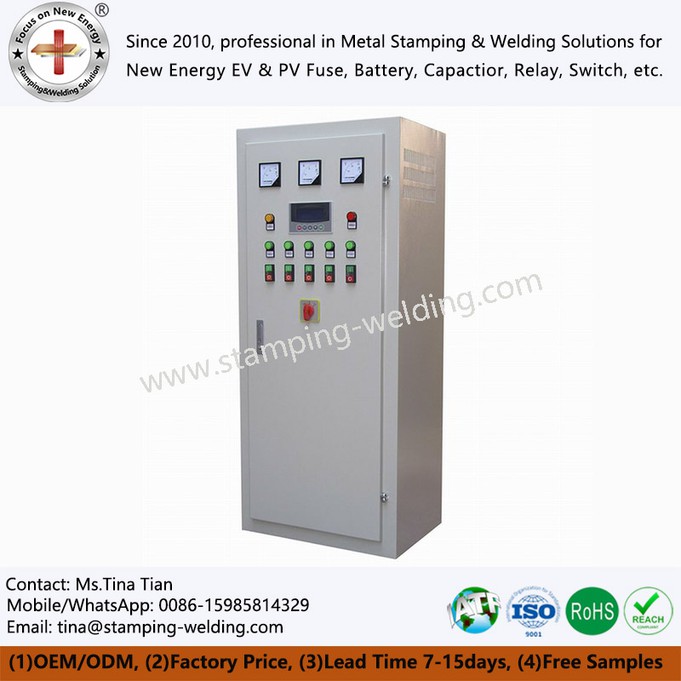
Standard PLC cabinets are a complete set of electrical devices that are assembled in a closed or semi closed metal cabinet according to electrical wiring requirements, including switchgear, measuring instruments, protective appliances, and auxiliary equipment. Its layout needs to meet the requirements of normal operation of the power system, facilitate daily maintenance, and ensure that it does not endanger the safety of personnel and surrounding equipment.
Under normal operating conditions, the Application cabinet can connect or disconnect circuits manually or automatically; When the system malfunctions or operates abnormally, the protective appliances can promptly cut off the circuit or issue an alarm signal. With the help of built-in measuring instruments, operators can view various operating parameters such as voltage and current in real time, adjust some electrical parameters, and provide prompts or signal outputs for deviations from normal working conditions.
Development history and technological evolution
The development of PLC cabinet components technology is closely related to the evolution of programmable controllers. In 1968, General Motors sought a new industrial controller to adapt to the rapid updates of car models. In 1969, the American Digital Equipment Company successfully developed the first programmable controller and successfully tested it on General Motors' automated assembly line. Early programmable controllers were mainly used to replace relay control circuits, complete logical operations, timing, counting, and other sequential controls, all of which were switch control, and are therefore often referred to as programmable logic controllers.
In the 1970s, with the development of microelectronics technology, programmable controllers began to adopt general-purpose microprocessors and their functions continued to enhance. The industry gradually referred to them as programmable controllers. By the 1980s, advances in microelectronics technology such as large-scale and ultra large scale integrated circuits led to rapid development of microcomputer based programmable controllers composed of 16 bit and 32-bit microprocessors, laying the technical foundation for the high performance and reliability of modern PLC panel control logic program stainless steel automatic cabinets.
Product specifications and structural design
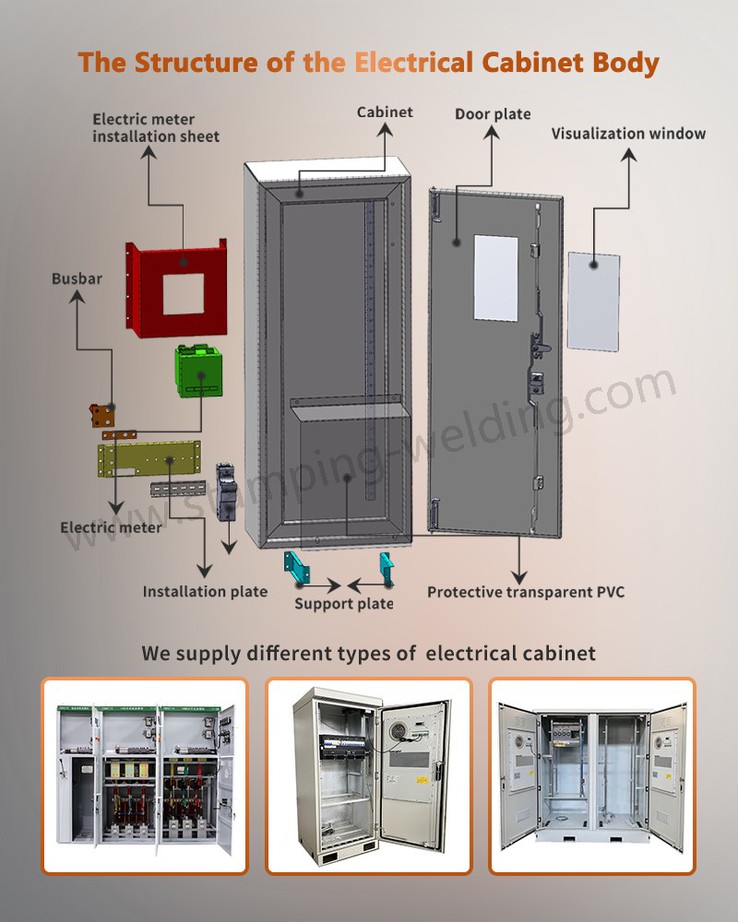
G8 switchgear PLC automatic control cabinet panels are usually customized according to actual application needs, and there is no unified standard model size. The cabinet size is determined according to the implemented functions, module quantity, and component quantity. Common sizes include 2200 x 800 x 600 mm, 2200 x 1000 x 800 mm, 2200 x 800 x 800 mm, 2200 x 1600 x 800 mm, etc. Small PLC control boxes have specifications such as 1200 x 600 x 400 mm. In terms of cabinet structure, the sides and front and rear doors are mostly made of 2.0mm thick cold-rolled steel plates, and the side panels are made of 1.5mm thick cold-rolled steel plates.
When designing, it is necessary to consider structural elements such as ventilation and heat dissipation, outlet holes, installation brackets, and lifting devices. For example, a cover plate should be installed at a distance of 100 millimeters from the bottom of the PLC system cabinet for Sewage, and outlet holes should be reserved on both sides of the cover plate near the cable tray; Set up ventilation holes or slots in suitable positions of the box to facilitate electrical heat dissipation; At the same time, for the convenience of handling, devices such as lifting hooks, lifting holes, handrails, or movable wheels are designed.
Selection elements and industry application culture
When choosing an Electric cabinets PLC panel cabinet, it is necessary to comprehensively consider factors such as application scenarios, control complexity, scalability, software compatibility, budget constraints, and after-sales service. The naming conventions for product models vary among different manufacturers, usually including information such as series, performance level, and interface configuration. Some series of products are specifically designed for installation inside control cabinets and may integrate RJ45 interfaces or wireless communication functions. Integrated control cabinet solutions typically cover the complete process from planning, engineering design to commissioning. In terms of industry applications, PLC control cabinets, as the core hub of intelligent control, are widely used in fields such as power, metallurgy, chemical industry, papermaking, and environmental wastewater treatment. For example, automotive parts manufacturing enterprises use PLC cabinets to accurately control injection molding machine parameters, and smart pipe gallery and tunnel environmental monitoring systems also widely adopt PLC control solutions.
There are many brands of PLC control cabinet power distribution panels in the market, including internationally renowned brands and local enterprises actively participating. At the level of industrial culture, PLC control cabinets have become a core component of industrial automation systems, covering almost all industrial fields such as manufacturing, food processing, chemical, power, medical, transportation, and construction. Their functions include equipment automation control, process automation, data acquisition and communication, fault warning, etc. They are known for their stability, scalability, and strong anti-interference ability, and play an irreplaceable role in modern industrial production and management.

Contact us
After a comprehensive understanding of the selection points, core technical parameters, and industry application value of PLC cabinet components, if you have further product consultation or customization needs, please feel free to contact us at any time. We will provide you with professional technical support and comprehensive solutions.