Full-dimensional industry knowledge analysis of DC fast charging technology
Jun 02, 2026
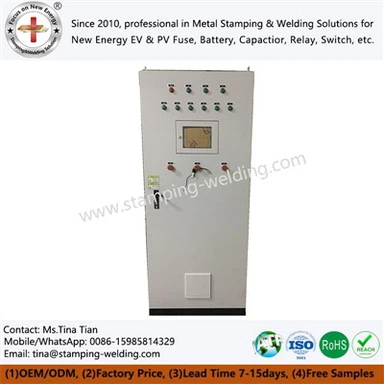
DC fast charging is a charging technology that provides a high-power electric energy supply for electric vehicles. Its core principle is to directly convert the alternating current input from the power grid into direct current through the rectifier device inside the charging cabinet, bypassing the power limit of the on-board charger and quickly replenishing the power battery with a power of tens to hundreds of kilowatts. This technology is a key support for alleviating battery life anxiety of electric vehicles and improving the convenience of use. In actual engineering deployment, DC fast charging systems are usually integrated into charging stations in the form of a Battery Charging Cabinet for Backup Power Systems, which not only undertakes regular fast charging tasks but also serves as a power interface for emergency backup power. As technology moves towards the megawatt level, DC fast charging is iterating from early 2C and 3C to 4C and even 6C rates. Charging in 10-20 minutes can replenish hundreds of kilometers of battery life. The maturity and popularization of this technology have directly promoted the extension of public charging networks from urban centers to highways, logistics hubs and other scenarios, becoming an indispensable infrastructure link in the electric vehicle industry ecology.

Architectural details
The system design of the DC fast charging cabinet revolves around the three main lines of "power conversion - control management - thermal safety protection". Divided from functional modules, it mainly includes four core parts: power conversion unit, control unit, charging interface and cable, and thermal management system. Among them, the power conversion unit adopts high-efficiency isolation topologies such as full-bridge LLC or dual active bridge, and cooperates with wide-bandgap semiconductor devices such as silicon carbide MOSFET to achieve high power density and low-loss power conversion; the control unit is based on a high-performance microcontroller and is responsible for charging protocol analysis, vehicle BMS communication, safety monitoring and billing management. For sites that require flexible deployment, the Custom Battery Charging Cabinet can be designed in non-standard ways according to on-site space and power requirements, such as adjusting the inlet and outlet methods, integrating local energy storage, or adding dual gun output interfaces. For standardized sites, the Standard Battery Charging Cabinet provides fixed power levels and size modules, making it easy to purchase in bulk and install quickly. Regardless of the form, the design of the charging cabinet must take into account wide voltage output (150V-1000V), high protection level (IP54 and above) and multiple electrical isolations to adapt to complex outdoor environments and ensure personal safety.

Production process
The manufacturing of DC fast charging cabinets follows the quality system of industrial-grade power electronic products. Key process nodes include: SMT automatic patching and selective wave soldering of power modules, insulation withstand voltage testing, aging screening of the entire cabinet, and full machine protection inspection. In the production of power modules, the control circuit board uses fully automatic placement and AOI optical inspection to ensure component position accuracy and welding quality; the power circuit board uses selective wave soldering to focus on controlling high-current solder joints to prevent heat caused by false soldering. Each assembled power module and the entire cabinet must undergo 48 hours of high-temperature and full-load aging and continue to operate at rated power to screen out early-failure semiconductor devices in advance. After the cabinet is assembled, each sealed cavity is tested for air tightness to ensure it reaches the IP54 protection level.
For the Low-Power Battery Charging Cabinet, due to the low power density, the aging test can be appropriately shortened to 24 hours, but the factory test items remain unchanged, including input and output electrical performance testing, communication protocol consistency testing, insulation withstand voltage testing and protection function trigger verification. All fasteners are locked with fixed-torque electric tools, and thread fasteners are applied at key locations to resist transportation vibration. When leaving the factory, each charging cabinet comes with a test report with a unique serial number, recording the measured values of key nodes to facilitate later traceability.

Application scenarios
The application scenarios of DC fast charging cabinets cover many fields such as highway service areas, urban bus stations, heavy truck logistics parks, commercial and office building underground garages, ports and mining areas. In highway service areas, High-Power Battery Charging Cabinets or megawatt-level charging terminals are usually deployed symmetrically along both sides, and are linked with adjacent service areas through back-end systems to guide vehicle diversion in advance. At urban bus stations, peak and valley electricity prices are used to centrally charge multiple electric buses at night. At this time, the advantages of the Modular Battery Charging Cabinet are fully utilized - it can dynamically allocate power according to the actual number of parked vehicles at night, improving equipment utilization. In heavy truck logistics parks, charging cabinets often use dual-gun parallel output. A single cabinet provides more than 350kW of charging power for electric heavy trucks, shortening the stay time for energy replenishment. In underground parking lots or public charging points in residential areas, Compact Battery Charging Cabinet and Stationary Battery Charging Cabinet are favored because of their small footprint and noise below 65dB.
In remote overseas areas or areas with weak power grids, the Portable Battery Charging Cabinet can be used as a mobile energy replenishment unit, which can be carried to the site by a service vehicle to provide temporary charging for broken-down vehicles. In addition, in the integrated light storage and charging station, the DC fast charging cabinet, battery storage cabinet and inverter battery box cabinet together form a DC microgrid. Photovoltaic power generation is given priority to the vehicles through the charging cabinet, and the remaining power is stored in the energy storage cabinet. At night or on rainy days, the energy storage cabinet discharges through the charging cabinet, realizing self-consumption of green electricity and peak and valley arbitrage.

contact us
We are supported by engineering verifiable reliability, a global compliance certification system and full-stack self-developed rapid response capabilities to provide customers with High-power DC charging one-stop services from site survey and solution design to equipment delivery and remote operation and maintenance.