Panoramic analysis of lithium battery casing
May 26, 2026
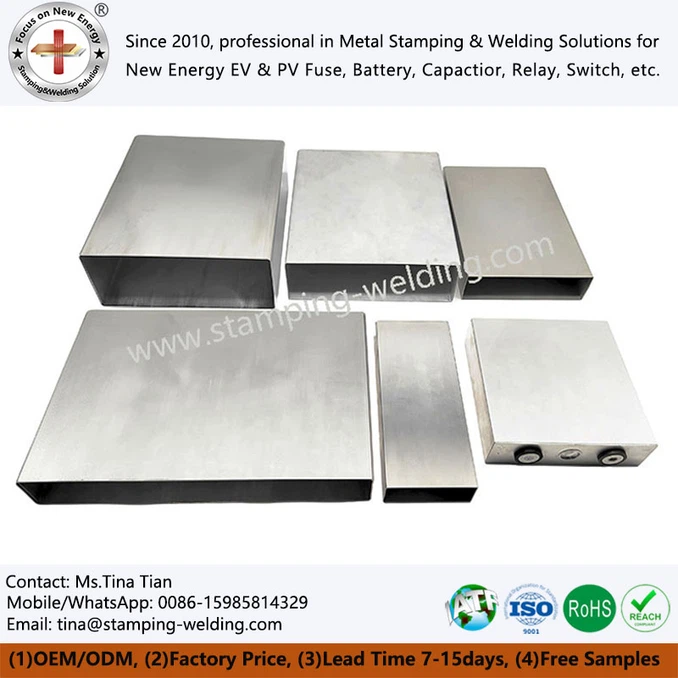
The battery case is a key structural component used to encapsulate and protect the internal cells of lithium-ion batteries, forming the physical boundary and mechanical protection barrier of the battery cells. As a core component in the battery system that directly determines air tightness, cycle life and explosion-proof safety performance, the engineering design level of the battery case directly affects the stable operation and safety protection capabilities of the battery module in various application scenarios. According to different packaging forms, battery cases are mainly divided into three types: square, cylindrical and soft pack. Square and cylindrical battery cases are usually made of aluminum, steel and other metal materials, and are manufactured through processes such as stamping and laser welding; soft-pack batteries use aluminum-plastic film as the packaging material, which is a flexible packaging solution.
Lightweighting is an important direction for the development of battery case technology, and aluminum alloys and composite materials are therefore increasingly widely used in high-performance battery cases. From a full life cycle perspective, battery shells can be recycled as renewable resources after reaching their service life. Among them, the recycling value of aluminum shells such as Battery Aluminum Housing and Aluminum shell for prismatic lithium ion battery is particularly significant. The energy consumption of aluminum recycling is much lower than that of primary aluminum production. In the cylindrical battery system, the lithium cell Aluminum shell is the most standardized shell form and is widely used in mass production of specifications such as 18650, 21700 and 4680. In addition, in response to the packaging needs of international brand battery cells, special shell solutions such as Aluminum shell for Panasonic battery Aluminum shell and Aluminum shell for samsung sdi battery Aluminum shell also occupy an important position in the field of precision manufacturing.
Material advantages
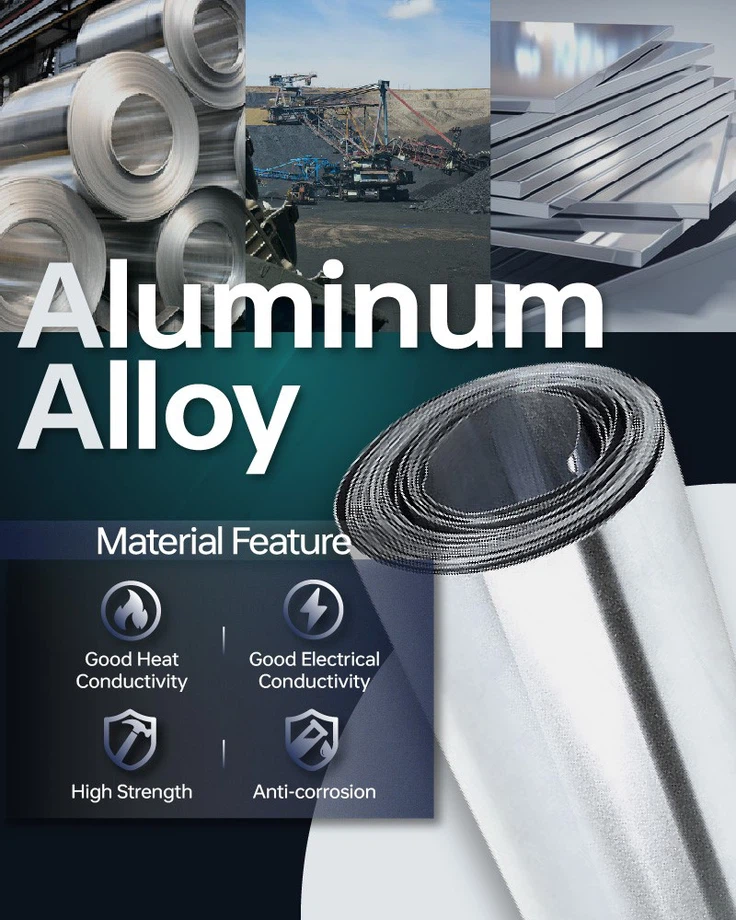
Advances in materials science provide underlying support for performance breakthroughs in battery cases. Aluminum alloy is the current mainstream technology route for power battery casings. Among them, the 3,000 series aluminum plates are widely used in the manufacturing of power battery casings due to their comprehensive advantages such as excellent formability, high corrosion resistance, good welding performance and conductivity, low density and light weight. Three different forms of aluminum materials, rolled aluminum plates, extruded aluminum profiles and cast aluminum, have been used on a large scale in various battery shell projects. As a traditional material, high-strength steel can still meet basic strength and stiffness requirements and remain competitive in some scenarios that are cost-sensitive and have low weight requirements. As an emerging direction, composite materials have a tensile strength that can be more than three times that of aluminum alloy under the same thickness conditions, a flame retardant performance that can reach UL-94 V0 level, and a density that is more than 30% lower than that of aluminum alloy. The high-pressure resin transfer molding process allows it to have a faster production cycle and good dimensional accuracy. As a cutting-edge representative of lightweight materials, magnesium alloy's industrial application is attracting industry attention. The aluminum-plastic film used in the soft packaging route is usually composed of three layers of outer nylon, middle aluminum foil and inner polypropylene film, and is prepared by dry or thermal processes. For lithium iron phosphate chemical systems, Aluminum shell for lithium iron phosphate cells has been widely used in commercial vehicles and energy storage fields due to its excellent corrosion resistance and cost controllability.
manufacturing process
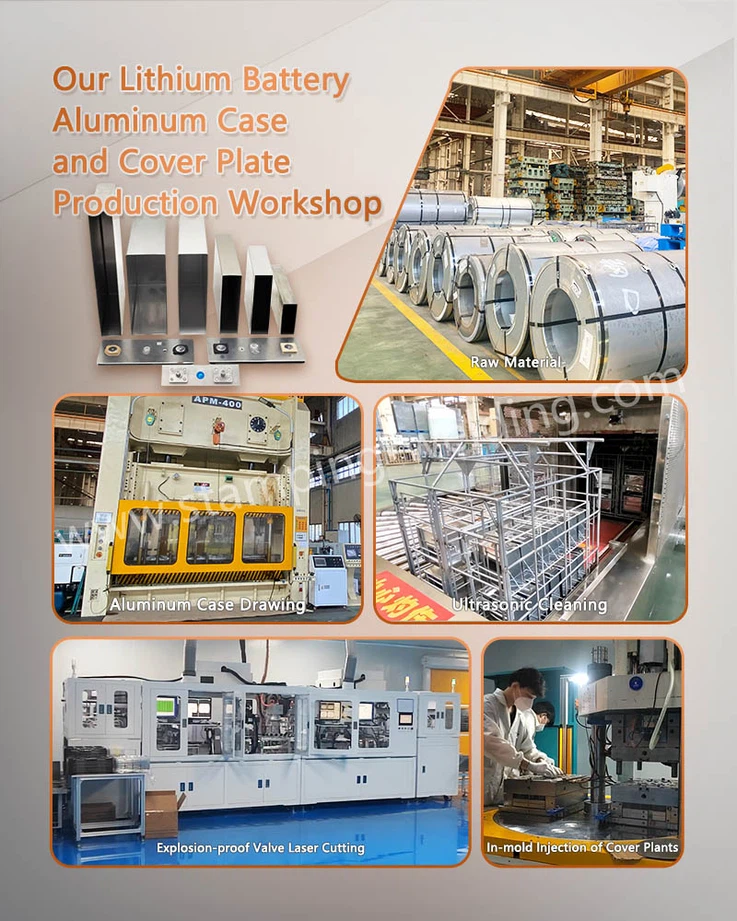
The manufacturing process is a key link in determining the final performance consistency and reliability of the battery case. In terms of forming technology, the metal shell mainly adopts the stamping and stretching process. The aluminum alloy shell can usually be stretched and formed in one step except for the cover plate. With the automatic blanking and precision feeding device, it can effectively reduce the die jam and scrap rate and improve the production rhythm. The welding process is the first step to ensure the sealing of the battery, which directly affects the voltage strength and cycle life of the battery. Laser welding technology for square aluminum shell battery top cover sealing has experienced continuous evolution from low speed to high speed. In the early stage, the welding speed was lower than 100 millimeters per second. Later, the speed was increased to 100 to 200 millimeters per second through laser hybrid welding and high-frequency beam swing technology. Currently, advanced technology has explored high-speed welding solutions of more than 300 millimeters per second, using point ring spot laser welding and other technologies to improve welding stability and product compatibility.
However, aluminum alloy laser welding still faces technical difficulties such as pores, hot cracks, explosions and spatter, which need to be overcome through optimization of shielding gas, fine control of welding parameters and pre-welding surface treatment. The sealing and protection process are also crucial. During the design stage, it is necessary to systematically calculate the compression amount of the sealing ring, the structure of the sealing groove, the assembly tolerance and the deformation of the end cover, and adopt a combination of pressure-resistant cabin structure, internal potting reinforcement and O-ring radial sealing to resist pressure shock and electrolyte leakage. For cylindrical batteries, the manufacturing of lithium cell Aluminum shells places more emphasis on wall thickness uniformity and roundness accuracy to ensure that the matching gap between the core and the shell is in the optimal range, which not only ensures sufficient infiltration of the electrolyte, but also avoids shaking of the core caused by excessive gaps.
application scenarios
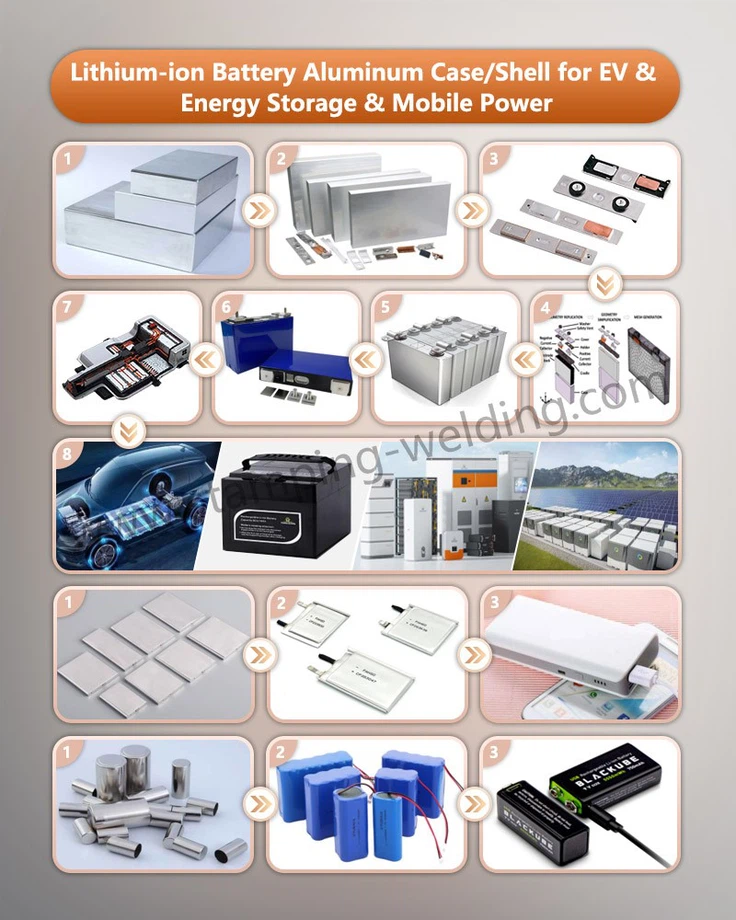
The application scenarios of battery cases have penetrated deeply from new energy vehicle power battery packs to energy storage systems, consumer electronics and special equipment and other fields. In the field of new energy vehicles, battery cases need to meet the combined requirements of high strength, lightweight and high safety. The design of the case needs to take into account multiple functions such as underbody collision protection, lateral extrusion energy absorption and thermal runaway directional pressure relief. In the field of energy storage systems, large cylindrical batteries generally use aluminum shell packaging solutions. Relying on their lightweight, good thermal conductivity and cost-controllable characteristics, they are widely used in energy storage cylindrical cells. The industry's requirements for precision manufacturing, structural optimization and explosion-proof processes of the casing continue to increase. In the field of consumer electronics, products have high requirements for the thinness, feel and integration of battery cases.
They usually use a composite structure of external soft materials and internal microfiber lining. In the field of special equipment, such as deep-water robots and other application scenarios, the battery casing needs to withstand a water pressure of about one MPa. Systematic pressure resistance calculations must be carried out during design, including wall thickness design, reinforcement arrangement, end cover structure optimization, and material rigidity check. Regardless of the application scenario, the design of the battery case must balance the chemical safety requirements of the battery cells with the mechanical environmental requirements of the end product. In the international market, Japanese battery manufacturers have extremely strict requirements for casing accuracy and surface quality. Aluminum shell for panasonic battery Aluminum shell usually requires multiple polishing and passivation treatments to meet the quality standards of its high-end consumer and automotive batteries.
contact us
All products are produced in strict compliance with industry precision manufacturing and safety standards. They have the advantages of high precision, high strength, good sealing, lightweight, and corrosion resistance. The structural size and protection process can be customized according to customer process requirements, providing stable and reliable casing supporting solutions for various Aluminum Li-ion cells manufacturers.