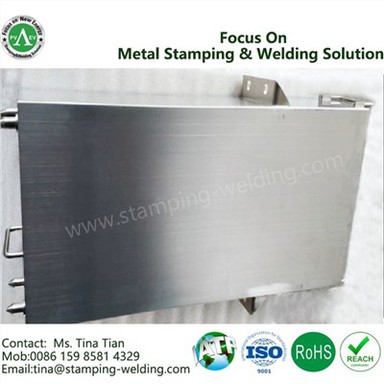
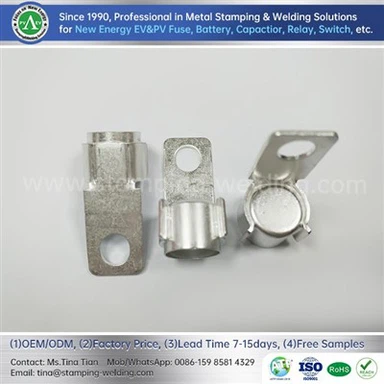
Sealing design for New energy aluminum battery cases
May 05, 2026
Structural Scheme and Material Characteristics of New energy aluminum battery cases
Automotive battery aluminum cases often adopt a box structure, mainly composed of an upper cover, a lower tray, and a bottom guard plate. Currently, the design of integrated water-cooled plates has become the mainstream in the industry, where the lower tray is usually composed of a frame and a water-cooled plate combination. In terms of material selection, aluminum alloy has become the preferred material for the main body of the shell due to its lightweight advantages and outstanding process adaptability. Compared with steel, aluminum alloy extrusion process is simple, tooling cost is low, and casting process has high integration, which can meet the structural performance requirements of the shell and assist in the lightweighting of the entire vehicle.
In the manufacturing process of Aluminum case for new energy cars, the preparation of the upper cover and lower tray will be completed in advance, and some models will also integrate a bottom guard plate into the tray assembly to lay the foundation for subsequent sealing design.

Structural analysis and sealing design principles for each component
The structural design of each component in New energy aluminum battery cases directly affects the sealing effect, and targeted sealing principles must be followed. The upper cover is divided into flat and irregular types, and is often designed as a whole to ensure stable self sealing performance. The positioning holes and features need to be set on the outside of the sealing interface, and the sealing interface between the upper cover and the lower tray needs to meet the requirements of uniformity and continuity.
The lower tray of Lithium battery aluminum case can be divided into integral and frame types, among which the extruded aluminum profile frame tray has both cost and performance advantages. The frame needs to be built with closed section profiles, and the joints use self sealing linear connection technology such as CMT welding. The joints need to be designed with continuous sealing gel, and when integrating water-cooled plates, gel sealing or FSW friction stir welding technology is required. The bottom guard board mainly undertakes the functions of impact prevention and thermal insulation bearing. It is necessary to design a structure that blocks the intrusion of solid foreign objects, and determine whether to carry out waterproof design based on the hydrophilicity of the insulation material.

Core sealing interface identification and sealing focus
The sealing effect of Lithium cell aluminum shell depends on the design of five key sealing interfaces. One is the matching sealing interface between the upper cover and the lower tray, which needs to be adapted to the normal temperature operation and after-sales maintenance needs of the battery workshop to ensure a tight seal after assembly;
The second is the sealing interface of the aluminum profile frame splicing joint, with a focus on ensuring the manufacturing stability of the connection technology, using self sealing linear connection technology to achieve closure;
The third is the sealing interface between the aluminum profile frame and the water-cooled plate, which is divided into two designs: integrated and non integrated. The integrated design needs to be consistent with the overall sealing requirements of the shell, while the non integrated design does not participate in the shell sealing;
The fourth is the sealing interface between the frame/water-cooled plate and the bottom guard plate. Depending on whether the water-cooled plate is integrated, it follows the Lifepo4 soft pack cell sealing standard or the white body bottom parts sealing standard, with a focus on preventing foreign objects from entering and waterproofing;
The fifth is the sealing interface of fasteners and mechanical connectors, which needs to reduce the number of sealing components. Connectors that cannot meet the sealing requirements need to have their own sealing rings developed through secondary development.
The core significance and application value of sealing design
The sealing design of Aluminum battery casing is the key to ensuring the long-term stable operation of power batteries. Good sealing performance can effectively isolate moisture, foreign objects, and external environmental erosion, prevent water and gas leakage from the battery pack, avoid safety hazards such as thermal runaway, and protect internal cells and modules from damage, extending the service life of power batteries.
Combining the lightweight and technological advantages of aluminum alloy materials, the scientific sealing design of Rechargeable aluminum shell not only fully utilizes the application value of aluminum materials, but also adapts to the high requirements of new energy vehicles for battery system safety and reliability, providing a solid guarantee for the safe driving of electric vehicles.

contact us
If you have sealing design, customization, or technical consulting needs for New energy aluminum battery cases of electric vehicles, please feel free to contact us at any time. We will provide tailored sealing design solutions and professional technical support based on your actual application scenario, to assist in the efficient progress of your project.