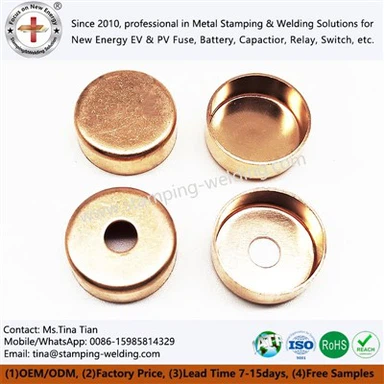
Selection and application of outdoor photovoltaic system and inverter output circuit photovoltaic Bright Tin plated fuse copper cap
Apr 10, 2026
Selection Guide
Outdoor photovoltaic systems are exposed to harsh environments such as high temperatures, rainwater, and ultraviolet radiation for a long time. The selection of Bright Tin-plated fuse copper caps should revolve around four core aspects: functional adaptation, environmental tolerance, material technology, and specification matching. Firstly, it is necessary to clarify that the core function of the copper cap is to cooperate with the melt to quickly cut off the circuit in the event of current overload or short circuit. Therefore, it must have excellent conductivity, corrosion resistance, and thermal stability to lay a solid foundation for the safe operation of the system.
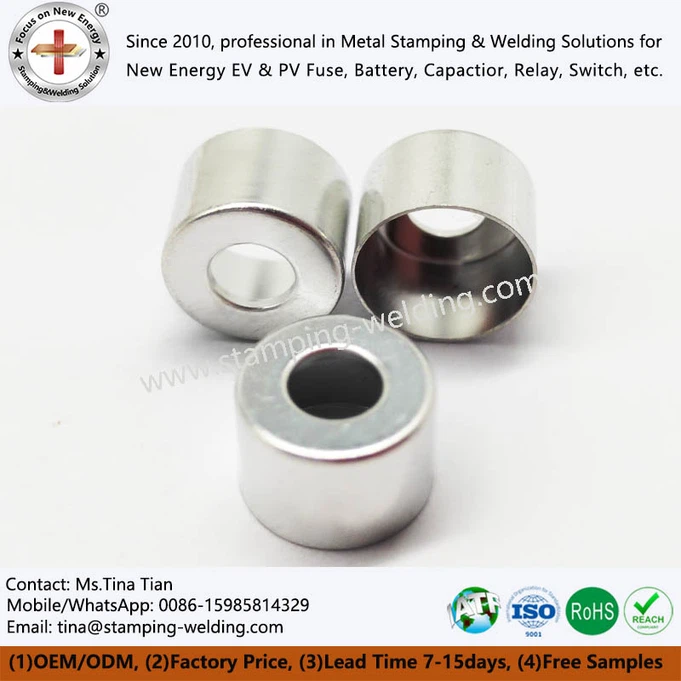
Considering the special requirements of outdoor environments, three key points should be focused on when selecting:
One is corrosion resistance, which needs to resist the erosion of media such as rainwater and salt spray to avoid oxidation damage during long-term use. Tin plating treatment can form a dense oxide film on the surface of Bright Tin-plated fuse copper caps, effectively improving corrosion resistance and adapting to harsh outdoor environments such as humidity and salt spray;
The second is thermal conductivity, which requires the rapid dissipation of heat generated by direct sunlight to maintain the normal operating temperature of the equipment. The tin plating layer will not significantly affect the excellent thermal conductivity of the copper material itself, ensuring rapid heat conduction and avoiding local overheating;
The third is the ability to resist ultraviolet radiation, preventing material aging and cracking, ensuring long-term structural stability. The tin plating layer can enhance the weather resistance of Custom copper caps and delay aging problems caused by ultraviolet radiation. On this basis, combined with the actual needs of the system, suitable substrates such as pure copper and copper alloys, as well as forging, casting and other suitable manufacturing processes, are selected. At the same time, specifications such as rated current, rated voltage, and breaking capacity are clearly defined to ensure that the copper cap matches the system requirements accurately.
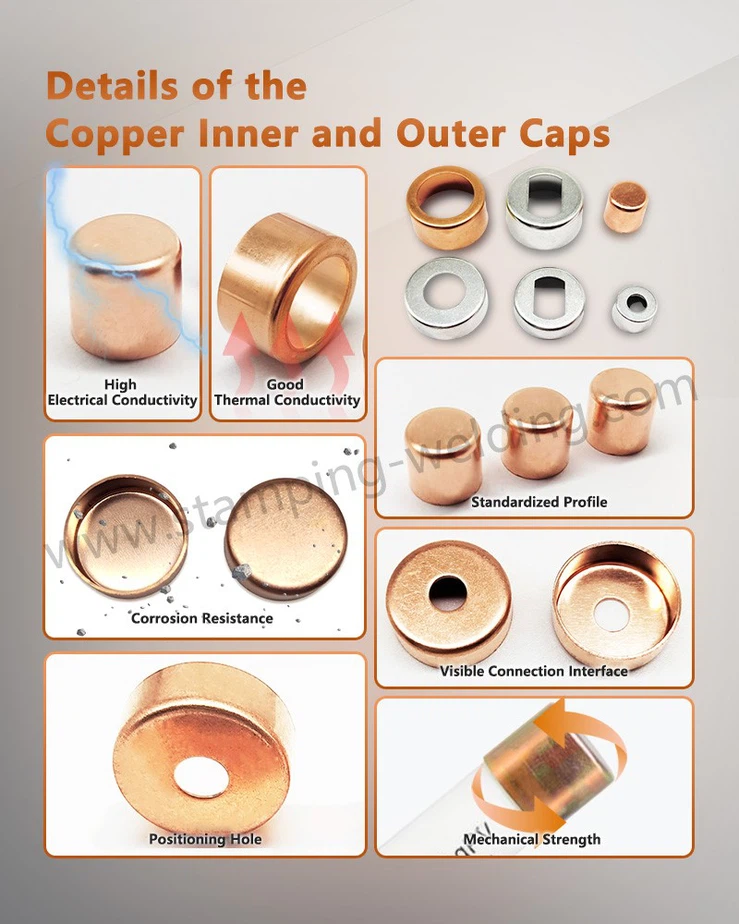
The core function of photovoltaic fuse Copper end cap
As the core equipment for AC-DC conversion in photovoltaic systems, the inverter's output circuit carries the power transmission of the entire system and is susceptible to faults such as current fluctuations and short circuits. The photovoltaic End cap copper plays a crucial role in conducting, connecting, and protecting the system. Among them, tin plated copper caps have become the preferred choice for inverter output circuits due to their excellent comprehensive performance. They can not only rely on the high conductivity of copper materials to ensure stable transmission and reduce power consumption, but also improve corrosion resistance and weldability through tin plating layers, extend the service life of fuses and the entire circuit, and adapt to the welding and assembly requirements of inverter output circuits.
Specifically, the core function of Copper metal end cap is reflected in its dual guarantee: on the one hand, as a conductive connecting component, relying on the excellent conductivity of high-purity copper to achieve efficient current transmission, the tin plating layer will only cause slight attenuation of conductivity (usually less than 2%), fully meeting the transmission requirements of photovoltaic inverter output circuits; On the other hand, it cooperates with the melt to achieve overcurrent, short circuit, and overheating protection. When there is an abnormality in the circuit, it quickly responds and cuts off the circuit to avoid damage to the inverter and related equipment, ensuring the safety of the output circuit.
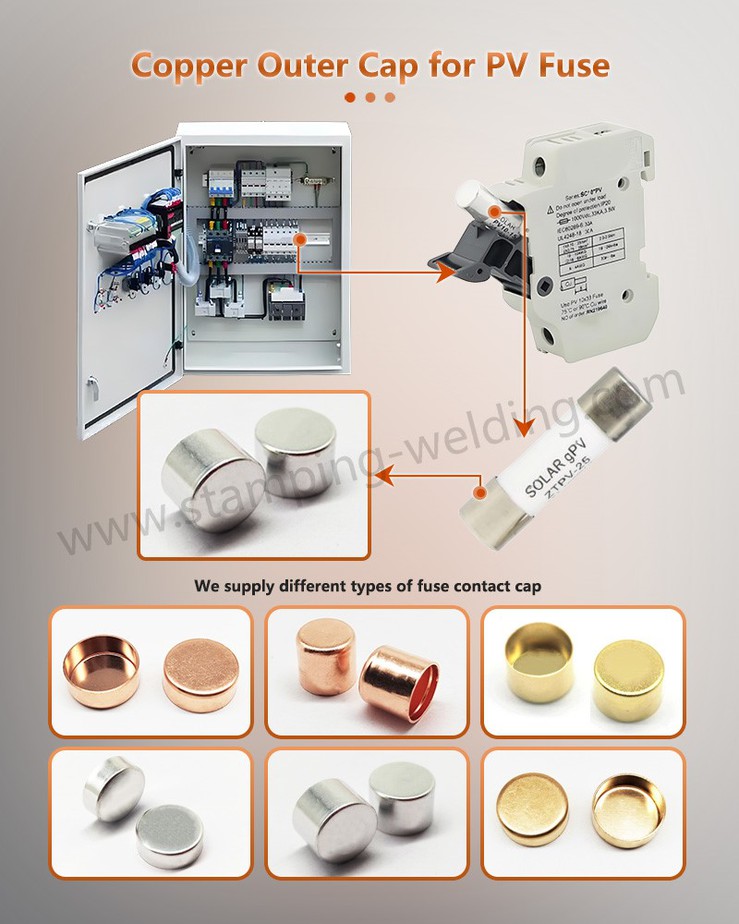
manufacturing process
Its manufacturing process requires multiple strict procedures to ensure product quality and stable performance:
First, select high-quality and high-purity copper materials and cut them according to design requirements, and then use precision stamping to ensure that the Copper pipe cap size is uniform and meets standards, ensuring compatibility with the inverter output circuit;
Subsequently, tin plating treatment is carried out to form a uniform and sturdy coating, enhancing corrosion resistance and weldability;
Next, solder and assemble the Tin plated copper end caps with fuses to ensure a secure connection without pinholes or gaps, and to meet the connection requirements of the inverter output circuit;
Finally, the product can only be put into use after passing multiple tests such as conductivity, corrosion resistance, and mechanical strength, ensuring that it is fully compatible with the inverter output circuit and meets the reliability requirements for long-term operation of the photovoltaic system.
contact us
If you have any selection, customization or procurement needs for photovoltaic Bright Tin-plated fuse copper caps in outdoor photovoltaic systems or inverter output circuits, please feel free to contact us at any time. We will provide professional selection suggestions and adaptation solutions based on your actual working conditions to assist in the safe and stable operation of photovoltaic systems.