Stainless Steel Stamping Parts technology: material properties, process flow and industrial applications
Apr 29, 2026
Basics and classification of stainless steel materials
Stainless steel is essentially an iron-based alloy whose core characteristic is excellent corrosion resistance. This characteristic comes from the chromium content of at least 10.5% in the alloy, which reacts with oxygen in the air to form a dense passivation protective film on the metal surface. This mechanism distinguishes it from ordinary steel and makes it an ideal choice for scenarios with strict requirements on durability and service life. According to different microstructures, stainless steel is mainly divided into four categories: austenitic stainless steel (such as 304, 316), which is non-magnetic, has excellent corrosion resistance and formability, and is widely used in the food and pharmaceutical industries; ferritic stainless steel (such as 430, 446), which is magnetic and cost-effective. Commonly used in automotive parts and home appliances, martensitic stainless steel (such as 410, 420), which can be hardened by heat treatment, is suitable for surgical instruments and knives; duplex stainless steel (such as 2205), which combines the advantages of austenite and ferrite, has high strength and excellent corrosion resistance, and is suitable for the chemical industry and marine environments.
Stainless steel material selection guide for stamping
In the field of metal stamping, 304 and 316 stainless steel are the most commonly used materials. 304 stainless steel is regarded as a universal material in stamping processing due to its excellent formability and good corrosion resistance, and is especially suitable for manufacturing complex parts exposed to general corrosive environments. On this basis, 316 stainless steel adds the molybdenum element, which significantly improves its resistance to chloride and acidic substances, and is suitable for marine environments or chemical processing equipment. For specific prototype sheet metal stamping needs, choosing the right grade is critical to balancing cost and performance.

Key process flows
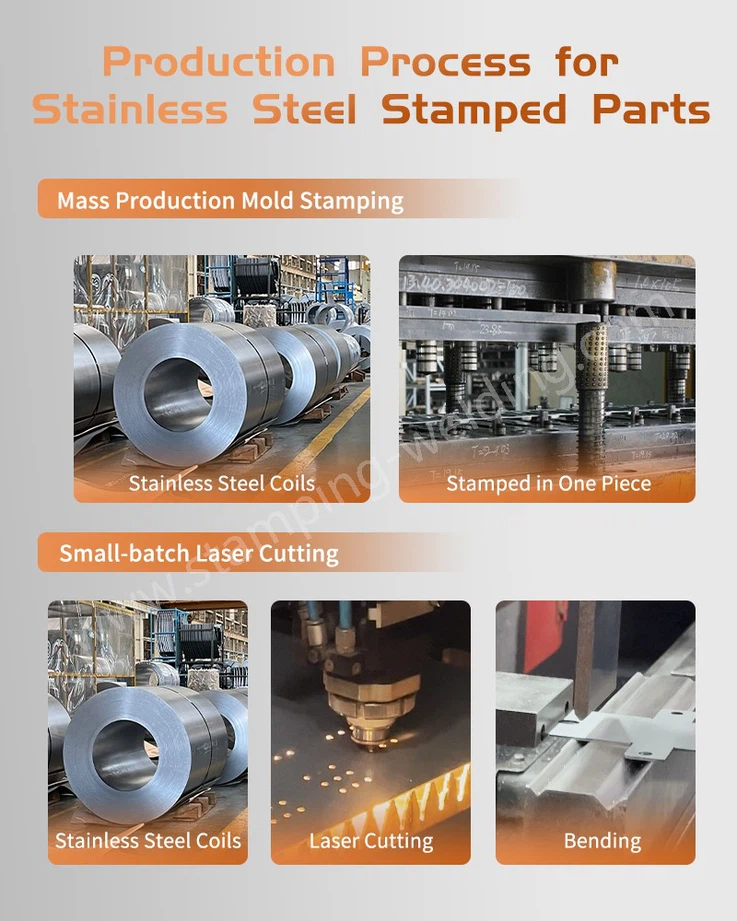
The stainless steel stamping process begins with material selection and mold design. Engineers need to develop detailed Die Metal Stamping plans based on part specifications, which directly determine the tolerances and functions of the product. Blanking is then performed to cut the sheet into easy-to-handle blanks.
Forming and drawing are the core links. The metal is bent or stretched into the required shape through a high-pressure mold. For complex parts, a deep-drawn metal stamping process may be involved to ensure the accuracy of depth and shape. In addition, through progressive stamping Steel Metal technology, punching and cutting can be completed at continuous stations, greatly improving production efficiency. Finally, stamped parts often undergo post-processing processes such as deburring and polishing to meet appearance and performance standards.
Industry application and manufacturing capabilities
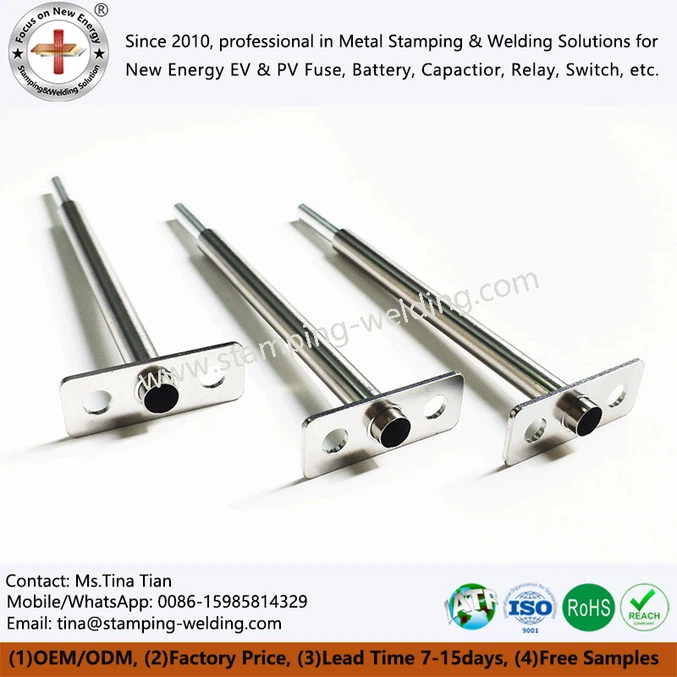
Stainless steel stamping parts are widely used in automotive (fuel injectors, exhaust systems), medical (surgical instruments, implanted equipment), electronics (connectors, battery contacts), aerospace and construction industries. In order to cope with diverse industrial needs, metal stamping companies continue to refine their processes to meet high standards from Automotive Assembly Stamping Parts to precision medical components. Whether it is small batch trial production of custom metal stamps or large-scale production of Carbon steel Sheet Metal Stamping Parts, precision manufacturing capabilities are the key to ensuring the quality of parts.

contact us
We focus on precision stamping manufacturing of metal materials such as carbon steel and Stainless Steel Stamping Parts. Our processes cover continuous die stamping, deep drawing stamping and small batch prototype trial production, and we are committed to providing customers with high-precision, high-quality metal stamping solutions.