What Are Carbon Steel Stampings? An Analysis of Materials, Manufacturing Processes, and Applications
Sep 20, 2026
In sectors such as automotive, electronics, electrical equipment, HVAC, industrial equipment, and machinery manufacturing, many metal components are not produced individually via machining; instead, stamping processes are used to rapidly transform steel sheets or strips into parts with specific shapes and dimensions. Carbon steel stampings represent a widely used category of these metal stamped products.
Carbon steel-particularly low-carbon and cold-rolled varieties-offers a favorable combination of strength, formability, and cost-effectiveness. Through processes such as punching, blanking, bending, deep drawing, and forming, it can be manufactured into components like brackets, connecting plates, mounting plates, clips, housings, and structural parts. Industry data indicates that low-carbon steel generally exhibits excellent formability, with cold-rolled low-carbon steel frequently utilized for deep-drawn and precision-stamped parts. When selecting carbon steel galvanized deep draw metal stamping, engineers and procurement professionals must look beyond material costs and comprehensively consider factors such as material grade, thickness, product design, stamping processes, tolerances, surface treatments, tooling lifespan, and the end-use environment.

What is Carbon Steel Metal Stamping?
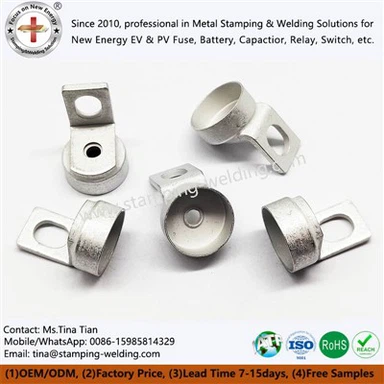
Carbon steel sheet metal stamping parts are metal parts made by processing carbon steel sheets, strips, or coils using stamping dies and presses. During the stamping process, the material undergoes plastic deformation or localized shearing under the action of the die to form the required two-dimensional or three-dimensional structures.
Depending on the product design, carbon steel stamping processes typically include blanking, piercing, bending, drawing, forming, embossing, and coining. For products with simple structures, single-operation dies can be used; for parts featuring multiple holes, bends, and complex forms, multi-station processing using continuous or progressive dies is employed.
Why is carbon steel suitable for stamping?
The widespread use of carbon steel in the manufacture of stamped parts is due to its material properties and cost structure.
First, low-carbon steel generally possesses good ductility and formability, allowing it to withstand bending, stretching, and deformation during stamping; it is therefore suitable for components such as brackets, clips, mounting plates, and certain deep-drawn parts.
Second, carbon steel raw materials are widely available and come in standardized specifications, enabling effective control of material costs per unit for high-volume stamping projects.
Additionally, precision metal stamping can undergo various surface treatments-such as galvanizing, electroplating, powder coating, painting, or blackening-to enhance corrosion resistance and improve their appearance.

Common Carbon Steel Materials for Stamping
Carbon steel is not a single material but a family of steels with varying carbon content, strength, and formability. In actual stamping production, the appropriate material must be selected based on the product's structure and performance requirements.
Low-carbon steels offer good ductility and formability, making them common choices for general stamped parts and deep-drawn components. Examples include AISI 1008, AISI 1010, and certain cold-rolled steels like SPCC and DC01; these are frequently used for brackets, clips, housings, and other parts requiring forming.
Medium-carbon steels possess higher strength, though their formability is generally lower than that of low-carbon steels. They are a suitable choice when a part requires higher mechanical strength and the design allows for a certain degree of stamping deformation.
High-carbon steels offer superior hardness and strength but have relatively limited plasticity and formability. Consequently, they are generally unsuitable for complex deep-drawn shapes and are better suited for specific parts requiring high strength, elasticity, or wear resistance.
Common Manufacturing Processes for Carbon Steel Stamped Parts
Carbon steel stamping is not a single processing step but a comprehensive manufacturing process comprising material preparation, die making, stamping formation, and post-processing.
1. Raw Material Preparation
First, the material grade, thickness, width, and surface condition are determined based on engineering drawings. Coiled stock is typically used for continuous stamping products, whereas pre-cut sheets or circular blanks may be used for larger or deep-drawn parts.
2. Die Design and Manufacturing
The die determines the final geometry of the stamped part. During the design phase, factors such as material thickness, stamping direction, bend radius, hole locations, die clearance, draw ratio, layout strategy, and material utilization must be considered.
3. Blanking and Piercing
Blanking is used to separate the required outer profile from the sheet or strip material. Piercing is used to create mounting holes, locating holes, ventilation holes, or other functional openings.
4. Bending and Forming
Punches and dies are used to shape flat steel plates into angles, steps, embossments, or other three-dimensional structures.
Bending is often a critical step for brackets, mounting tabs, and structural connectors.
5. Deep Drawing
Deep drawing is employed when the product requires a cup-like, cylindrical, or box-like structure. This process uses a punch to draw flat material into a die cavity, creating a seamless hollow structure; it is commonly used for housings, sleeves, cups, and other deep-cavity parts.
6. Post-processing
After stamping, processes such as deburring, cleaning, heat treatment, and surface finishing may be performed depending on the intended operating environment. Common surface treatments include electroplating, galvanizing, powder coating, painting, black oxide coating, electrophoresis, and anti-rust treatment.
Corrosion protection is particularly important for standard carbon steel products, as exposed carbon steel is prone to rusting in humid or corrosive environments.

What are the applications of Metal Stamping Techniques?
Progressive die stamping is widely used in the field of industrial manufacturing.
Automotive Industry
The automotive industry is a major sector for metal steel stamping blanks. Common products include mounting brackets, metal clips, chassis brackets, fixing plates, connectors, reinforcement plates, and structural components.
Electrical and Electronics Industry
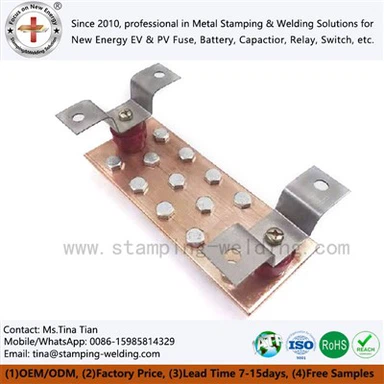
In electrical equipment, metal forming serves as mounting brackets, metal housings, shielding components, fixing plates, connecting structural parts, and equipment supports.
HVAC Industry
HVAC equipment also requires a large number of metal stamped parts, such as mounting brackets, fixing plates, connecting plates, and internal structural components.
Industrial Machinery
In industrial equipment, automation systems, and machinery, stainless steel stamped parts perform functions such as fastening, connecting, supporting, and protecting.
Consequently, for high-volume, repetitive structural parts, stamping is generally more suitable for mass production than individual machining.

What is the difference between Die Metal Stamping and CNC machining?
There is no absolute superiority of one method over the other; rather, they are suited to different types of products. Stamping primarily involves using dies to plastically deform or shear sheet metal, making it ideal for high-volume, repetitive production. CNC machining, on the other hand, removes material through cutting; it can produce complex 3D structures and is better suited for low-volume, highly complex parts or those requiring extensive machining features.
If a product features a sheet-metal structure, requires high-volume production, and has a stable geometry, stamping usually offers a cost advantage. Conversely, if the product has a complex structure, requires low-volume production, or involves extensive 3D cutting, CNC machining may be the more suitable choice.
What should be considered when selecting a supplier for Stainless Steel Sheet Metal Fabrication?
When sourcing carbon steel stampings, it is not advisable to focus solely on the unit price. It is more important to verify the supplier's ability to consistently control factors such as material grade and certification, sheet thickness, die precision, stamping capabilities, dimensional tolerances, burrs, flatness, bending angles, surface treatment, and batch-to-batch consistency.
For long-term mass production projects, additional considerations include die lifespan, production stability, quality inspection capabilities, and delivery schedule management.
Contact Us