How to Choose IT rack cabinet for High-Density IT Equipment: A Procurement Guide on Dimensions, Load Capacity, and Cooling
Sep 20, 2026
As the power consumption, weight, and size of GPU servers, high-performance computing equipment, and storage devices continue to increase, traditional server racks may struggle to meet requirements regarding space, load-bearing capacity, and thermal management. When procuring IT rack cabinet, one must evaluate not only price but also equipment dimensions, load capacity, heat dissipation, power cabling, and room for future expansion.
Selecting racks for high-density IT equipment should begin with the actual equipment specifications rather than by choosing a rack model first. Verifying parameters such as equipment height, depth, weight, power consumption, and quantity helps minimize the risk of needing to replace racks or reconfigure the data center layout later. The rack configuration should align with the specific needs of the equipment.

First, determine the equipment dimensions and cabinet specifications.
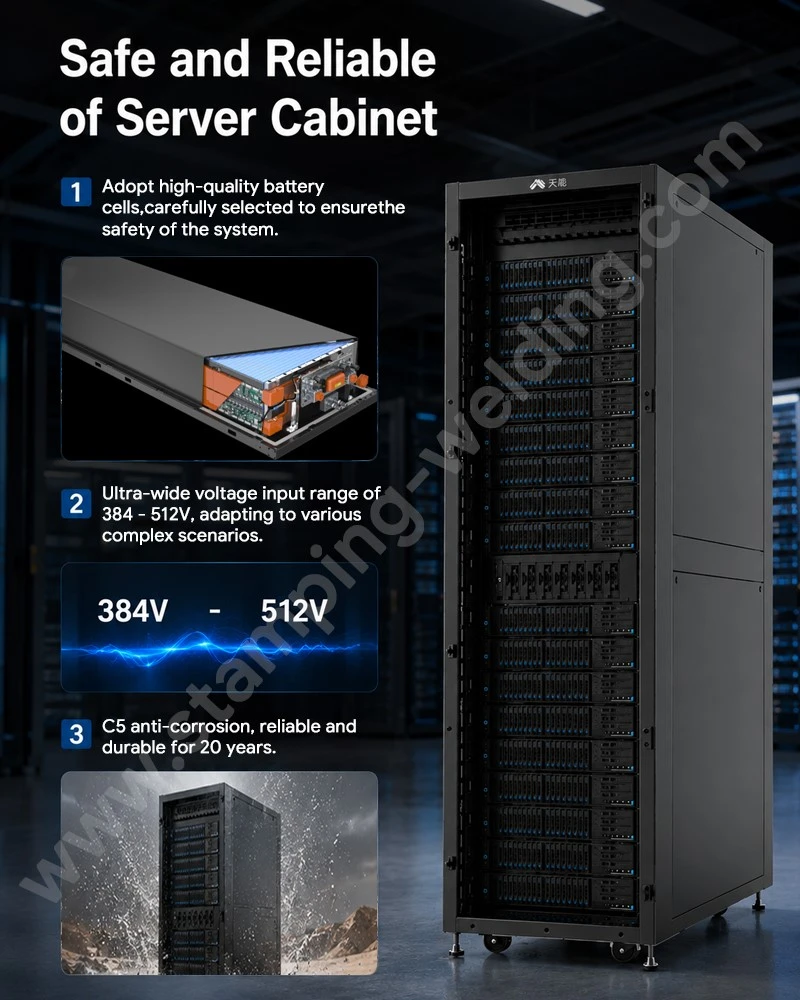
The height of the equipment directly determines the required rack unit (U) capacity. When dealing with a large number of servers, one can select an appropriate 42U cabinet based on the current installation count and planned expansion space; this avoids overcrowding the equipment while reserving room for future server additions.
Equipment depth is another critical factor to verify. Procurement decisions should not be based solely on the dimensions of the server chassis itself; space must also be allocated for rear-facing power cables, network cables, and maintenance access. For deep equipment-such as GPU servers-it is essential to confirm the internal depth of the enclosed server rack and the positioning of the front and rear mounting rails in advance.
If the project involves wall-mounted equipment, the rack structure must be selected based on both the equipment's weight and the mounting method. For instance, a 15U wall-mount rack is suitable for networking or small IT equipment in space-constrained environments, but load-bearing capacity should not be judged by rack unit size alone.
For various equipment configurations, it is also necessary to verify mounting hole patterns, rail dimensions, and overall compatibility between the equipment and the cabinet. Server rack specifications must align with the servers or other 19-inch equipment to minimize the need for on-site installation adjustments.
Compatibility with load-bearing requirements and high-density equipment
Once the dimensions are determined, the load-bearing capacity of the cabinet must be further verified. High-density servers often have significant individual weights; therefore, the static load capacity, rail mounting capacity, and base structure of the 42U rack must all be compatible with the total equipment weight while allowing for a reasonable safety margin.
In scenarios involving the centralized deployment of multiple servers, the procurement criteria should not be based merely on the sum of individual equipment weights; factors such as installation positioning and long-term operational conditions must also be considered. IT cabinets with heavy-duty construction are better suited for deployment environments involving higher loads.
Need to match rack dimensions and load capacity with your high-density IT equipment?
Request IT Rack Cabinet Selection & Quote

Heat dissipation and airflow must be considered in conjunction with the server room environment
High-density equipment generates significant heat during operation; therefore, the choice of IT rack cabinet must align with the data center's overall cooling strategy. When procuring cabinets, focus on factors such as the perforation ratio of the doors, front-to-rear airflow patterns, and equipment intake/exhaust configurations, rather than simply asking whether the cabinet offers "heat dissipation capabilities."
For high-power servers, internal airflow can be compromised by cabling, blanking panels, or equipment layout, potentially reducing cooling efficiency. Consequently, the cabinet's structural design and equipment arrangement should prioritize maintaining an optimal front-to-rear airflow path.
If the project is located in an edge facility, a factory, or another specialized environment, cabinet selection must also account for installation space and environmental conditions. For instance, when selecting a wall-mount rack enclosure, one must consider the mounting wall structure, equipment weight, maintenance clearance, and dust protection requirements.
Power Supply, Cabling, and Safety
High-density IT equipment typically requires extensive power and network connectivity; therefore, cabinets must not only provide sufficient mounting space but also accommodate proper PDU installation and cable management. While compact cabinets (such as those for home use) are common in small-scale scenarios, large-scale projects require a re-evaluation based on actual loads and equipment configurations.
Procurement decisions should also account for vertical and horizontal cable management space, cable entry points, and access paths for front and rear maintenance. In space-constrained environments, compact options like 12U racks may be suitable for specific equipment, provided that the quantity, depth, and cabling requirements are carefully verified.
When installing equipment on walls or in confined areas, ease of maintenance is a critical consideration. For wall-mount cabinets, factors such as the door-opening mechanism, equipment mounting depth, and cable entry/exit points must be evaluated to ensure that routine servicing is not hindered after installation.
Reserve space for future expansion
When selecting a server cabinet, one should consider future expansion in addition to current equipment needs. Provisions for rack units (U-space), power capacity, cooling clearance, and cable management space should be made at the time of purchase to avoid the cost of acquiring new cabinets when adding equipment later.
For small to medium-sized IT projects, a 22U rack can accommodate the centralized installation of a selection of servers, networking gear, and storage devices; however, if the volume of equipment continues to grow, a higher-specification model should be chosen based on available data center space and future capacity requirements.
For scenarios requiring frequent equipment relocation, key factors to verify for rolling server racks include the casters, the base structure, and the overall load-bearing capacity, as well as ensuring that the equipment remains securely fastened while the rack is in motion.
Server Rack Procurement Checklist
During the supplier inquiry phase, procurement parameters can be categorized into several key dimensions: dimensions (including height, width, depth, and mounting dimensions); load capacity (static load and rail load); cooling (airflow design and door panel perforations); power and cabling (PDUs and cable management); and security (door locks, environmental requirements, and mounting methods).
If a project requires a more compact equipment footprint, a 9U or 15U server rack may be selected based on the actual number of devices; for larger-scale data centers, cabinet specifications should be determined by balancing equipment volume, available floor space, and future scalability, rather than basing the decision solely on price.
For data centers, network rooms, and industrial IT environments, procurement teams should also verify requirements regarding materials, frame structure, surface finish, door configurations, and custom dimensions. Specific sizes-such as 15U data cabinets or 32U racks-should be chosen based on the specific equipment mix and installation conditions.
The final selection logic can be summarized as follows: Equipment Requirements → Rack Size → Load Capacity → Cooling → Power & Cable Management → Security → Future Expansion. Note that the selection logic for small-scale applications (such as home network cabinets) differs from that of high-density data centers; therefore, assessments should be tailored to the specific usage scenario.
FAQ
The rack unit (U) size should be determined based on the equipment's height, quantity, depth, and future expansion needs; additionally, verify that the internal mounting depth and cable management space meet requirements.
The rack's rated load capacity should exceed the actual total weight of the equipment, with a reasonable margin reserved based on the mounting method and rail load requirements.
In addition to the depth of the server unit itself, factors such as power cables, network cables, and rear maintenance clearance must be considered; specific dimensions should be based on the equipment's actual installation requirements.
Consideration should be given to server intake/exhaust directions, the perforation ratio of the rack doors, and the overall data center cooling method to ensure the rack's airflow design aligns with the site's thermal management strategy.
Structural adjustments-such as modifications to dimensions, mounting hole patterns, depth, door panels, cable entry points, and PDU placement-can be made to accommodate specific equipment requirements, making them suitable for projects with unique installation needs.
Contact Us
If you need assistance selecting cabinets for high-density IT equipment-considering dimensions, load-bearing capacity, heat dissipation, and cabling requirements-please provide the equipment specifications and deployment needs so that a technical assessment can be conducted.