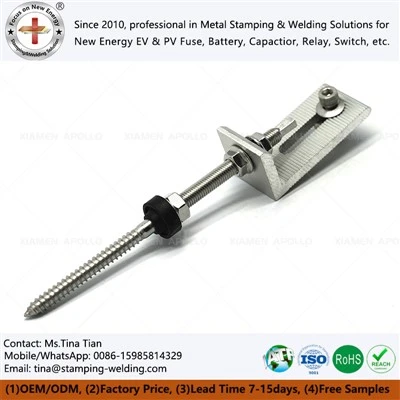


Solar Panel Earthing Plate
A solar panel earthing plate is an electrical safety component specifically designed for photovoltaic (PV) power generation systems. It facilitates conductive connections and equipotential bonding among PV mounting structures, aluminum alloy rails, module frames, and the overall grounding network. Its primary function is to establish a low-impedance grounding path during system operation, safely diverting lightning currents, static charges, and leakage currents to the earth, thereby ensuring the safety and stability of the entire PV power plant. In large-scale ground-mounted plants, distributed rooftop PV systems, and commercial/industrial PV installations, the reliability of the grounding system directly impacts the plant's safety rating and long-term operational stability.
- Fast Delievery
- Quality Assurance
- 24/7 Customer Service
Product Introduction
Solar panel earthing plates are typically installed on the metal rails of PV mounting systems or at module connection points, establishing a rapid, conductive connection through mechanical clamping or piercing mechanisms. Depending on the specific mounting structure and application scenario, various types are available:
PV Rail Earthing Plate
Aluminum Rail Grounding Plate
Stainless Steel Earthing Plate
Copper Conductive Earthing Connector
Module Frame Grounding Plate
Piercing-type Earthing Plate
Spring-contact Grounding Plate
These products are compatible with mainstream PV mounting systems and rail structures, and support customized designs for dimensions and connection methods.

Meticulous Manufacturing Processes
Incoming Strip Inspection
High-grade stainless steel (e.g., SUS304/316) or specialized composite copper strips-selected for their superior elastic-plastic properties and corrosion resistance-undergo comprehensive testing for hardness and chemical composition.
01
Multi-Station Integrated Forming
Complex geometries-including blanking, punching, tooth forming, and bending-are completed in a single pass using high-speed precision presses equipped with progressive dies.
02
Deburring and Polishing
An eco-friendly barrel polishing process removes excess stamping burrs from edges, ensuring safety for installers handling the parts with bare hands.
03
Surface Passivation/Specialized Coating
Targeted chemical passivation or multi-element alloy coating is applied to enhance corrosion resistance, specifically for high-salinity and high-humidity environments (such as coastal "fishery-solar hybrid" or offshore photovoltaic projects).
04
Performance Sampling and Testing
Finished Stainless Steel SUS 304 Solar Earthing Plates are periodically sampled for laboratory testing, which includes simulating actual torque-tightening conditions, measuring contact resistance, and conducting salt spray aging tests that exceed industry standards.
05

Design Advantages: Topology-Optimized Mechanics and Ergonomics
| Optimized Tooth Array for Penetration | The angle, height, and arrangement density of the teeth have undergone rigorous mechanical simulation and physical validation. Teeth that are too sharp risk fracturing during penetration, while those that are too blunt fail to pierce the thick oxide layer. Our tooth design creates an inverted-cone mechanical lock after piercing the oxide layer; this increases pull-out resistance, ensuring the teeth remain securely engaged with the aluminum frame even under conditions of high wind or vibration. |
| Stress Relief Design | We incorporated specific stress-relief slots around the fastener hole. This design ensures the bolt's clamping force is evenly distributed across the tooth area, preventing fatigue fractures caused by localized stress concentrations during long-term service. |

Key Functions: The Three Pillars of Electrical Safety
Fault Current Discharge Path
When insulation breakdown occurs within a PV module (e.g., due to the PID effect or moisture ingress caused by encapsulation aging), high DC voltage may be conducted to the metal frame. The Solar Panels Earthing Plates provide a low-impedance path to rapidly divert fault current to the earth, triggering the ground fault protection mechanism of the inverter or combiner box, thereby preventing electric shock and fire hazards.
Lightning Surge Protection
PV power plants are typically located in open areas where the risk of lightning strikes is significantly higher than for urban buildings. Acting as the "nerve endings" of the lightning protection grounding system, the Grounding Plate for Solar Panels integrates lightning rods, mounting structures, and module frames.
Suppression of Static Electricity and Electromagnetic Interference
PV modules are prone to static electricity accumulation when operating in dry environments; the grounding plate provides a continuous path for static discharge. Additionally, robust grounding continuity reduces the system's susceptibility to electromagnetic interference (EMI) and enhances the stability of the inverter's control circuitry.

contact us
We offer not only standardized Grounding Plates for Solar Panel Sets but also comprehensive engineering support-ranging from structural optimization to mass production-tailored to the client's PV mounting structure, grounding system design, and operational environment. This ensures stable, safe, and consistent electrical connectivity throughout the system's long-term outdoor operation.

Hot Tags: solar panel earthing plate, China, manufacturers, suppliers, factory