




Solar Panels Earthing Plates
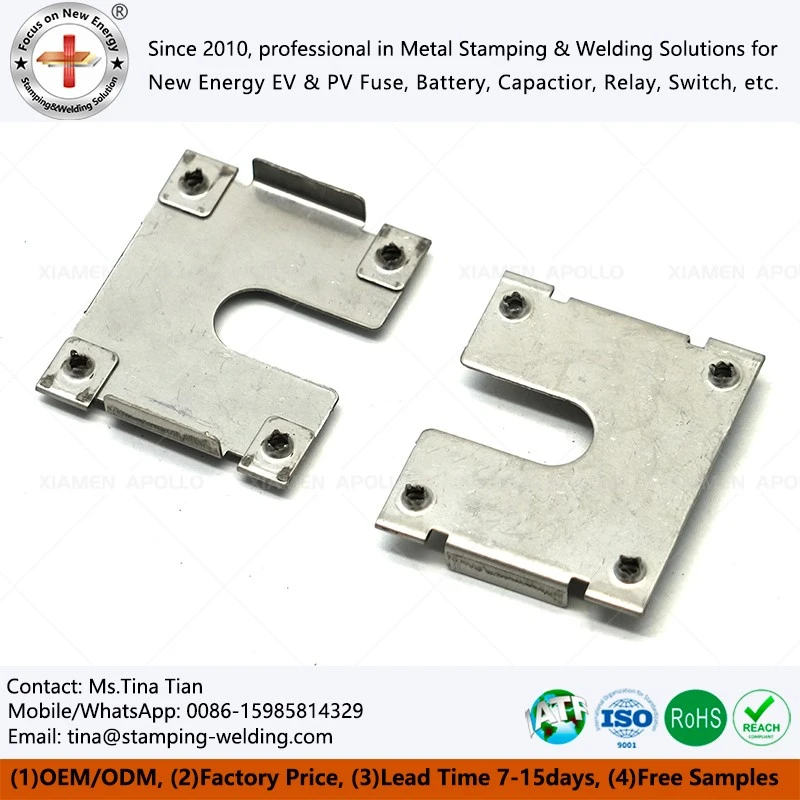
Solar Panels Earthing Plates are critical electrical connection components in photovoltaic (PV) power generation systems, designed to facilitate module grounding and equipotential bonding. Their primary function is to establish a low-impedance electrical path between PV modules, mounting structures, and grounding conductors, thereby providing a safe route for discharging lightning and leakage currents. During the long-term operation of PV systems, factors such as lightning strikes, static electricity accumulation, and environmentally induced voltages can potentially compromise system stability. By utilizing a stable and reliable metal conductive contact structure, these earthing plates effectively connect PV module frames to the grounding system, significantly reducing the risk of electrical faults and serving as a fundamental component for the safe operation of PV power plants. The product is widely used across various renewable energy applications, including utility-scale PV plants, distributed rooftop PV systems, agrivoltaic projects, industrial rooftop installations, and large-scale ground-mounted PV arrays.
- Fast Delievery
- Quality Assurance
- 24/7 Customer Service
Product Introduction
Solar Panels Earthing Plates are not merely simple connectors within a photovoltaic (PV) system; they are a critical component of the electrical safety framework. Their core functions include:
1. Equipotential bonding
Ensuring a uniform electrical potential across the aluminum alloy frames of PV modules, mounting systems, and metal structures, thereby preventing the risk of arcing or electric shock caused by potential differences.
2. Lightning discharge path
Providing a low-impedance path to discharge lightning currents and divert high-energy transients into the grounding system, thereby protecting PV modules and inverters.
3. Electrical safety assurance
Minimizing the accumulation of leakage current and reducing safety hazards associated with system insulation failure.

Key Features and Engineering Advantages Across Multiple Applications
Rooftop and Distributed PV (C&I Rooftop): Enhanced Fire Safety
Commercial and industrial rooftops (such as those with steel structures and color-coated steel sheets) are highly sensitive to arc sparks caused by DC-side leakage. With a highly integrated design, the grounding clip achieves "sub-second" equipotential bonding between the entire mounting rail and the large-area module array, in the event of sudden leakage.
Utility-Scale Ground-Mounted Plants: Dramatically Accelerated Construction
For vast desert or mountainous power plants, using traditional jumper cables to ground millions of modules entails exorbitant labor and material costs. Our penetrating grounding clips are installed simultaneously with the module clamps-enabling "grounding upon tightening"-which significantly reduces on-site labor expenses and helps meet tight EPC construction and grid-connection schedules.
Dynamic Tracking Systems: Long-Term Resistance to Mechanical Shear
Tracking systems undergo daily axial reciprocating rotation. Leveraging the excellent fatigue life and superior clamping force retention of high-strength stainless steel, our grounding clips maintain consistent electrical conductivity even within the dynamic, high-stress environment of long-term system operation.

Material Advantages: Scientifically Selected Materials Tailored to Specific Conditions
We recognize that no single material is suitable for every environment; therefore, we offer targeted material solutions.
Aluminum Alloy (AL5052/AL6061): This is the most common choice. As Solar Panel Earthing Plates for solar panel grounding shares the same material composition as module frames and aluminum mounting rails, there is no risk of galvanic corrosion. Additionally, aluminum offers excellent electrical conductivity and a lightweight profile, while passivation treatment ensures superior weather resistance.
Stainless Steel (SUS304/SUS316): Designed specifically for highly corrosive environments, such as chemical industrial parks or offshore solar installations. Stainless steel offers exceptional chemical stability; however, due to its high hardness, specific installation torque requirements apply, and flat washers must be used to increase the contact area.
Galvanized Steel: A cost-effective choice. Through hot-dip or electro-galvanizing processes, the steel acquires excellent corrosion resistance. With higher mechanical strength than aluminum, it is ideal for applications requiring superior structural robustness.

Detail Showcase: Visible Engineering Quality
Integrity of Sharp Teeth
Stamped teeth are free from wear, deformation, and burrs, ensuring reliable penetration of the anodized layer at recommended torque levels for Solar Panel Stainless Steel Grounding Plate.
Thickness Consistency
Stainless steel sheet thickness tolerance is controlled within ±0.02mm, ensuring consistent mechanical performance across every grounding clip.
Coating Uniformity (Copper Series)
The tin plating provides complete coverage with no exposed copper, peeling, or pinholes for the earthing plate for the PV panel.
Mounting Hole Precision
Bolt mounting holes are precisely sized, ensuring smooth compatibility with M5, M6, and M8 bolts without binding.

contact us
As fundamental connection components within photovoltaic electrical safety systems, Grounding Plates for Solar Panels derive their value not merely from their electrical conductivity, but from their role in underpinning the long-term, safe operation of the entire PV system. Their core competitiveness in engineering applications stems from a combination of stable contact structures, reliable material systems, and standardized manufacturing processes.
If you are currently engaged in PV project design or component selection, we can provide tailored grounding solutions and engineering-grade support based on your project's technical specifications, helping your system achieve consistently high standards of safety and long-term reliability.

Hot Tags: solar panels earthing plates, China, manufacturers, suppliers, factory


