

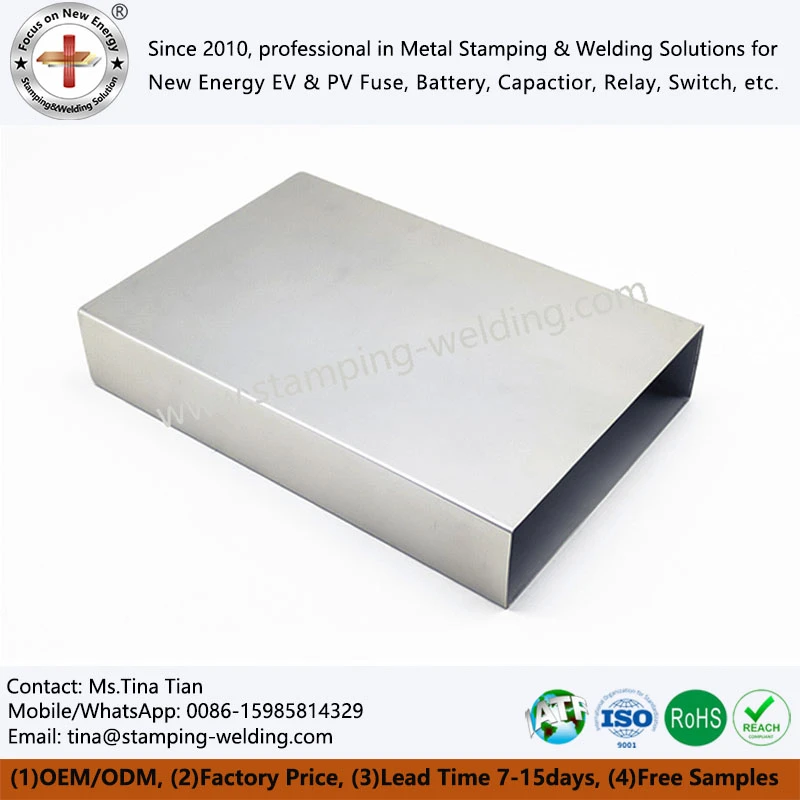

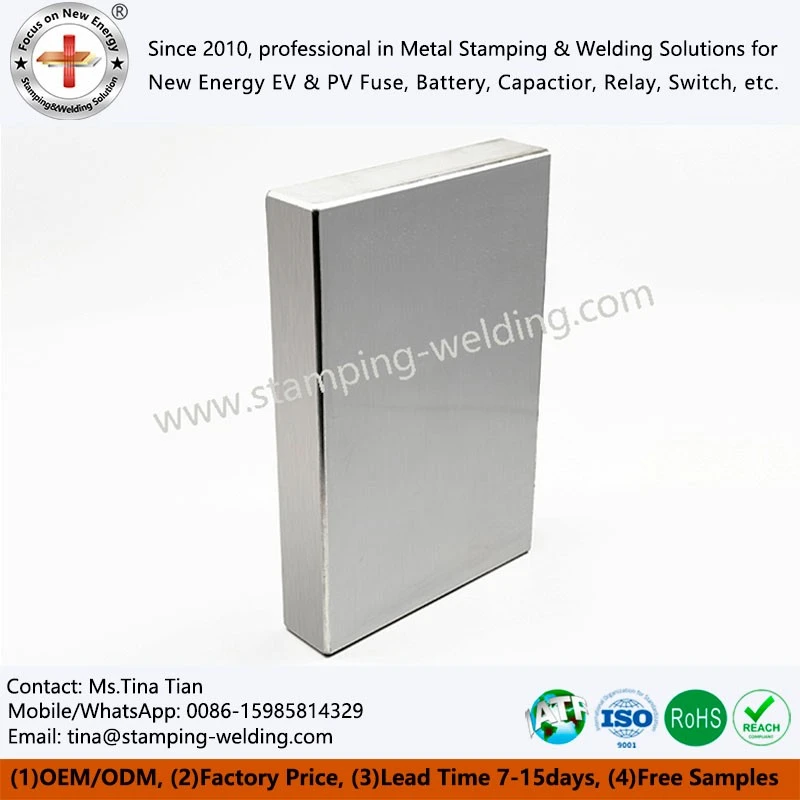
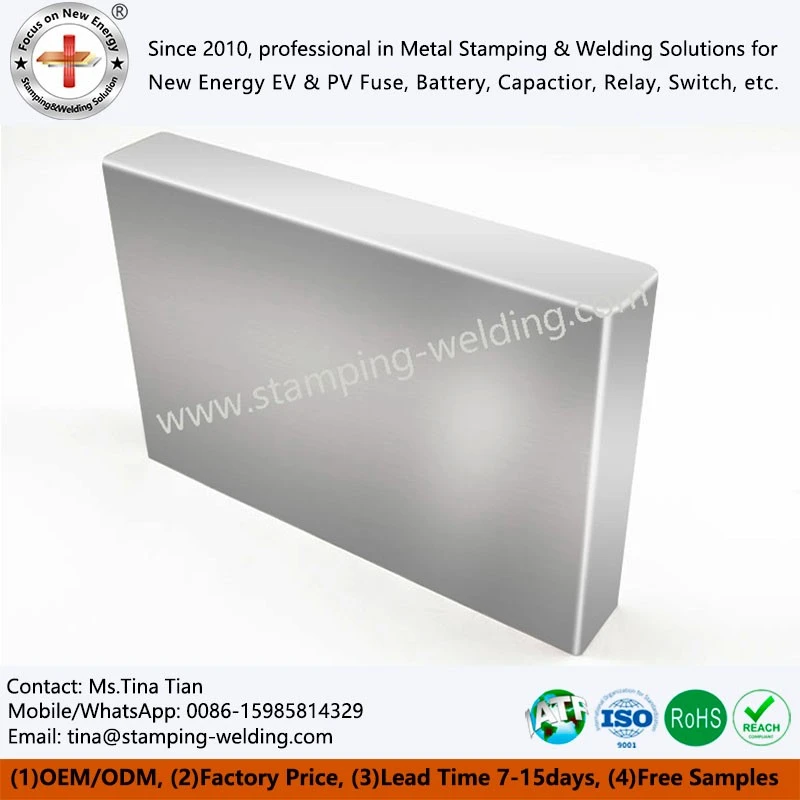
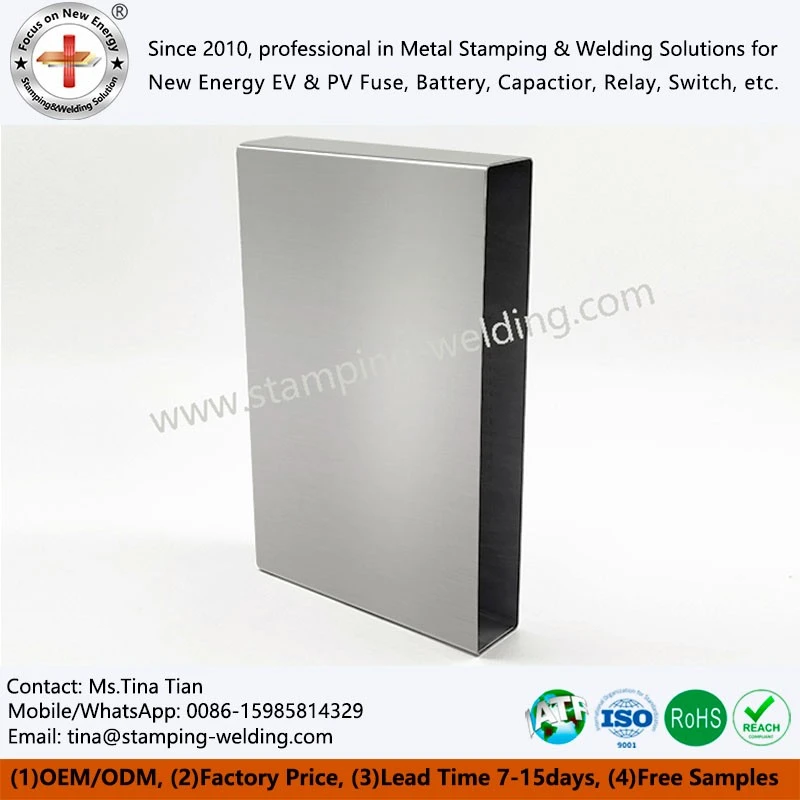
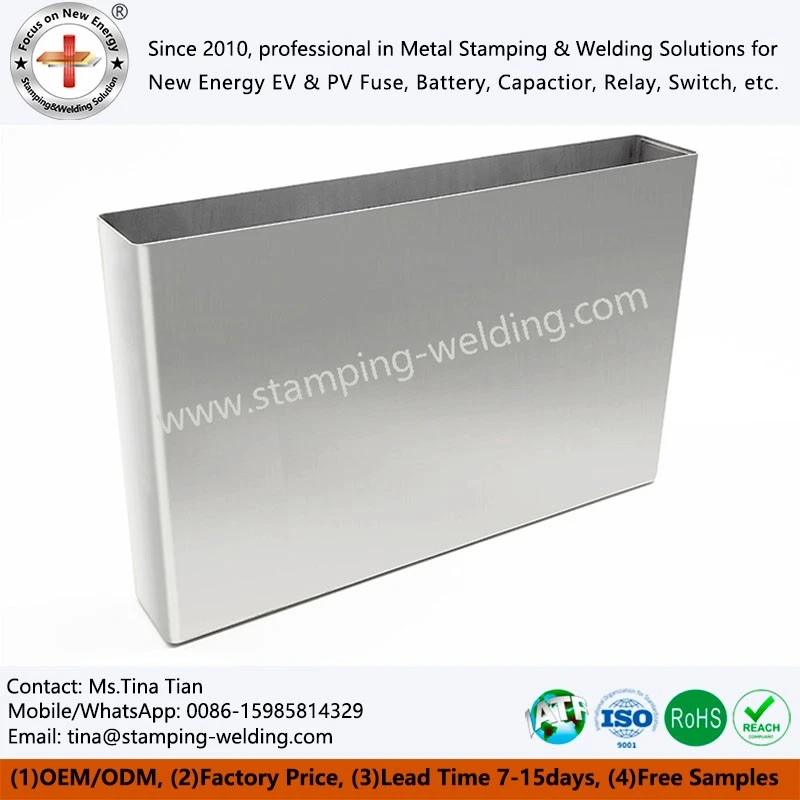
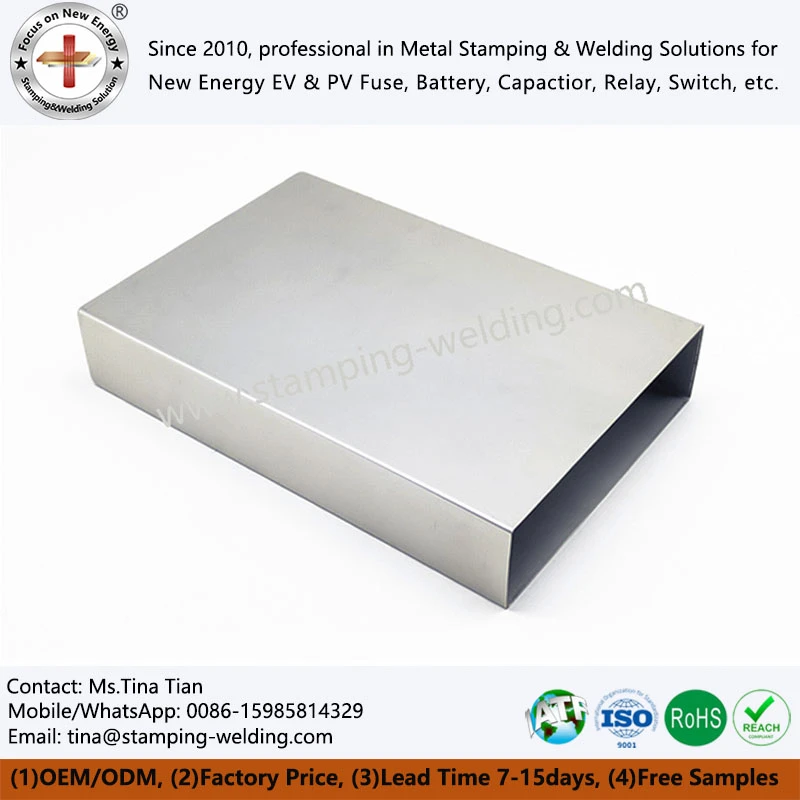
Aluminum Case For Motor Replacement Lead Acid Battery Pack
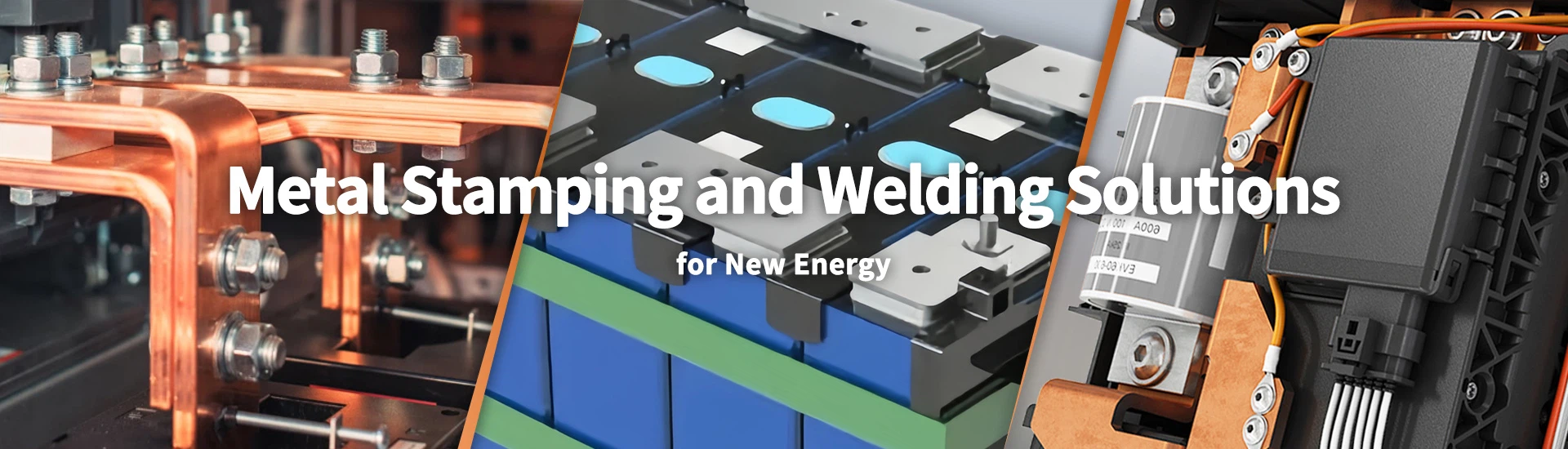
As motor drive systems transition to lithium-ion power, Aluminum Case for Motor Replacement Lead Acid Battery Packs have evolved beyond mere containers into critical structural components that directly influence system safety, thermal management efficiency, weight control, and long-term reliability. Aluminum alloy casings for prismatic lithium batteries represent a specialized solution designed to meet these specific needs. By leveraging advanced material selection, structural design, and precision manufacturing, they provide stable, lightweight, and reliable external protection for prismatic lithium cells, effectively addressing the spatial constraints, vibration conditions, and thermal management challenges common in lead-acid battery replacement scenarios.
- Fast Delievery
- Quality Assurance
- 24/7 Customer Service
Product Introduction
Aluminum Case for Motor Replacement Lead Acid Battery Pack | Casing Engineering Derived from "Lead-Acid Replacement"
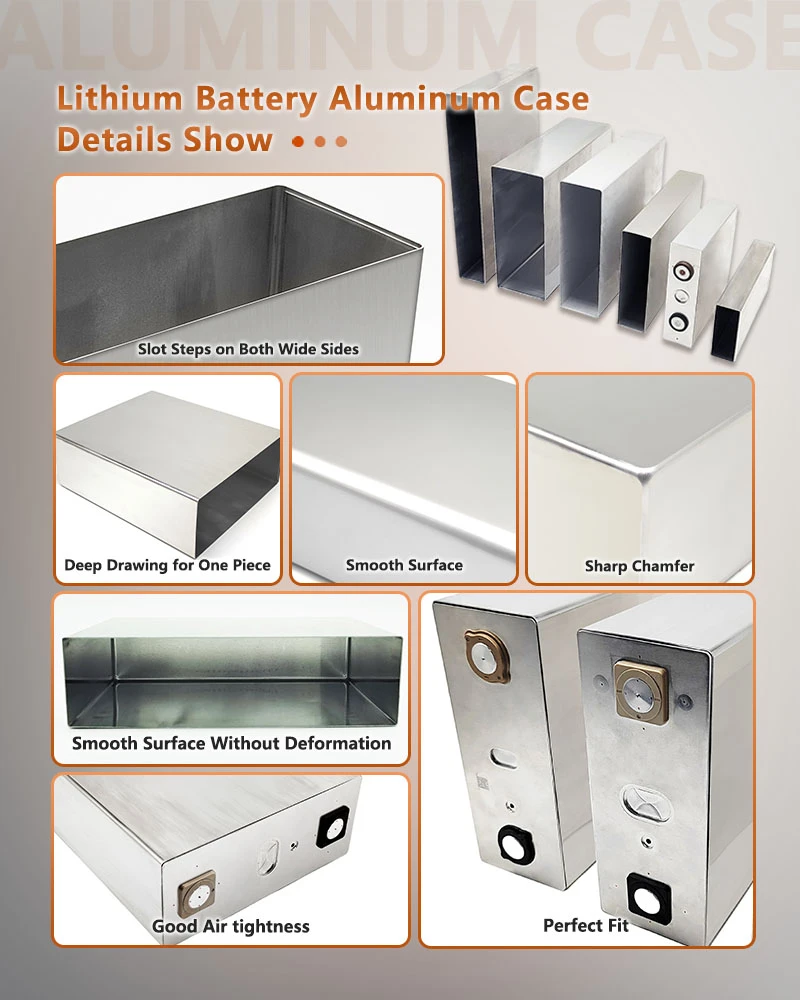
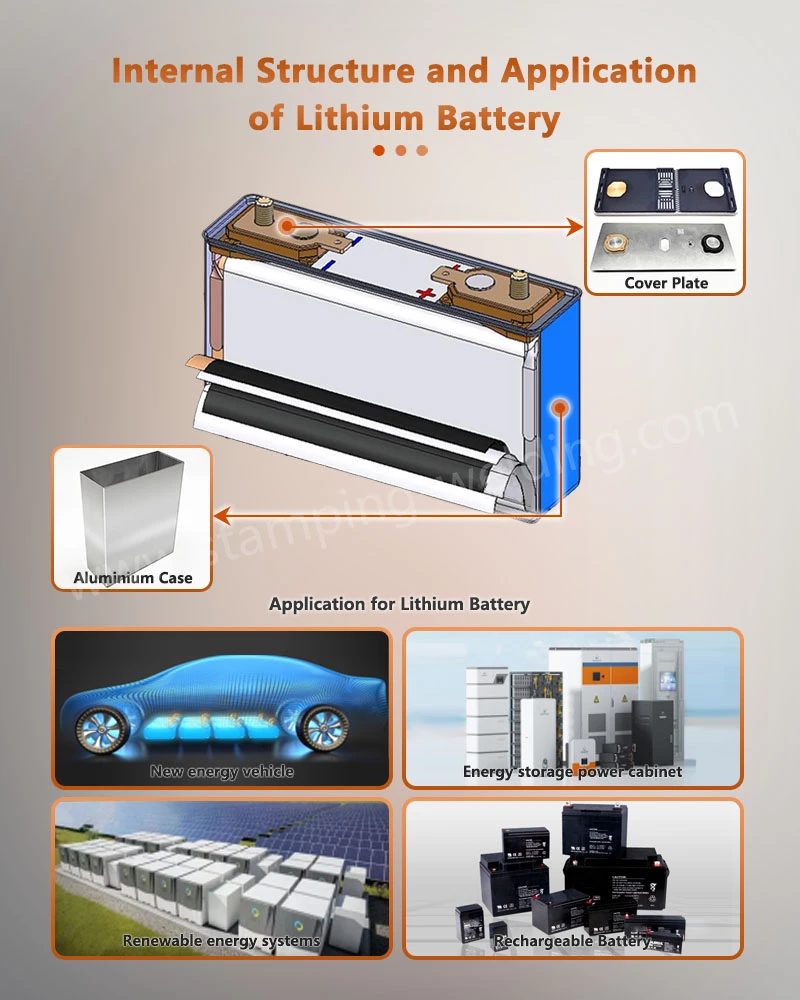
This product is an aluminum alloy structural component designed specifically for prismatic lithium battery packs. It typically comprises elements such as the casing, cover (or lid), mounting flanges, terminal openings, handle interfaces, and explosion-proof valve ports; together with the battery cell module and BMS, it forms a complete battery pack assembly.
Unlike injection-molded housings, aluminum alloy casings offer three distinct physical attributes that are irreplaceable:
Structural Rigidity: The specific stiffness of aluminum alloy far exceeds that of ABS/PC engineering plastics. For a given volume, the casing walls can be thinner while exhibiting less deformation, enabling them to withstand the vibrations and shocks encountered in automotive applications.
Thermal Conductivity: Aluminum's thermal conductivity is orders of magnitude higher (hundreds of times greater) than that of plastic. Heat generated by the cells during operation can be rapidly dissipated through the casing walls; when paired with thermal interface pads inside the pack, this creates an effective heat dissipation surface.
Lithium Ion Battery Pack Design Advantages: Enabling Thermal Management and Intelligent Integration
In engineering designs for converting lead-acid systems to lithium-ion, thermal management often dictates the safety limits of the battery system. Our enclosure design moves beyond the passive cooling limitations of traditional "sheet-metal box" enclosures:
Passive Cooling Fins and Optimized Thermal Conduction
Leveraging the high thermal conductivity of aluminum alloy, heat generated by internal cells is rapidly conducted to the enclosure surface. Streamlined cooling fins on the outer wall facilitate heat dissipation via natural convection, effectively slowing the rate of battery aging.
Internal Insulation and Flame-Retardant Spatial Layout
The design incorporates scientifically calculated allowances for cell swelling and accommodates aerogel insulation pads or mica sheets, preventing thermal runaway in a single cell from propagating to adjacent cells.
Lightweight Wiring Harness and BMS Integration Brackets
The internal structure supports custom bracket welding, allowing for the direct mounting of Battery Management System (BMS) circuit boards and main circuit breakers, thereby achieving structural and electrical integration.
Manufacturing Advantages of Customized Prismatic Battery Cell Casings
We possess end-to-end, closed-loop manufacturing capabilities spanning material sorting, mold development, and surface treatment:
In-house mold development
To address the fragmented nature of non-standard dimensions in the aftermarket, we employ a rapid mold response mechanism. This significantly shortens the cycle from drawing confirmation to first-article delivery, facilitating a smooth ramp-up from small-batch pilot runs to full-scale mass production.
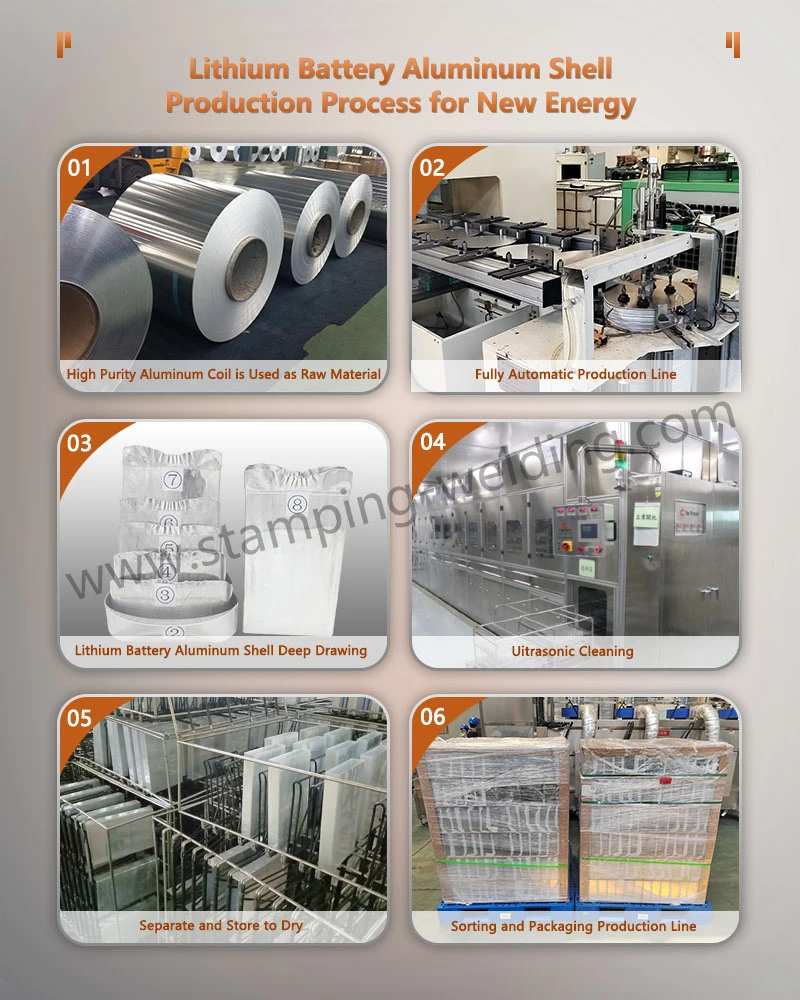
Precision stamping and deep drawing lines
We utilize multi-station progressive dies and hydraulic deep-drawing equipment to ensure uniform sidewall thickness in deep-cavity housings, free from scoring or wrinkling-critical factors for the compressive strength and impact resistance of thin-walled aluminum casings.
Welding and sealing processes
End caps are joined using laser welding or friction stir welding to ensure consistent weld airtightness; combined with helium or differential pressure leak testing, this guarantees the battery enclosure meets or exceeds IP54 protection standards.
Full-process quality traceability
We implement batch-level management covering everything from incoming material heat numbers and deep-drawing parameters to final inspection dimensions. As aftermarket customers typically purchase in project-based batches, a comprehensive traceability system is a mandatory requirement for their engineering audits.
Frequently Asked Questions for Lithium-ion Battery Pack
1. Is the aluminum alloy casing suitable for replacing the original lead-acid battery?
-
In most cases, yes. We can design the casing to be compatible with the dimensions and mounting points of the original lead-acid battery, enabling a direct replacement and minimizing the need for equipment rack modifications.
2. How should I choose between different aluminum alloy grades?
-
AL3003 is suitable for most general applications, offering a balance of formability and corrosion resistance; AL5052 offers higher strength, making it ideal for outdoor use or environments with significant vibration; AL6061 is suited for industrial applications requiring high structural rigidity; and AL1060 is the preferred choice when heat dissipation and lightweighting are the priorities. Please consult our engineering team to determine the best option for your specific operating conditions.
3. Does the casing support waterproofing, dustproofing, and insulation?
-
Yes. We can design sealed structures and apply surface insulation treatments to meet specific protection ratings and prevent direct contact between the battery cells and the metal casing.
4. Can you provide small-batch samples for testing and validation?
-
Yes. We support the entire process, from single-unit samples to small-batch trial production, allowing customers to conduct assembly, thermal, and vibration testing before proceeding to mass production.
5. Can the internal structure or external mounting interfaces be customized?
-
Yes, customization is available. Features such as internal reinforcing ribs, cable routing channels, heat dissipation fins, threaded mounting points, and external flanges can all be specifically designed to match the battery pack layout and system installation requirements.
contact us
If your project involves the development of prismatic lithium batteries, lead-acid battery replacements for electric vehicles, or energy storage battery modules, the Apollo engineering team can provide tailored aluminum alloy housing manufacturing solutions based on your cell specifications, structural design, and mass production requirements.
Hot Tags: Aluminum Case for Lithium Battery Pack, 3003-H14 Aluminum Case, Square Lithium Battery Housing, Battery Aluminum Shell, Aluminum Battery Enclosure


