Application Of Heat-Shrinkable Insulating Materials in Power Busbar Systems: Enhancing Safety And Operational Reliability Of High-Voltage Electrical Connections
Oct 31, 2026
With the continuous development of new energy vehicles, energy storage systems, industrial power distribution, and power infrastructure, electrical equipment now demands higher standards for insulation protection, connection reliability, and long-term operational safety. As critical conductive components in power systems, busbars are widely used in switchgear, power distribution cabinets, transformers, battery systems, and various power electronic devices. During long-term operation, busbars and their connection points are susceptible to factors such as humidity, condensation, dust, salt spray, and temperature fluctuations-all of which increase the risks of insulation aging, surface discharge, and short-circuit faults.
Heat-shrinkable insulation materials have emerged as a key solution for insulating electrical busbars, thanks to their excellent insulating properties, conformability, and environmental adaptability. By encasing conductive surfaces in heat-shrinkable polymers and applying controlled heat, the insulation layer conforms tightly to the busbar's geometry. This reduces the risk of accidental contact between exposed conductors and enhances the overall insulation protection within electrical equipment.
In new energy power systems, customized busbar insulating tubes can be designed based on the specific dimensions, shapes, and voltage ratings of the busbars, providing tailored insulation for various types of conductive components. Compared to traditional insulating coatings, heat-shrinkable tubing creates a more complete, continuous protective layer. It is suitable for straight sections, bends, and certain complex, non-standard connection geometries-though the actual level of protection depends on factors such as material properties, wall thickness, shrinkage ratio, and installation technique.
Structural Principles and Types of Heat-Shrinkable Insulation Materials
Heat-shrinkable materials are polymers that exhibit "shape memory" properties. They are typically processed via radiation cross-linking or other cross-linking techniques to form a stable molecular network. After being pre-expanded and cooled, the material remains in its expanded state; when reheated to a specific temperature range, the molecular structure reverts to its original configuration, resulting in radial shrinkage.
In the field of electrical insulation, this characteristic allows heat-shrinkable materials to tightly encase copper or aluminum busbars and cable connections, creating a continuous, protective insulating layer. Depending on the application requirements, heat-shrinkable insulating materials can be customized in terms of base material, thickness, shrink ratio, and flame-retardant formulation to suit various voltage levels and operating environments.
Common forms of insulation protection for power equipment include heat-shrinkable tubing, heat-shrinkable tape, insulating enclosures (boxes), and cable termination accessories. Heat-shrinkable tubing is well-suited for busbars with regular cross-sections, while heat-shrinkable tape is ideal for complex, irregularly shaped structures or for on-site retrofitting where components cannot be easily disassembled. Insulating enclosures are primarily used for busbar joints, bolted connections, and other specialized electrical connection points.
For copper busbars requiring full encapsulation, the insulation system must be designed by taking into account the conductor's cross-section, available installation space, and specific insulation requirements. Beyond meeting fundamental electrical performance criteria, the insulating material must possess adequate flexibility and heat resistance to prevent cracking, delamination, or localized thinning during busbar bending, assembly, and long-term operation.
Key Performance Requirements for Heat-Shrinkable Busbar Insulation
Insulating a busbar is not merely a matter of adding a layer of material to a metal surface; it requires a comprehensive evaluation of electrical conductivity, dielectric strength, temperature rise, and mechanical compatibility.
First and foremost, dielectric performance is the most critical technical requirement for heat-shrinkable materials. The material must provide a dielectric strength appropriate for the application's voltage rating and pass relevant electrical tests, such as power-frequency withstand voltage, partial discharge, or other applicable standards. For high-voltage power distribution equipment, the design must also account for phase-to-phase and phase-to-ground clearances, as well as overall insulation coordination-relying solely on increasing the thickness of the insulation layer is not a substitute for a proper, holistic insulation design.
Secondly, heat resistance directly influences the long-term service life of the product. As busbars carry current, they generate Joule heat; therefore, the heat-shrinkable insulation must be capable of withstanding both the conductor's operating temperature and transient temperature fluctuations. If the material is subjected to temperatures exceeding its rated limits for an extended period, it may undergo shrinkage-induced deformation, hardening, or a degradation in its insulating properties.
Consequently, material selection must factor in the conductor's temperature rise, the ambient operating temperature, and the material's specific heat-resistance rating. Furthermore, flame retardancy is a critical performance indicator for insulating materials used in electrical equipment. In switchgear, energy storage systems, and industrial power distribution equipment, insulating materials must meet specific flame-retardant standards relevant to the equipment, thereby reducing the risk of flame propagation under abnormal operating conditions.
In addition, resistance to heat and humidity, ultraviolet (UV) radiation, salt spray, and chemical corrosion are essential considerations for outdoor electrical equipment and applications in coastal environments.
Application of Heat-Shrinkable Insulation Technology in Copper Busbar Systems
Copper busbars, characterized by excellent electrical conductivity and current-carrying capacity, serve as vital conductive components in industrial power distribution, energy storage inverters, and the electrical systems of new energy vehicles. However, when exposed to the air for extended periods, copper surfaces are susceptible to oxidation, moisture, and contaminants. In high-humidity or salt-spray environments, ensuring proper insulation and corrosion protection at connection points becomes particularly important.
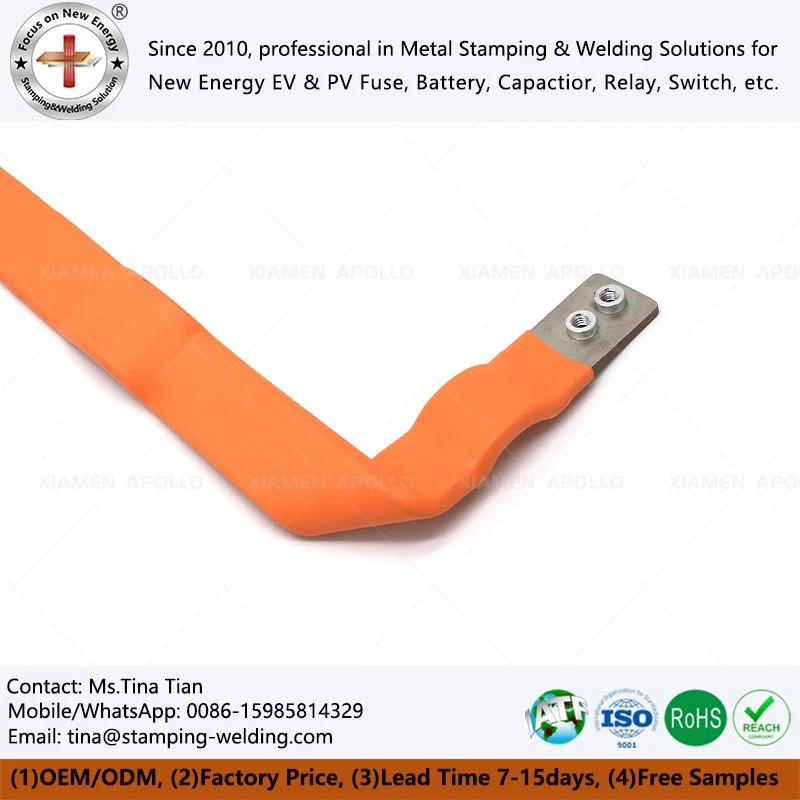
Utilizing a PVC-insulated copper busbar structure provides electrical isolation and surface protection for the copper busbar. For applications requiring a heat-shrink process, an appropriate heat-shrinkable insulating sleeve must be selected based on the specific material system to ensure a tight, secure fit against the copper busbar.
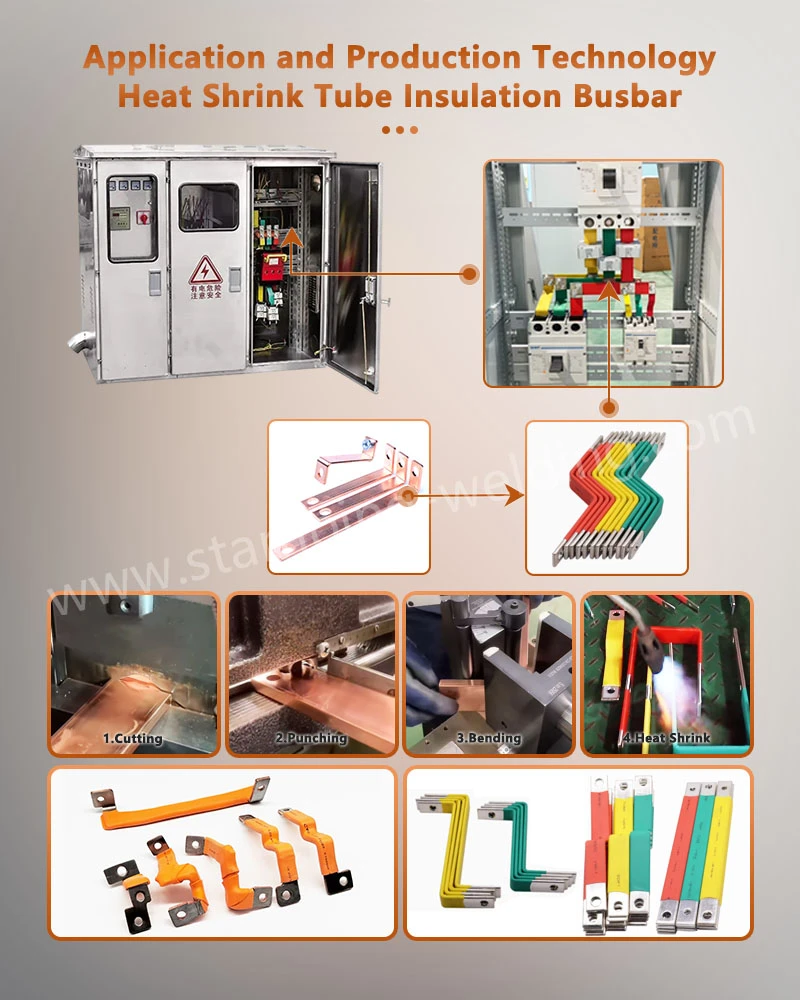
In switchgear and power distribution cabinets, insulated busbars are typically used for main circuit connections, branch circuit connections, and power transmission between various functional units. Encasing busbars in insulation helps mitigate the risk of short circuits-which could otherwise be caused by the ingress of foreign objects or accidental contact-while also optimizing the internal insulation layout of the equipment.
For connections that require both high electrical conductivity and mechanical flexibility, PVC-insulated flexible busbars can be employed.
These structures generally consist of multiple layers of copper foil or flexible copper conductors encased in an insulating protective layer, allowing them to accommodate vibrations, displacements, and spatial variations that may occur during equipment operation. Such products must be validated against specific requirements for bending radius, current-carrying capacity, and insulation performance.
Impact of Heat-Shrinkable Insulation Materials on Busbar Temperature Rise and Current-Carrying Capacity
When an insulation layer is added to a busbar, the resulting change in temperature rise is a critical factor that must be verified during engineering design.
Heat generation in a busbar primarily stems from the conductor's internal resistance and the contact resistance at connection interfaces.
Applying an insulation coating alters the heat dissipation conditions at the busbar surface; therefore, one cannot simply assume that adding insulation has no effect on current-carrying capacity, nor can the heat dissipation performance be judged solely by the thermal conductivity of the insulation material itself.
In practical applications, the temperature rise of a busbar is influenced by various factors, including the conductor's cross-sectional area, the magnitude of the current, ambient temperature, installation method, inter-phase spacing, ventilation conditions, and the thermal properties of the insulation material. This is particularly relevant in compact switchgear and high-power energy storage converters, where busbars are densely arranged, and localized heat accumulation is likely. In such cases, thermal design and temperature-rise testing are essential to ensure that the insulation scheme meets operational requirements.
When using copper busbars with heat-shrinkable insulation, engineers must pay close attention to the continuous operating temperature of the insulation material, the wall thickness after heat-shrinking, the degree of adhesion to the conductor surface, and the heat dissipation conditions at connection points. Once the assembly is complete, temperature-rise testing-conducted under actual operating current conditions-is necessary to confirm that both the conductor and the insulation material remain within their permissible operating ranges.
Application of Insulated Busbars in New Energy Vehicles and Energy Storage Systems
As high-voltage platforms in new energy vehicles (NEVs) and power densities in energy storage systems continue to advance, busbar connection structures are increasingly trending toward lightweight, compact, and integrated designs. Battery packs, inverters, DC-DC converters, and high-voltage power distribution units all require reliable components for current transmission.
In NEV battery systems, EV battery connectors must meet stringent requirements for high-current transmission, resistance to mechanical vibration, and electrical insulation. When designing conductive components that connect battery modules to high-voltage power distribution units, it is necessary to simultaneously account for contact resistance, temperature rise, insulation spacing, and assembly reliability.
Similarly, energy storage systems-including battery cluster interconnections, power conversion systems (PCS), and DC busbar structures-also require the use of busbars with various specifications. For a battery terminal busbar, the structural design must not only meet requirements for rated current and short-circuit fault current, but also incorporate an insulation scheme tailored to the battery system's operating voltage, connection configuration, and maintenance space requirements.
In high-voltage electrical connections, heat-shrinkable insulating materials provide external insulation for copper busbars and connecting components; however, they cannot serve as a substitute for proper design regarding creepage distances, electrical clearances, partial discharge, and system-level insulation coordination. In high-voltage energy storage systems, in particular, comprehensive electrical safety verification must be conducted based on the specific voltage level and operating environment.
Manufacturing Process and Quality Control for Heat-Shrinkable Busbars
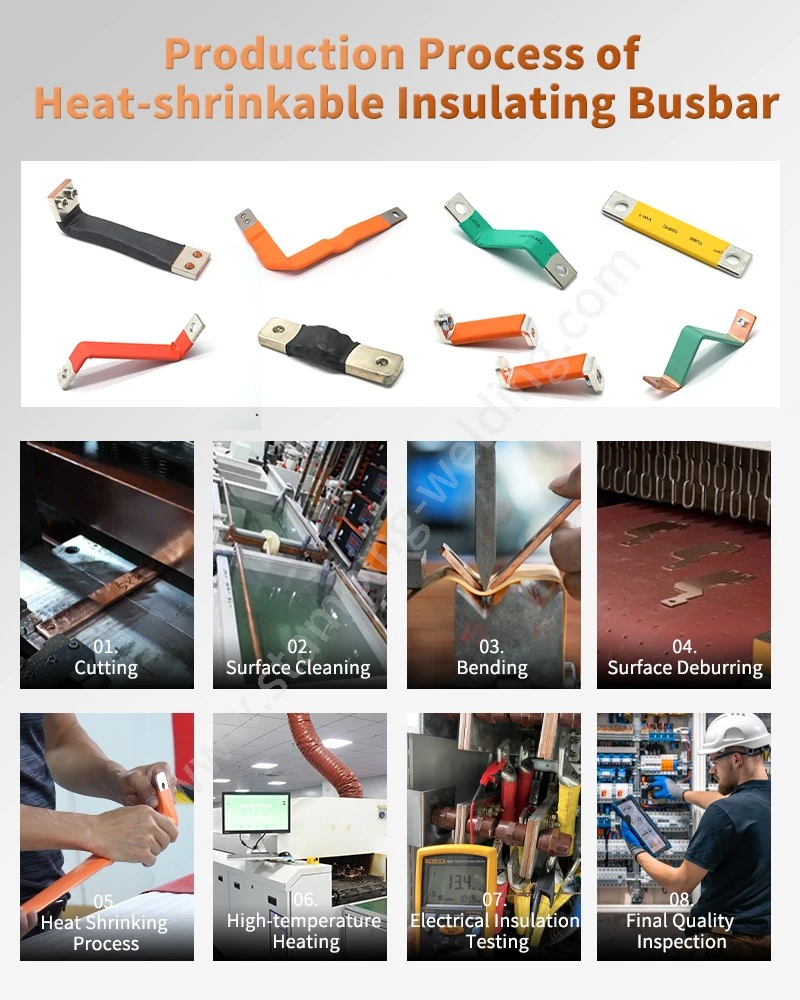
The manufacturing of heat-shrinkable insulated busbars involves two primary stages: processing the metal conductor and applying a polymer insulating coating. Metal busbars typically undergo processes such as material cutting, precision stamping, bending, drilling, deburring, and surface treatment, followed by the application of insulation according to the product's structural design.
For busbars with PVC insulation, key quality control parameters include the adhesion between the insulation layer and the busbar, the integrity of the coverage, and the quality of edge finishing. Areas such as cut edges, bends, and bolt connection points are prone to inadequate insulation coverage; therefore, the scope of the coating and specific structural requirements must be clearly defined during the product design phase.
The heat-shrink process requires precise control over heating temperature, heating distance, movement speed, and the uniformity of the shrinkage. Insufficient heating may prevent the material from shrinking fully, leading to the formation of air gaps or a loose fit, while excessive heating can cause surface discoloration, degradation of material properties, or even localized damage to the insulation.
For complex-shaped busbars, the selection of PVC heat-shrink sleeves must be based on actual cross-sectional dimensions and the material's shrink ratio. Particular attention should be paid to the continuity of the insulation at corners, holes, and connection points. In cases involving multi-section insulation, the overlap length and the quality of the seams must be carefully controlled to prevent the creation of potential electrical weak points.
In mass production, quality control protocols should encompass the inspection of raw materials, verification of conductor dimensions, measurement of insulation layer thickness, visual inspection, assessment of the shrinkage outcome, and necessary electrical performance testing. For high-voltage applications, additional verification-such as withstand voltage testing, insulation resistance testing, and other relevant assessments-must be performed in accordance with product specifications.
Development Trends and Engineering Selection Criteria for Insulated Busbars
With the continued growth of new energy vehicles, energy storage systems, industrial power supplies, and power distribution systems for data centers, insulated busbars are evolving toward multi-material combinations, structural integration, and customized manufacturing.
On one hand, the range of available insulating materials has expanded. Beyond traditional PVC-based systems, polyolefins, cross-linked polyolefins, and other high-temperature-resistant insulating materials are now being applied across various electrical environments. The selection of materials for heat-shrinkable busbar components must be based on factors such as operating voltage, temperature rating, flame retardancy requirements, and environmental conditions, rather than relying solely on color or appearance.
On the other hand, busbar insulation structures are becoming increasingly complex. For irregularly shaped copper bars, multi-port connectors, and multi-layer conductive structures, customized heat-shrinkable materials and specialized coating processes are required to ensure a proper fit. For specific configurations, heat-shrinkable insulating tape can be used for localized insulation or to protect irregular areas; however, the overlapping methods, application quality, and long-term stability of such solutions must be rigorously verified.
In high-voltage electrical equipment, the development of heat-shrink-insulated copper busbars requires a comprehensive assessment of dielectric properties, heat resistance, insulation thickness, and the available space within the equipment. Product design must also be validated against the relevant voltage ratings and applicable standards to ensure that the insulation structure is fully compatible with the overall electrical system.
From an application perspective, future insulated busbars must not only meet fundamental electrical performance criteria but also accommodate requirements for automated assembly, modular connectivity, and long-term operation and maintenance. Optimizing conductor structures, insulating materials, and manufacturing processes can enhance product consistency and mitigate quality risks during on-site installation and maintenance.
When procuring customized heat-shrink-insulated copper busbars, it is essential to specify parameters such as the copper grade, conductor dimensions, hole configurations, bending requirements, type of insulating material, shrink ratio, insulation thickness, and operating temperature. The selection of these components should also take into account the specific installation environment and electrical testing requirements to prevent quality issues in the final assembly caused by mismatched material specifications.
For customized products such as PVC heat-shrink insulation sleeves for copper busbars, procurement and engineering teams should prioritize verifying the busbar's conductive material, surface treatment, extent of insulation coverage, machining tolerances, and batch inspection standards. For projects involving flexible connections or complex, non-standard geometries, potential issues-such as dimensional interference or inadequate insulation-can be identified early through drawing reviews, prototype fabrication, and assembly validation.
As high-voltage electrical equipment increasingly demands greater connection reliability and insulation safety, a supplier's integrated capability-encompassing both busbar manufacturing and insulation application-has become a key criterion for selection. Engineering and procurement personnel can collaborate with manufacturers by providing product drawings, technical specifications, operating voltages, and environmental conditions to jointly evaluate material selection, stamping and bending processes, surface treatments, and insulation application methods.
Through proactive technical consultation and prototype validation, the optimal product structure and manufacturing approach can be effectively determined, ensuring the delivery of reliable, customized, and insulated busbar assemblies for applications in new energy vehicles, energy storage systems, and industrial power distribution equipment.
contact us