An AI Data Centers Accelerate Upgrades, Creating Growth Opportunities For Open Racks And High-Density Server Architectures
Oct 26, 2026
As the training and inference workloads for large-scale artificial intelligence (AI) models expand-alongside the growth of cloud computing infrastructure-data center server architectures are shifting toward higher density, higher power, and modularity. As the foundational infrastructure housing servers, networking equipment, power supply systems, and cooling components, server racks are now subject to new technical requirements regarding structural design, spatial layout, and load-bearing capacity. According to market analysis from the research, open-standard racks are poised to become a key trend in the AI data center market by 2030, reflecting how data center infrastructure is evolving to meet the deployment needs of next-generation computing hardware.
While traditional data centers have long relied on standard 19-inch racks, the 21-inch rack design-championed by the Open Compute Project (OCP)-offers a new deployment paradigm for high-density computing equipment. Compared to traditional designs, 21-inch open-standard racks provide more room for hardware installation, cable routing, power component configuration, and the integration of cooling systems, making them better suited to the increasingly complex system architectures of AI servers.
In practice, server racks must not only accommodate equipment installation and maintenance but also account for structural integrity, space utilization, airflow management, and the organization of power and communication cabling. As power density per rack continues to rise, rack design is evolving from a simple housing structure into an integrated platform for data center infrastructure.
Rising AI Computing Demands Drive Upgrades in Rack Architecture
AI servers typically incorporate high-performance processors, accelerator cards, high-speed interconnects, and sophisticated power supply systems; some high-density configurations even require the inclusion of liquid-cooling manifolds and associated piping. These additions increase the space consumed within the rack, placing greater demands on structural layout and equipment compatibility.
For next-generation data centers, server racks must accommodate more computing resources within a limited footprint, while still leaving sufficient space for power distribution, cabling, cooling components, and routine maintenance. The structural design of a rack influences not only the efficiency of initial equipment deployment but also the ease of future capacity expansion, repairs, and system upgrades.
As server architectures increasingly shift toward a rack-level design, the methods for designing and deploying data center equipment are undergoing a significant transformation. The increasing synergy among servers, storage devices, and network components is driving the evolution of cabinet manufacturing toward modularity, standardization, and higher load-bearing capacity.
Open-design cabinets improve space utilization and thermal management
A key feature of open-style cabinets is their relatively open structure, which allows for flexible positioning of equipment and auxiliary components based on specific layout requirements. A wider installation space helps optimize air intake paths for certain systems and provides room for larger fan arrays, cable bundles, and liquid-cooling components.
In high-power computing environments, thermal management has become a critical aspect of cabinet engineering. Traditional air-cooling solutions require carefully organized airflow paths-both intake and exhaust-to minimize the risk of localized heat accumulation. Liquid-cooling solutions, meanwhile, necessitate the strategic placement of cooling pipes, manifolds, connectors, and maintenance access areas.
Consequently, cabinet design must be planned in coordination with server thermal design, power distribution architecture, and the broader data center infrastructure.
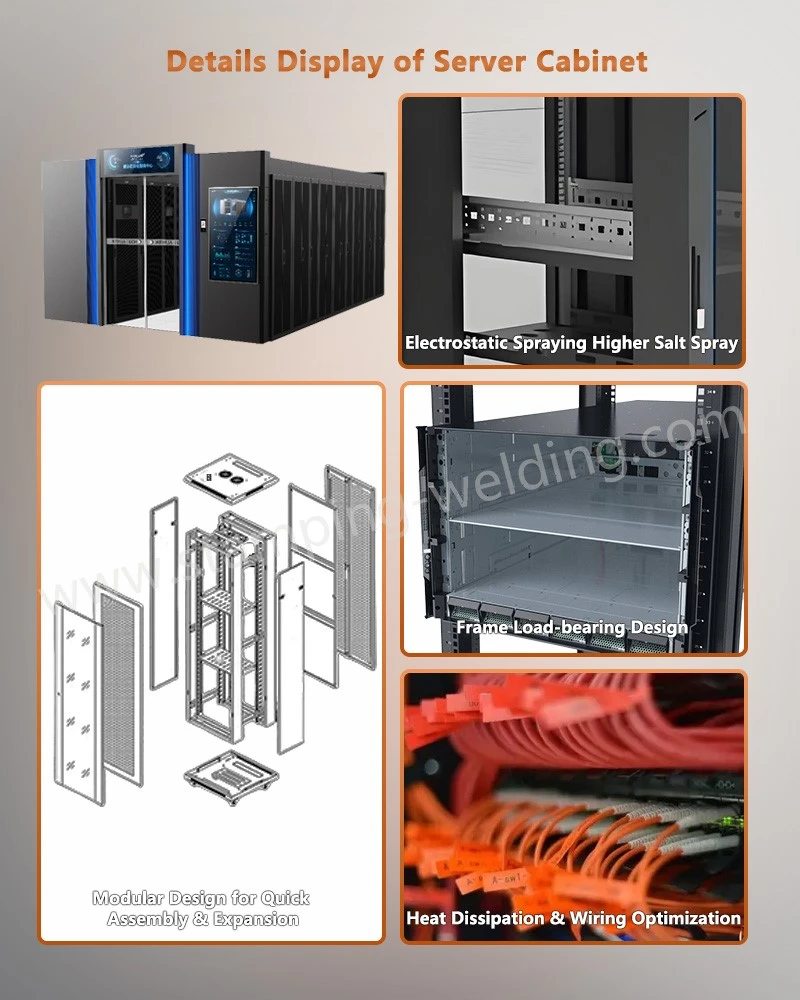
For data centers housing diverse equipment, the structural layout of network racks must also accommodate switches, patching components, and high-speed communication cabling. Well-planned equipment zoning and cable management help reduce cable congestion, improve maintenance efficiency, and provide flexibility for future equipment adjustments.
Modular architecture enhances equipment compatibility and scalability
As data centers shift toward modular construction, the standardized installation, rapid replacement, and phased expansion of equipment within cabinets have become increasingly important. Modular server designs facilitate the upgrading of computing components while enhancing infrastructure maintainability, provided that interface and mechanical compatibility requirements are met.
When procuring and deploying cabinets, factors such as installation standards, effective depth, internal clearance, load capacity, and cable management methods must be carefully evaluated. For data centers intended for long-term operation, it is also essential to assess whether the cabinets can accommodate future server generations; this helps avoid costly retrofitting caused by mismatches in equipment dimensions, load-bearing limits, or interface layouts.
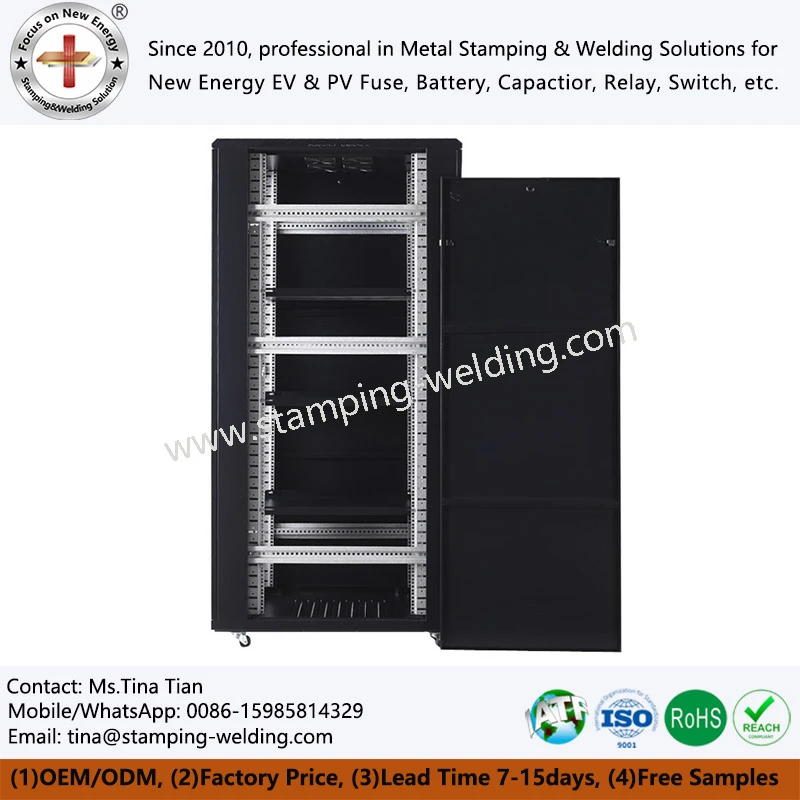
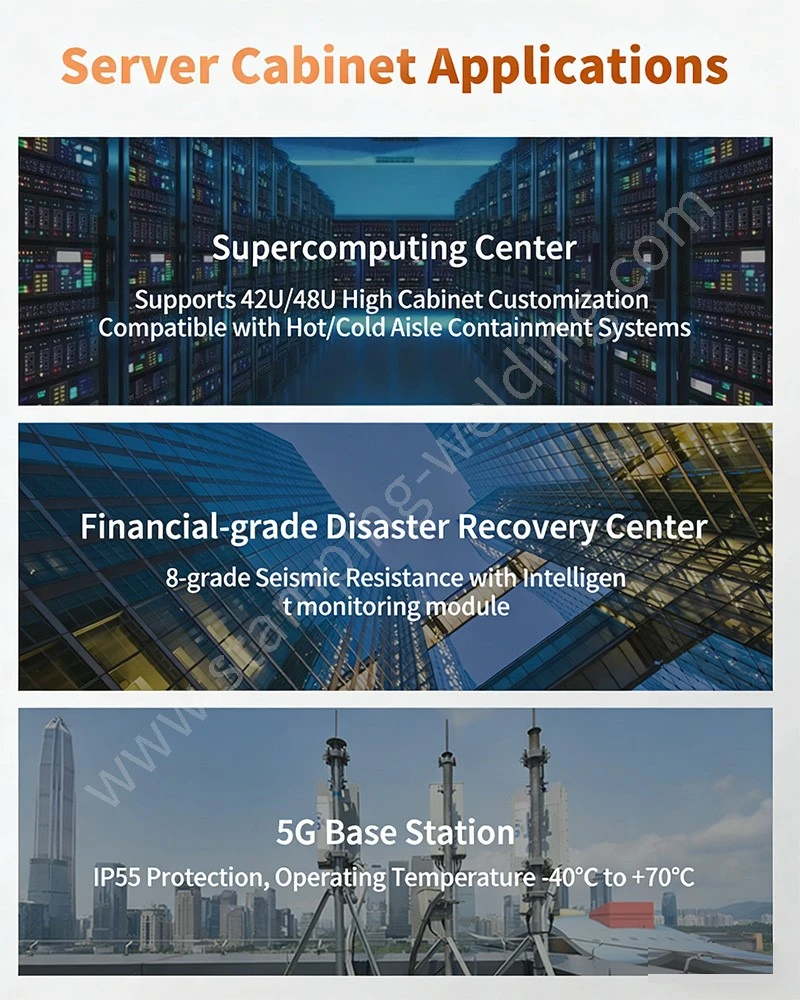
Different application scenarios impose varying requirements on cabinet specifications. For instance, a 42U rack is typically used for standardized equipment deployments that demand significant vertical mounting space-though the actual usable space depends on the cabinet's internal structure, the height of the equipment, and the footprint of any auxiliary components. For high-density AI computing systems, procurement teams must carefully verify equipment dimensions, mounting rail specifications, load-bearing capacities, and thermal management solutions; relying solely on cabinet height to determine suitability is insufficient.
The Data Center Cabinet Market Shifts Toward Higher-Specification Products
As the power consumption and weight of AI servers continue to rise, the technical requirements for data center infrastructure have also increased. Cabinet manufacturers must strike a balance between material selection, structural design, connection methods, and manufacturing precision to ensure that high-load equipment can operate reliably over the long term.
Market trends-such as the deployment of high-density servers, the widespread adoption of liquid cooling systems, and the development of rack-level integrated solutions-are driving a shift toward cabinets that offer higher load-bearing capacities, modularity, and systematic integration. Industry research has raised its growth forecast for data center cabinet shipments, projecting that market revenue will be bolstered by product specification upgrades and an increased share of high-end cabinets. While these forecasts highlight the potential boost to the cabinet market from AI infrastructure investment, actual growth will depend on the pace of data center construction, the evolution of technical roadmaps, and shifts in capital expenditure.
Meanwhile, traditional 19-inch cabinets remain suitable for many enterprise network environments, telecommunications equipment, and existing data center facilities. A variety of cabinet specifications will continue to coexist for some time; the final selection should be based on an assessment of server compatibility, the deployment environment, and the costs associated with infrastructure upgrades.
Key Factors for Cabinet Selection and Procurement
In data center projects, cabinet procurement should extend beyond external dimensions and equipment capacity. It requires a comprehensive evaluation of structural load-bearing capacity, installation standards, thermal management, power distribution, cable management, and long-term maintenance requirements. For high-density AI servers, it is essential to verify the equipment's weight at full load, mounting rail requirements, space for liquid cooling components, and the load-bearing capacity of both the cabinet and the facility floor to ensure the overall solution meets operational demands.
In enterprise network environments that utilize standardized cabinets, a 42U server rack is a common specification for capacity planning; however, the final selection must always be based on the actual dimensions of the servers, switches, and associated components. For communication nodes or edge computing scenarios with limited space, wall-mounted solutions-such as wall-mount server racks-require careful evaluation of factors including equipment depth, heat dissipation methods, wall load-bearing capacity, and accessibility for maintenance.
During the procurement phase, it is advisable for the project team to clearly define the application environment, equipment inventory, dimensional drawings, load-bearing requirements, material and surface finish specifications, as well as the configuration for cabling and cooling components. Confirming these technical parameters during the design stage helps mitigate the risk of installation conflicts or the need for costly retrofitting later on.
If you are planning an AI data center, server deployment, or network infrastructure upgrade, you may provide details such as rack specifications, equipment layout diagrams, load-bearing requirements, and cooling strategies. Engaging with a professional engineering team to discuss structural design, sheet metal fabrication, assembly methods, and bulk delivery requirements will allow for the development of a customized rack solution tailored to your project's specific needs. You can then clarify technical parameters and the scope of procurement through a formal engineering inquiry.
contact us