Manufacturing Processes And Technical Challenges For Prismatic Power Battery Structural Components: An Analysis Of Precision Stamping, Welding, And Aluminum Casing Formation
Oct 24, 2026
With the continued development of the new energy vehicle and energy storage industries, prismatic lithium-ion batteries have emerged as a key packaging format, favored for their high space utilization, structural stability, and superior system integration efficiency. Prismatic battery structural components-primarily consisting of the battery housing and the top cover assembly-not only provide mechanical protection and sealing for the battery cell but also facilitate electrical connections, internal pressure relief, and the long-term operational reliability of the battery system.
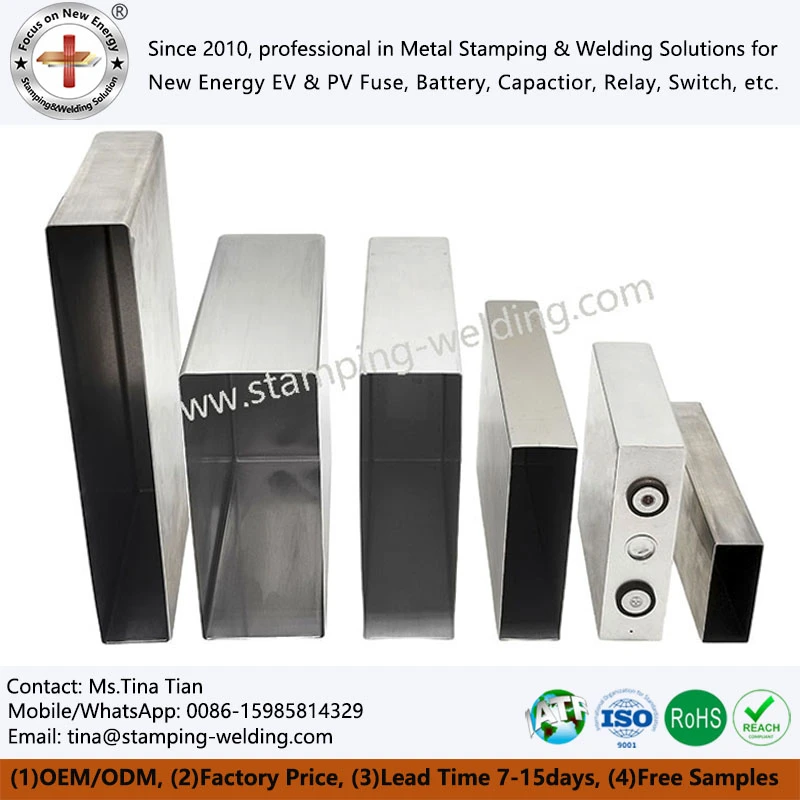
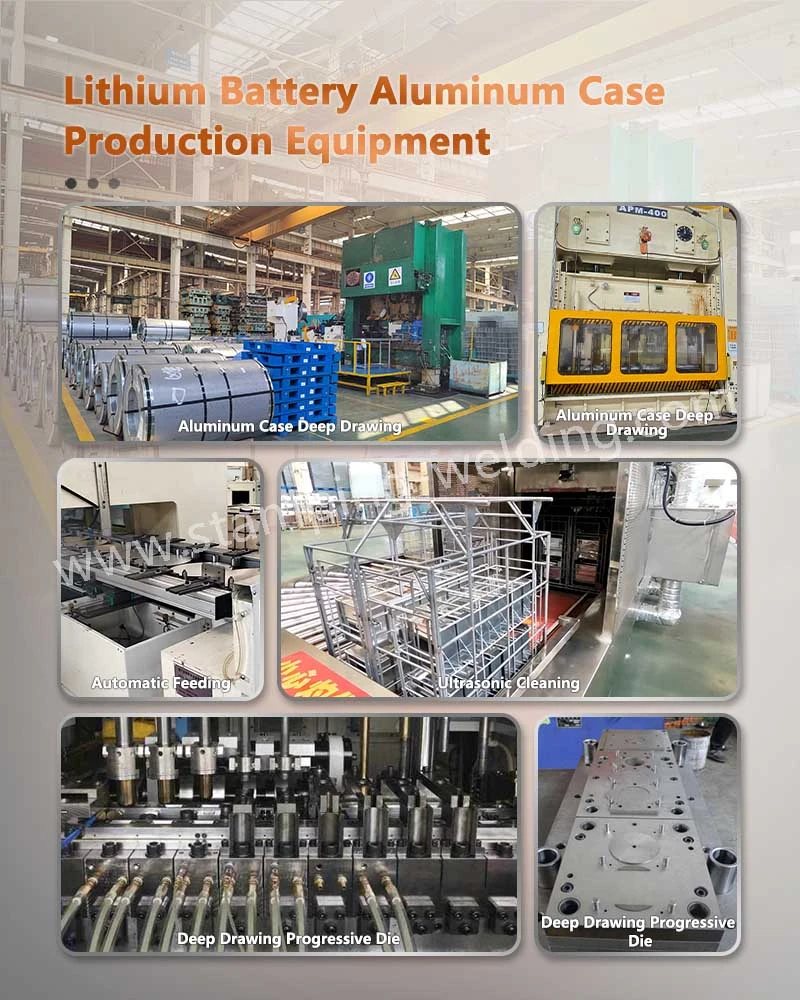
The manufacturing of these structural components involves a complex array of processes, including metal processing, precision stamping, deep drawing, welding, injection molding, and automated assembly. As cell capacities increase and battery system integration becomes more sophisticated, manufacturers must strike a balance between material utilization, dimensional accuracy, production efficiency, and batch-to-batch consistency. In particular, the forming quality of deep-drawn aluminum battery housings-which dictates wall thickness distribution, structural strength, and subsequent assembly precision-represents a critical technical stage in the production of aluminum-cased power batteries.
Prismatic battery structures are composed mainly of two parts: the housing and the cover plate. The housing is typically formed from aluminum alloy sheet metal through processes such as stamping and progressive deep drawing; it serves to contain the battery cell while providing external mechanical protection. The cover plate, by contrast, integrates terminals, explosion-proof valves, electrolyte filling ports, and various insulating components, requiring a series of precise machining and assembly steps. Compared to the relatively simple structure of the housing, the cover plate features a higher level of functional integration, imposing more stringent requirements on mold design, welding quality, and assembly precision.
In the structural design of a battery pack, the aluminum housing must not only meet lightweighting requirements but also possess sufficient mechanical strength, dimensional stability, and environmental adaptability. Given that battery systems are subject to factors such as vibration, mechanical shock, temperature fluctuations, and cell expansion during operation, the design of the housing must be evaluated holistically-accounting for material properties, wall thickness distribution, connection methods, and the overall structural configuration.
Regarding material selection, aluminum alloys are widely used for the housings of prismatic power batteries due to their low density, excellent corrosion resistance, and favorable formability. Different alloy grades vary in terms of strength, elongation, and stamping performance; therefore, the appropriate material must be selected based on product structure, forming depth, and the intended operating environment. For battery packs with aluminum housings, the design phase must also account for the method of joining the housing to the top cover, the control of welding-induced deformation, and the dimensional requirements of sealing areas, all to mitigate assembly risks during mass production.
The core technical challenges in manufacturing prismatic battery housings lie primarily in deep-drawing, die precision, and the control of material deformation. During the drawing process, the sheet metal undergoes complex plastic deformation; if die clearance, blank-holder force, or lubrication conditions are not properly optimized, issues such as wrinkling, cracking, localized thinning, and dimensional deviations may arise. Consequently, manufacturers must optimize die structures, adjust forming parameters, and implement in-process inspection to ensure that the wall thickness and geometric dimensions across the housing meet design specifications.
Structural components must also be tailored to the specific packaging requirements of different battery chemistries. For instance, an aluminum shell for a prismatic lithium-ion battery must be designed with consideration for the cell's dimensions, capacity, and operating environment. In the case of lithium iron phosphate (LiFePO4) batteries, the housing structure must account for factors such as cell expansion, thermal management strategies, and system integration methods. For aluminum shells used in lithium iron phosphate cells, the housing must not only provide mechanical protection during routine operation but also integrate effectively with the top-cover sealing, explosion-proof design, and the overall protective structure of the battery pack.
The manufacturing of top covers involves a more complex array of processes. Terminal assemblies must ensure reliable current transmission; some designs utilize copper-aluminum composite connections to balance electrical conductivity with mechanical joining requirements. Welding processes must be carefully controlled-focusing on weld strength, contact resistance, the heat-affected zone, and joint stability-to prevent any degradation in electrical performance caused by welding defects. As a safety feature, the explosion-proof vent (pressure-relief valve) must be manufactured to precise specifications regarding opening pressure and consistency, ensuring it functions as intended to relieve pressure under defined conditions.
Furthermore, the production of top covers encompasses a series of interconnected steps, including stamping, injection molding, the installation of insulating components, sealing, and the final assembly of various parts. Any deviation during any stage of the manufacturing process can compromise the final product's dimensional accuracy, sealing performance, or electrical reliability. Consequently, manufacturers typically implement comprehensive quality control protocols-spanning raw material inspection, mold calibration, in-process monitoring, and final product testing-while also conducting dimensional verification, weld quality validation, and batch traceability in accordance with customer specifications.
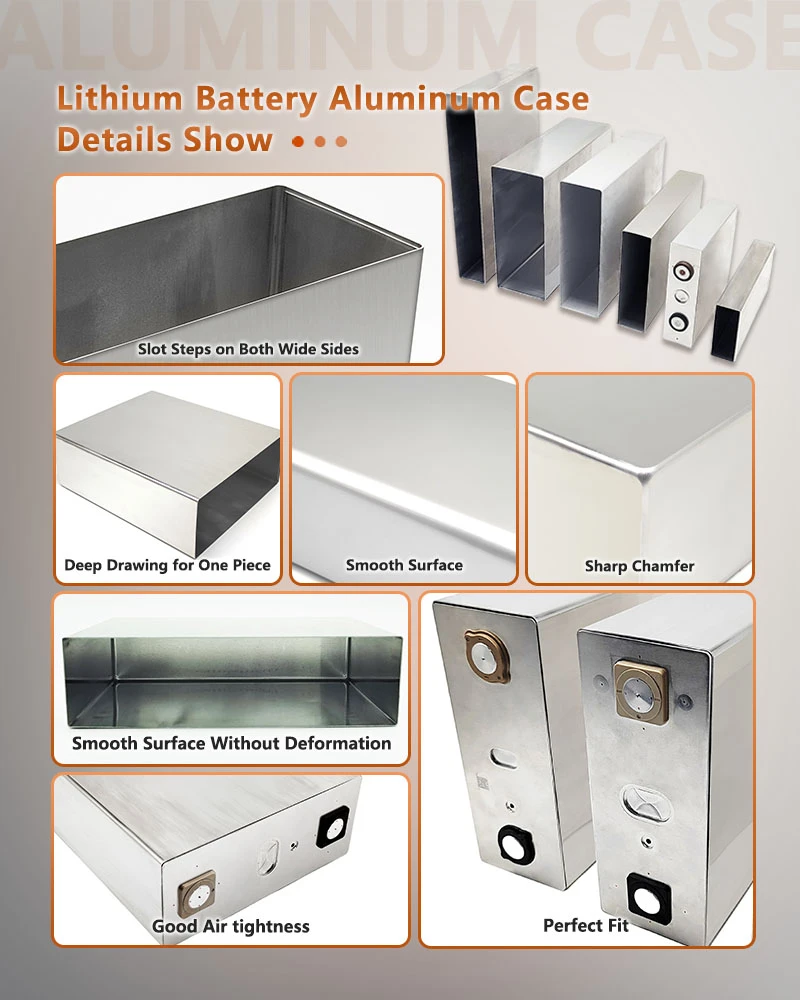
Regarding cost control, the cost structures for the battery housing (case) and the cover plate differ. The cost of the housing is primarily driven by aluminum pricing, material utilization rates, the deep-drawing process, and equipment uptime. The cover plate, which comprises multiple components and involves complex assembly, sees its production costs heavily influenced by the level of automation, welding techniques, and in-process inspection requirements. Optimizing nesting layouts, maximizing material utilization, extending mold lifespan, and increasing automation can reduce both material waste and unit manufacturing costs, all while ensuring consistent product quality.
As battery technology continues to evolve, the design of aluminum battery cases for new energy vehicles (NEVs) is trending toward lightweight construction, structural integration, and high-precision manufacturing. The synergistic design of the housing and cover plate, the deployment of automated production lines, and the refinement of in-line inspection technologies will further enhance the manufacturing consistency of these structural battery components. Furthermore, the development of aluminum battery housings must account for broader system requirements-such as battery pack spatial layout, thermal management, mechanical loading, and assembly interfaces-rather than focusing solely on the optimization of individual components.
For engineering procurement, when selecting a supplier for prismatic aluminum battery cases and related structural components, key evaluation criteria should include material grade and temper, forming depth, wall thickness tolerances, critical dimensions, welding methods, surface treatment, and the supplier's capacity for batch quality control. For projects in the development phase, it is advisable to provide 2D drawings, 3D models, material specifications, target production volumes, and operational conditions during the inquiry process. This enables the engineering team to assess tooling strategies, forming feasibility, and manufacturing processes.
If you are currently developing prismatic lithium-ion batteries, battery modules, or energy storage systems, please feel free to submit your drawings and technical specifications regarding aluminum alloy prismatic battery cases, deep-drawn housings, or precision-stamped and welded cover plates. Through preliminary engineering assessment and process-related discussions, it is possible to more accurately define material selection, structural design, quality inspection criteria, and requirements for batch delivery-thereby establishing a foundation for subsequent sample validation and the transition to mass production.
contact us