Continuous Upgrading in The Lithium-Ion Battery Structural Components Industry: Synergistic Development Of Precision Manufacturing, Lightweighting, And Battery Safety
Oct 25, 2026
As the markets for new energy vehicles (NEVs), energy storage systems, and consumer electronics continue to grow, there is an increasing demand for lithium-ion batteries to offer higher safety, greater energy density, longer service life, and greater manufacturing consistency.
As critical components of the battery packaging system, structural parts for lithium-ion batteries provide mechanical support, sealing and protection, current conduction, and pressure relief during abnormal conditions; their design and manufacturing quality directly influence the overall performance of the battery.
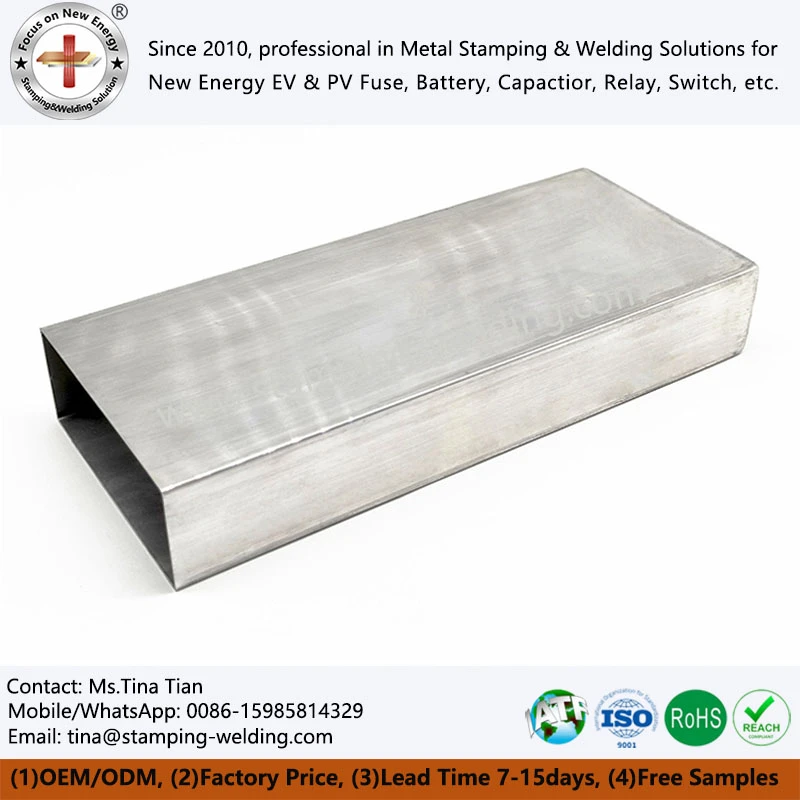
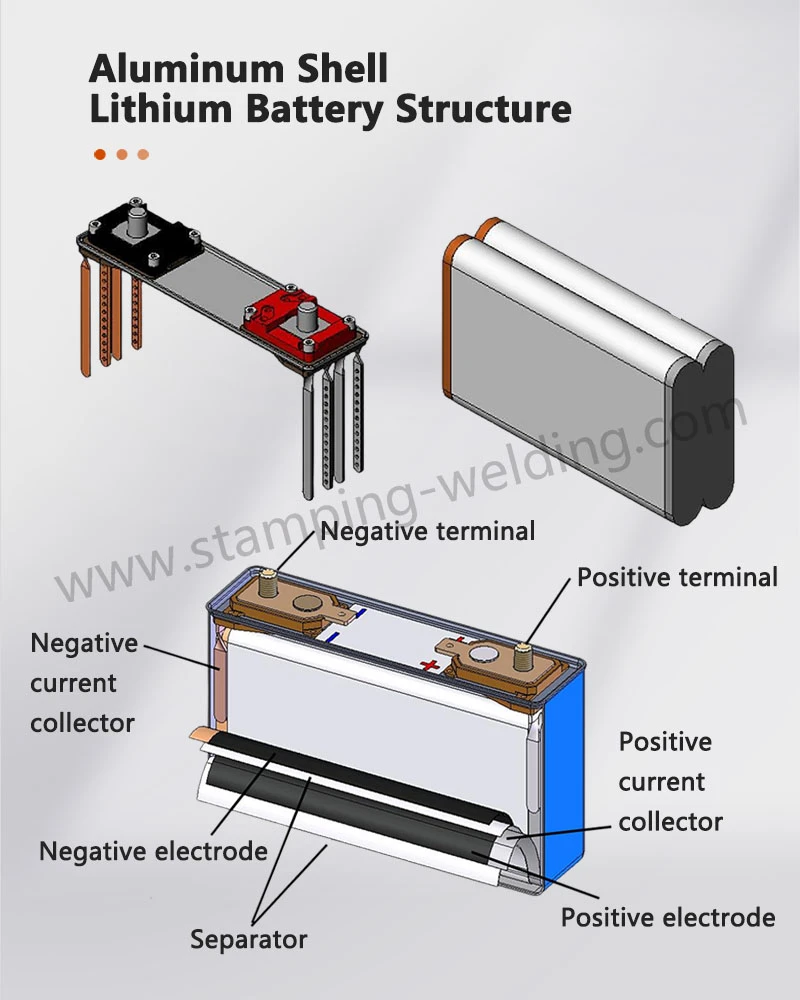
In terms of product composition, lithium-ion battery structural components include cell casings, top covers, terminal posts, safety valves, connectors, insulating components, and support structures for battery packs. Based on the packaging format, these products are categorized into components for prismatic batteries, cylindrical batteries, and packaging materials for pouch (soft-pack) batteries. Among these, aluminum casings for prismatic batteries are widely used in power batteries for NEVs and energy storage systems, thanks to their high space utilization, excellent structural stability, and mature manufacturing processes.
As battery technology evolves toward higher capacity, faster charging, and greater integration, the manufacturing of structural components is shifting from traditional metal forming toward precision stamping, automated welding, functional integration, and intelligent inspection.
Core Functions and Material Selection for Lithium-Ion Battery Structural Components
Structural components for lithium-ion batteries are more than just simple external protective parts; they are essential for the safe operation of the battery cell. During charging and discharging, batteries are subjected to temperature fluctuations, internal pressure variations, and external vibrations or impacts. Consequently, these structural components must maintain sufficient mechanical strength, sealing integrity, and dimensional stability under complex operating conditions.
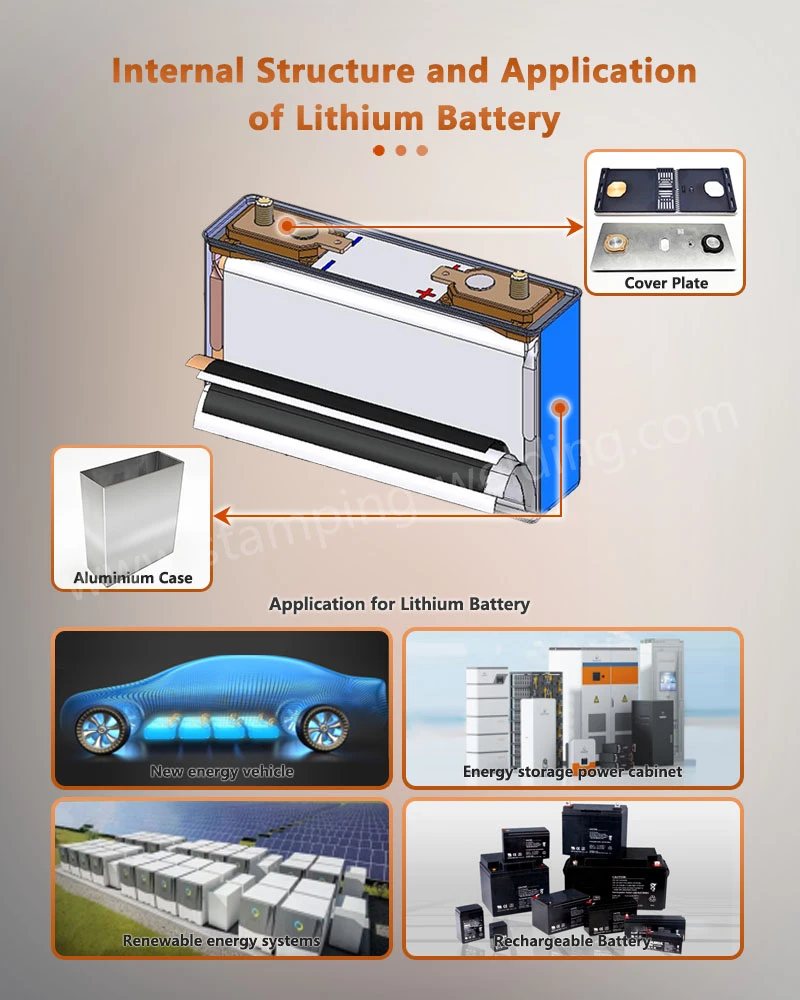
The casing serves to house and protect the internal components of the battery cell, minimizing the impact of the external environment.
The top cover typically integrates terminal posts, insulating components, and safety pressure-relief mechanisms, facilitating current conduction, sealing the cell cavity, and providing safety protection during abnormal events. The quality of the connection between the casing and the top cover is directly linked to the battery's airtightness and long-term reliability.
In the manufacturing of prismatic batteries, aluminum alloys are the preferred material for casings and cover plates due to their low density, superior corrosion resistance, and excellent formability. Common materials include aluminum alloys such as 1060, 3003, and 5052. The specific choice should be evaluated based on factors including product structure, wall thickness, forming complexity, strength requirements, and welding processes.
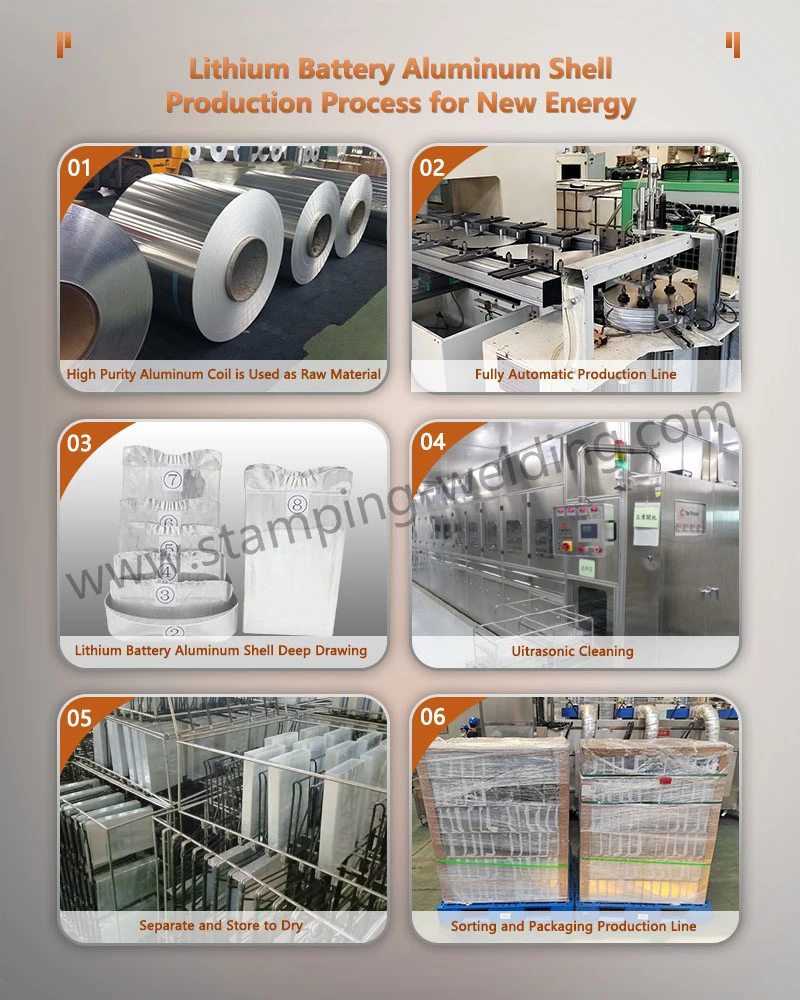
For instance, deep-drawn aluminum battery housings are typically produced by processing aluminum alloy sheets into shells with significant depth and complex contours. This process minimizes the need for additional joints or connecting structures; however, it places high demands on material elongation, die design, lubrication, and stamping parameters. Inadequate process control can lead to issues such as wrinkling, cracking, uneven wall thickness, or dimensional deviations.
Therefore, material selection should not be based solely on price or a single mechanical property. Instead, it must comprehensively account for the battery's design lifespan, operating environment, packaging configuration, and mass production requirements.
Evolution of Production Processes for Prismatic Aluminum Battery Housings
As the capacity of power batteries increases, dimensional precision, forming quality, and production consistency for the housings have become increasingly critical. A typical manufacturing workflow for aluminum housings includes material inspection, blanking, deep drawing, trimming, sizing (re-striking), cleaning, dimensional verification, and subsequent assembly. Products with complex structures or specialized interfaces may also require additional steps, such as localized punching, precision machining, or specific joining processes.
During the stamping phase, the quality of the formed product is determined by the interplay between die design and material properties.
Optimizing the draw ratio, blank-holder force, and die clearance helps mitigate the risks of localized material thinning and cracking. For large-scale, thin-walled components, manufacturers must also manage springback and overall flatness to ensure a precise fit between the housing and the top cover.
In the welding phase, laser welding is widely used to join the battery housing to the top cover, thanks to its concentrated heat input, high processing speed, and suitability for automated integration. The welding process requires careful control of weld continuity, penetration depth, spatter, and thermal deformation, with quality verified through airtightness testing and visual inspection.
Meanwhile, the design focus for aluminum battery pack housings has shifted from the manufacturing of individual shells to addressing the assembly requirements of the entire battery pack. Beyond meeting basic mechanical protection requirements, the design must also account for module positioning, space utilization, connection interfaces, and the layout of thermal management systems, thereby providing a reliable structural foundation for battery pack integration.
For mass-production projects, companies should also establish a comprehensive quality traceability mechanism-covering everything from raw material batches and mold status to final product inspection-to minimize batch-to-batch variation and enhance delivery consistency.
Distinct Structural Requirements Based on Battery Packaging Architectures
Currently, prismatic, cylindrical, and pouch (soft-pack) cells differ significantly in terms of structural design and manufacturing processes. Each technical pathway imposes unique requirements regarding material strength, sealing methods, forming precision, and safety-related structural features.
Prismatic cells typically utilize metal-casing enclosures, offering high space utilization and ease of structural integration. The casing and top cover must ensure reliable mechanical connection and sealing, while also accommodating terminal placement and safety pressure-relief designs.
The design of a prismatic cell case requires a holistic assessment of cell dimensions, internal expansion space, wall thickness, and assembly methodology. For high-capacity cells, the casing must maintain structural stability under both internal pressure and external loads, preventing localized deformation that could compromise cell performance or hinder subsequent assembly.
Cylindrical cells prioritize dimensional consistency, compatibility with the wound-cell assembly, and the integrity of end-sealing. The evolution toward larger-format cylindrical cells introduces new technical demands for casing formation, top-structure design, and current-conduction systems.
Pouch cells are encapsulated in composite aluminum-plastic film, a construction logic that differs fundamentally from rigid metal-casing designs. In the case of LiFePO4 pouch cells, the performance of the enclosure is dictated by factors such as the barrier properties of the aluminum-plastic film, the quality of the heat seals, and the material's resistance to the electrolyte. Because pouch cells lack the comprehensive protection provided by a rigid metal shell, the battery modules and packs generally require external structural designs to provide necessary support and protection.
Consequently, suppliers of structural components must develop tailored material and process solutions based on the specific battery packaging architecture, product dimensions, and actual operating conditions; structural components for different battery types cannot simply be treated as interchangeable, universal products.
New Energy Vehicles and Energy Storage Applications Drive the Continuous Evolution of Aluminum Casing Structures
As requirements for the range, fast-charging capabilities, and overall lightweighting of new energy vehicles (NEVs) continue to rise, structural components for power batteries are also evolving toward greater lightweighting, integration, and high precision. Aluminum alloy casings allow for reduced component mass while maintaining adequate structural strength, thereby supporting weight optimization for battery systems.
In the development of aluminum battery casings for new energy vehicles, it is essential to simultaneously meet requirements for dimensional fit, mechanical protection, welding compatibility, and mass production. Since dimensions-such as length, width, height, wall thickness, and interface positioning-can vary significantly across different vehicle models and battery platforms, the development of customized molds and rigorous engineering validation remain critical stages in the product introduction process.
In the energy storage sector, batteries typically operate over long periods and are subjected to factors such as temperature fluctuations, continuous mechanical loads, and complex installation environments. Beyond basic mechanical protection, the structural components must also account for system layout, ease of maintenance, connection reliability, and long-term structural stability.
With the advancement of battery pack integration technologies, the functional scope of structural components has expanded. Some components now serve not only to house battery cells but also to secure modules, support structural beams, and accommodate thermal management components. Synergizing structural design with manufacturing processes has become a key strategy for enhancing product performance while controlling production costs.
Precision Manufacturing and Quality Control Determine Product Reliability
Structural components for lithium batteries must maintain consistent dimensional accuracy and performance, even under high-volume production conditions. For casings and cover plates, parameters such as material thickness, drawing depth, flatness, hole-position accuracy, and connection dimensions can directly impact subsequent assembly and sealing quality.
Quality control for aluminum battery housings must encompass the entire production lifecycle, including raw material inspection, first-article validation, in-process dimensional checks, weld quality assessment, and final product verification. Depending on the design specifications, key quality characteristics can be verified using methods such as coordinate measuring machine (CMM) inspection, optical measurement, airtightness testing, weld inspection, and mechanical performance testing.
During the production process, factors such as mold wear, fluctuations in equipment parameters, and variations between batches of raw materials can all lead to product deviations. Regular mold maintenance, monitoring of key process parameters, and the implementation of statistical process control (SPC) enable the timely detection of abnormal trends, thereby reducing the risk of batch defects.
For projects involving new energy vehicles (NEVs) and energy storage batteries, supplier evaluation should also focus on quality management systems, engineering change control, batch traceability, and mechanisms for handling anomalies. Passing initial sample validation does not mean that the risks associated with mass production have been eliminated; consistent and stable process capability is equally critical.
Furthermore, as customer requirements for lightweighting and space integration intensify, certain structural components must strike a balance between thinner designs and the maintenance of structural strength. Through material performance evaluation, structural simulation, mold optimization, and prototype testing, potential issues can be identified early in the product development phase, reducing the need for subsequent design changes or adjustments during mass production.
Development Trends in the Lithium Battery Structural Components Industry
Looking ahead, the lithium battery structural components industry will continue to be shaped by developments in new energy vehicles, energy storage systems, and the ongoing evolution of battery technology.
First, lightweighting will remain a key priority. For aluminum alloy casings and related metal components, the balance between weight and strength will continue to be refined through material optimization and structural design. The development of aluminum alloy prismatic battery cases requires selecting appropriate material grades and forming strategies based on specific cell dimensions, operating environments, and load requirements-rather than simply pursuing the thinnest possible wall thickness.
Second, automated manufacturing and in-line inspection will become increasingly widespread. High-precision stamping, automated welding, visual inspection, and digital quality traceability will help enhance production efficiency while minimizing variability caused by manual operations.
Third, structural components will evolve toward greater functional integration. As the level of integration within battery systems rises, design synergy between casings, cover plates, and supporting components becomes increasingly important. By holistically addressing material, process, and assembly requirements during the design phase, it is possible to reduce the number of unnecessary parts and improve overall manufacturing efficiency.
Finally, engineering development capability will emerge as a key competitive factor within the supply chain. Since different battery platforms have distinct requirements regarding structural dimensions, sealing performance, mechanical strength, and production cycle times, suppliers must possess robust capabilities in rapid prototyping, mold development, process validation, and volume delivery to effectively adapt to the rapid iteration of products.
How Engineering Procurement Teams Should Evaluate Suppliers of Aluminum Shell Components
For battery manufacturers, automotive supply chain stakeholders, and energy storage system integrators, the procurement of aluminum shell components for lithium batteries requires a rigorous verification of material specifications, product drawings, critical dimensional tolerances, surface treatment requirements, welding methods, and inspection standards. Furthermore, it is essential to define the sample validation process, mold ownership, projected annual demand, production throughput, and lead times to ensure a seamless transition from product development to full-scale mass production.
For customized products such as aluminum shells for lithium cells, engineering procurement teams should provide 2D drawings, 3D models, material grades, target wall thicknesses, dimensional tolerances, and application contexts during the inquiry phase. If a product is still in the development stage, providing preliminary structural concepts and expected performance requirements will enable suppliers to assess the complexity of material forming, mold design strategies, and potential manufacturing risks.
For projects involving specialized packaging or specific mechanical performance requirements, engaging in early-stage engineering discussions and conducting sample validation can help mitigate the risks of design changes, batch defects, and delivery delays.
If you are looking to develop custom aluminum alloy shells or precision metal structural components for new energy vehicle (NEV) power batteries or energy storage systems, please share your product drawings, technical specifications, and procurement requirements. We welcome the opportunity to discuss material selection, stamping processes, welding techniques, quality inspection, and mass production strategies, allowing us to provide a targeted engineering assessment and a formal price quotation.
contact us