How Do C&I Storage Systems Balance Price, Capacity, Safety, And Lifespan? A Procurement And Selection Guide
Sep 19, 2026
When selecting C&I storage systems projects, one cannot simply compare initial equipment quotes. Whether sourcing a commercial-grade BESS or specific energy storage cabinets, procurement professionals must make comprehensive assessments based on project load, operational objectives, usable capacity, safety specifications, and expected service life. Only by considering both the initial investment and long-term operating costs can the true value of a commercial energy storage project be accurately evaluated.
First, clarify the project requirements; then, determine the energy storage configuration
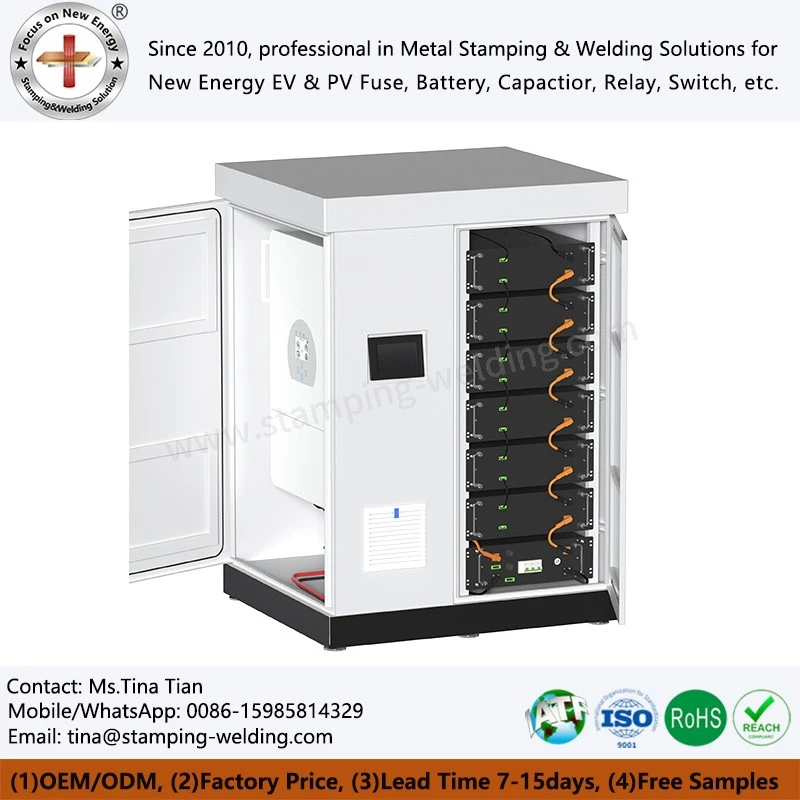
The selection of an energy storage system depends primarily on the specific problem the project aims to address. For large-scale industrial battery storage, common applications include peak shaving and valley filling, demand charge management, self-consumption of solar PV power, and backup power supply. Since different applications entail varying requirements for power output, energy capacity, and runtime, selecting a storage unit based solely on equipment price-without analyzing load data-is ill-advised. Clearly defining the application objectives before matching capacity and power specifications helps minimize the need for subsequent configuration adjustments.
For projects involving multiple load types and operational scenarios-such as industrial microgrid energy storage-factors such as load fluctuations, required backup duration, and energy dispatch strategies must be considered. System sizing should be determined only after confirming peak load, daily energy consumption, critical loads, and the intended operating mode. This approach prevents operational issues caused by insufficient capacity while avoiding the excessive initial investment associated with over-provisioning.

Capacity comparisons cannot rely solely on rated values
When comparing modular C&I storage systems applications, rated capacity is not equivalent to actual usable capacity. Procurement professionals should verify parameters such as rated capacity, usable capacity, Depth of Discharge (DoD), rated power, and backup duration. For instance, systems with the same nominal capacity may differ in the actual energy they can deliver due to variations in usable DoD and operational strategies. Therefore, sizing an energy storage system should be based on actual load requirements and usable energy output, rather than relying solely on the product nameplate.
Once the capacity is determined, smart energy management for commercial storage must also be considered. For peak-shaving and valley-filling projects, the system must deliver sufficient discharge power within specified timeframes; for solar-plus-storage projects, battery capacity should be assessed by integrating generation output with load profiles. A larger capacity is not necessarily better; the key is to align the usable energy of the C&I storage system with the project's actual needs.
Need to match usable capacity with actual load and operating requirements?
Request C&I Energy Storage System Evaluation
Price comparisons should shift to a full life-cycle cost approach
When comparing grid-connected industrial storage systems, procurement professionals are advised against relying solely on $/kWh pricing. Actual project costs may also encompass expenses related to equipment, installation, commissioning, maintenance, and future replacements. Instead, the cost per unit of usable energy storage should be evaluated by considering usable capacity, system efficiency, and expected service life. Equipment with a lower initial price tag does not necessarily result in lower long-term costs if it offers lower usable capacity or requires more frequent replacement.
For commercial and industrial storage systems, Total Cost of Ownership (TCO) analysis enables more informed comparisons between suppliers. Beyond the initial equipment purchase price, factors such as warranty terms, maintenance requirements, spare parts availability, and system scalability should be taken into account. By weighing lifecycle costs against projected operational returns, procurement teams can avoid making purchasing decisions based solely on low prices.
Security parameters should focus on system configuration
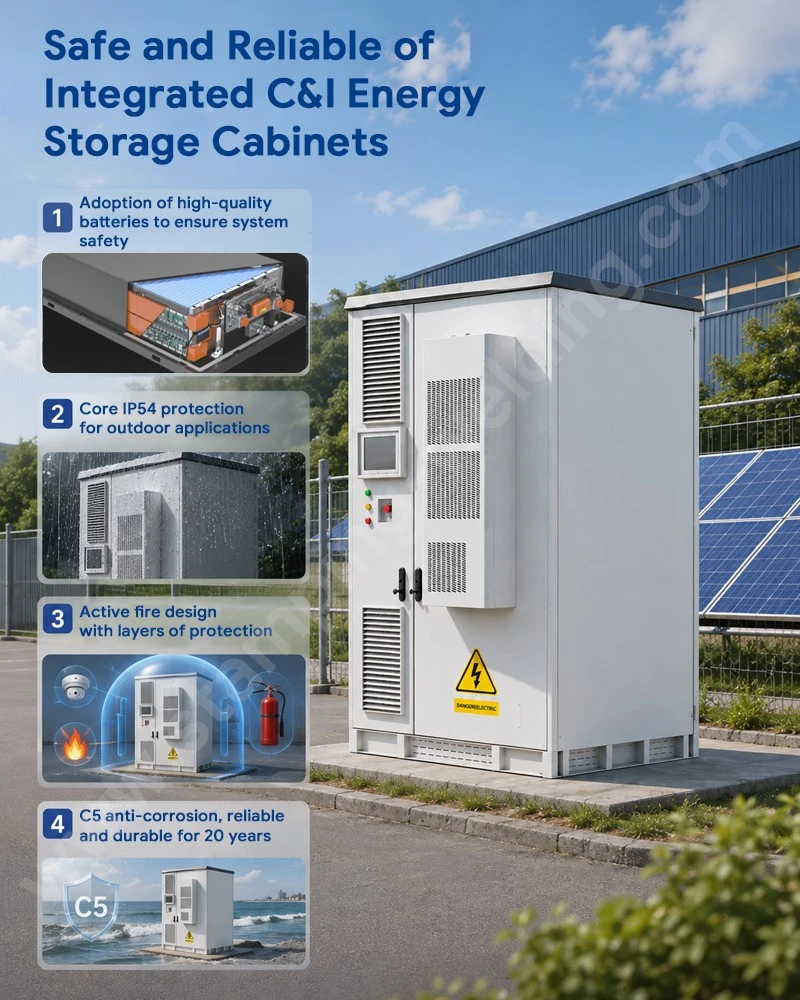
Safety assessments do not require delving into complex electrochemical analysis; however, the procurement phase should verify the fundamental safety configurations of battery-based energy storage systems. Key aspects to check include the battery cell chemistry, BMS protection mechanisms, thermal management, fire suppression systems, IP ratings, and relevant certifications. For energy storage cabinets intended for outdoor or high-temperature environments, the suitability for the specific environment and the operating temperature range must be confirmed, and suppliers should be required to provide corresponding specifications and test data.
The Battery Management System (BMS) is a critical component to evaluate during the procurement review. Procurement personnel should focus on its monitoring, protection, alarm, and communication capabilities, as well as its compatibility with the PCS (Power Conversion System) and EMS (Energy Management System). For industrial energy storage projects, safety configurations should be validated based on the installation environment, operating modes, and local regulatory requirements, rather than by simply comparing a single parameter.
Need to verify BMS, thermal management, and safety requirements for your project?
Request Energy Storage Technical Review
Cycle life should be assessed based on actual operating conditions
When comparing the lifespan of energy storage power stations or storage cabinets, one should not focus solely on a single figure such as "6,000 cycles" or "8,000 cycles." Procurement personnel should also verify the Depth of Discharge (DoD), temperature, charge/discharge conditions, and the capacity retention rate at the end of life associated with the cycle testing. Cycle life data holds practical value only when the testing conditions are broadly comparable.
For commercial and industrial (C&I) storage systems intended for long-term operation, battery lifespan also impacts future maintenance and replacement costs. Therefore, during the supplier technical evaluation phase, it is advisable to compare cycle life, capacity retention, operating temperature, and warranty terms in conjunction with one another. This approach allows for a more accurate assessment of whether the equipment meets the project's expected operational lifespan, rather than simply pursuing a higher number of cycles.
Checklist of Procurement Specifications for C&I Energy Storage Systems
After completing the preliminary analysis of requirements, capacity, cost, safety, and lifespan, procurement personnel can consolidate supplier quotations for C&I storage systems and compare them across several key dimensions: capacity (confirming rated and usable capacity, Depth of Discharge [DoD], and rated power); safety (verifying BMS, thermal management, fire protection, and IP ratings); and lifespan (checking cycle life, capacity retention, and warranty terms). Additionally, commercial conditions such as PCS/EMS compatibility, communication protocols, scalability (parallel expansion), Minimum Order Quantity (MOQ), and lead times should be verified.
The ultimate selection logic can be summarized as follows: Project Requirements → Capacity → Safety → Lifespan → TCO → Supplier Comparison. For battery-based energy storage projects, this approach enables procurement teams to shift from simple price comparisons to comprehensive parameter evaluations, ensuring they obtain complete and comparable technical and commercial information during the inquiry stage.
FAQ
Q: How do I calculate the required C&I energy storage capacity?
A: It should be determined based on the project's peak load, daily energy consumption, operating schedule, backup duration, and application objectives, rather than relying solely on the energy storage unit's rated capacity.
Q: What is the difference between rated and usable capacity?
A: Rated capacity represents the battery system's nominal energy storage capacity, whereas usable capacity accounts for the Depth of Discharge (DoD) and actual operating strategies, reflecting the energy amount the project can realistically utilize.
Q: How should I compare C&I energy storage prices?
A: It is recommended to evaluate equipment price, usable capacity, system efficiency, warranty terms, maintenance requirements, and expected lifespan simultaneously, rather than basing the decision solely on the initial price per kWh.
Q: Is higher cycle life worth the additional cost?
A: The assessment should consider factors such as the project's operating frequency, Depth of Discharge (DoD), capacity retention rate, warranty period, and lifecycle cost, rather than relying solely on the number of cycles.
Contact Us
For C&I energy storage projects, our engineering team provides technical evaluation and quotation based on capacity, power, application, and operating requirements.